Thank you for subscribing!
Some 41 per cent of people reported witnessing anti-social behaviour between 2025 and 2026, up five per cent from the previous year
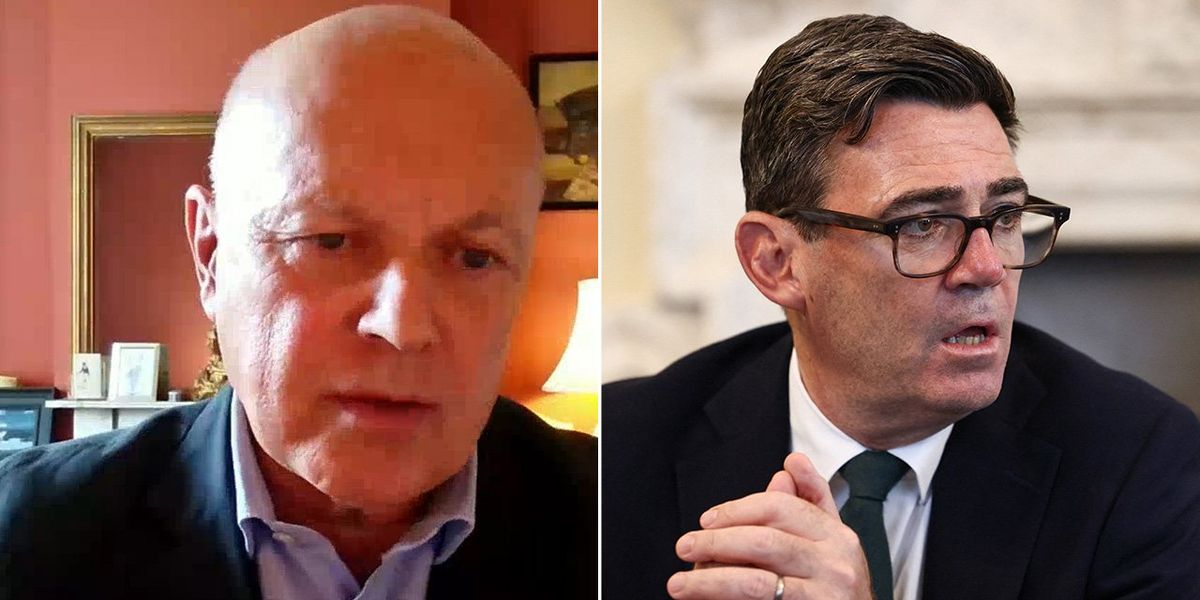
Sir Iain Duncan Smith has urged the Government to deny benefits for parents whose children terrorised neighbourhoods with anti-social behaviour.
Speaking to GB News, the former Conservative leader declared it is "appalling" that young Britons are allowed to commit such crimes without substantial punishment.
The Centre of Social Justice, which he chairs, has also proposed evicting parents living in social housing if a household member repeatedly causes public disorder.
This comes as 41 per cent of people reported witnessing anti-social behaviour between 2025 and 2026, up five per cent from the previous year.
Sir Iain described the scale of the problem as "fascinating" and deeply troubling, noting that "hardly anybody got picked up, put in jail" despite the staggering number of people affected.
He argued that the distinction between anti-social behaviour and criminal activity is essentially meaningless, insisting that ministers must pay attention to the Centre of Social Justice's findings.
"I think the Government ought to listen," Sir Iain said, warning that low-level offending on Britain's streets is far from trivial and demands a serious, coordinated response from both authorities and communities alike.
In his own Chingford constituency, Sir Iain described a pattern of brazen, gang-linked theft that had plagued local businesses.
"Literally the criminals were gang related and they just walked into shops, stripped the shelves, threatened the shopkeepers, and left and traded them with some illicit shop, probably a tobacco or a vape shop somewhere nearby," he told GB News.
The former Work and Pensions Secretary said that despite the severity of these incidents, offenders appeared to face no consequences whatsoever. "Nothing seemed to be done to them," he added.
The problem was compounded by a cycle of underreporting, with many retailers failing to notify the police about thefts and intimidation.
This meant officers had little awareness of the true extent of criminality in the area, effectively allowing organised gangs to operate with impunity on local high streets.
To tackle this, Sir Iain brought together larger retailers in the area and urged them to log every incident with the police. Once crimes were properly recorded, officers recognised the scale of the issue and began responding accordingly.
"Reporting the crime, getting the police there and getting action done has begun to reduce the levels of crime," he said.
The CSJ report's central argument, he explained, is that serious criminality invariably begins with precisely this kind of street-level offending. Anti-social behaviour is not a minor nuisance to be tolerated — it serves as a pipeline towards far graver problems.
"All big crime, major crime or big criminals start at this end," Sir Iain said. "It leads to violence and it leads to serious issues of gang warfare." The vast majority of crime experienced by ordinary members of the public falls into this category, he stressed.
Sir Iain pointed to a devastating recent incident in Middlesbrough as evidence of where unchecked anti-social behaviour ultimately leads. Young people had been riding quad bikes illegally, racing motorcycles, and driving cars at speeds of 70, 80, and even 90 miles per hour through residential streets.
"And then of course, sadly, it ended up with a head on collision with two policemen, they died and all the young people died in the car," he said.
Rather than being an isolated tragedy, Sir Iain insisted this kind of reckless behaviour had become routine. "This is considered to be an everyday occurrence every evening it goes on," he warned.
He condemned the normalisation of such dangerous conduct in the strongest terms. "We should not tolerate the fact that this bad behaviour, this criminality, this physically threatening behaviour should take over our streets. It's appalling," he said.
Sir Iain called for a return to the values of previous generations, when mothers and fathers ensured their children were home by set times and held themselves accountable for their behaviour on the streets. "We've just got to re-establish this sense of authority and responsibility that go together," he said.
Crucially, he argued that offenders must face meaningful consequences. "There has to be some sense that if you commit a crime like this, it has a punishment," he stated.
Intervening early to stamp out anti-social behaviour would starve gangs of new recruits, he maintained. "If you nip the anti-social behaviour in the bud and try and reform all of that and the behaviours on the streets, chances are the gangs will not be present because there won't be the level of people to go into them."
He described the approach as straightforward common sense, noting that shoppers on high streets across Britain are "sick and tired of this and often very frightened."