Thank you for subscribing!
A union representing the workers argues the Government is not saving money
Civil servants within Angela Rayner's Government department are set to stage a series of strikes over office closures and workplace attendance requirements that prevent them working from home.
Members of the Public and Commercial Services union (PCS) at the Ministry of Housing, Communities and Local Government (MHCLG) are due to take industrial action later this month and throughout October.
Staff attendance targets at the MHCLG generally require civil servants in offices outside London to attend for 50 per cent of their working time over a three-month period, with an "ongoing departmental ambition to move toward 60 per cent", a department spokesman said.
PCS said staff in the department’s finance directorate will strike for 13 days from September 24, while members in the resilience, emergencies and recovery directorate are scheduled to take eight days of strike action from October 1.
The union said the dispute centres on plans to close regional offices, along with targets for staff attendance in the workplace.
PCS general secretary Fran Heathcote said: "Our members are being asked to pay the price for decisions that make little sense for staff, communities or the effective delivery of public services.
"We need MHCLG to stop closing regional offices, rethink its rigid approach to attendance and get back around the table with PCS to find a fair solution."
Union members first began action short of a strike in July 2025, followed by strike action in September 2025.
They renewed their industrial action mandate in a fresh ballot, which closed on April 15, 2026, and began taking action short of strike again in May 2026.
In November 2024, the department announced plans to vacate six offices, affecting hundreds of staff in Newcastle, Truro, Exeter, Sheffield, Birmingham and Warrington - with all but the latter having closed.
The union argues the Government is not saving money overall through this approach, and called for a "progressive and flexible office attendance policy, placing staff choice at its heart".
They also urged the Government to consider proposals to prevent detriment or disciplinary action against staff, and to remove individual compliance monitoring in favour of an organisation-wide approach.
A union spokesman said: "Despite the union’s efforts to reach a settlement after previous industrial action, the department has failed to address the seriousness of our members’ concerns.
"It is continuing with planned office closures while also enforcing strict office attendance rules, with collective punishment based on the performance management of senior managers based on the attendance of their teams.
"These targets are also unrealistic - there are not enough desks to safely accommodate staff 60 per cent of the time, with the number of desks only set to reduce further with office moves.
"These desk reductions are being done to achieve cost savings for the employer, while forcing staff to face higher commuting costs through a dogmatic insistence on an unachievable target."
The spokesman said despite verbal reassurances and positive talks, the inability to reach formal agreement on a resolution means "there is currently little confidence for members who are being hit with a triple impact".
They continued: "The office closure plans fly in the face of the Labour Government’s stated commitment "to deliver good growth in every part of the United Kingdom," with greater collaboration and ‘connectivity’ with local Government.
"We trust that fresh leadership in the department – with a new permanent secretary and HR director, as well as the return of trade unionist Angela Rayner, who is in agreement with the principles behind our demands – will approach this dispute differently."
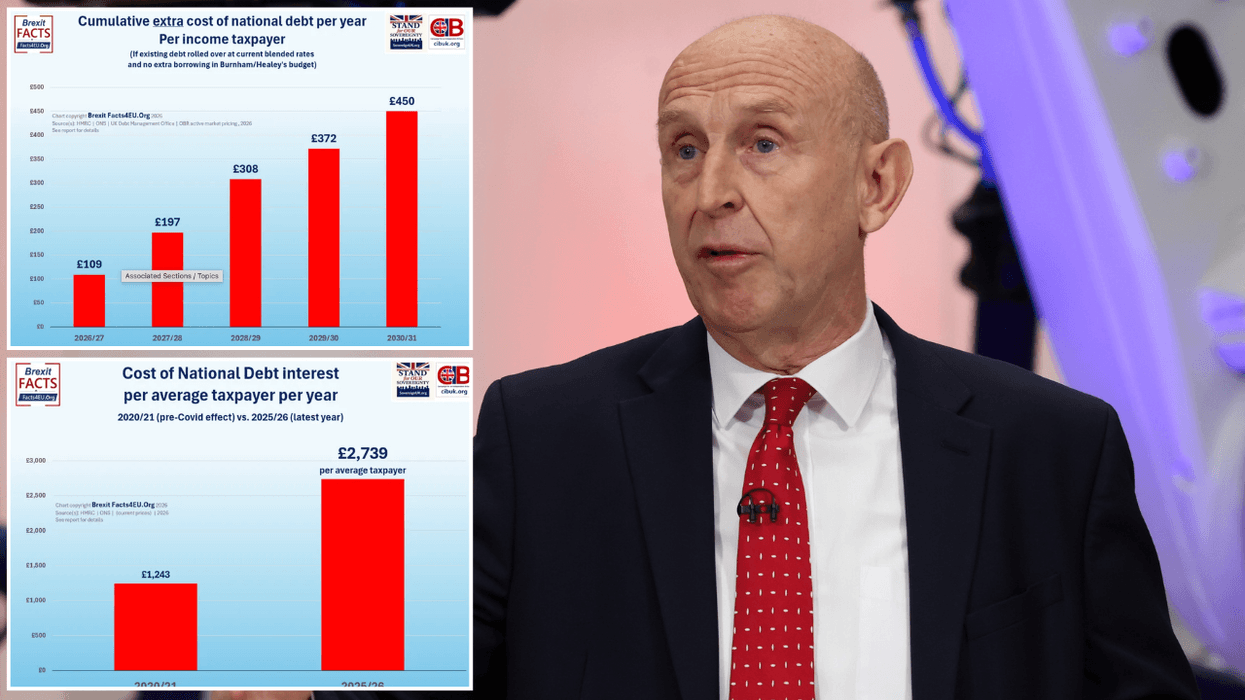
The demands of civil servants come after a report by Facts4EU showed public sector pay has risen by 6.6 per cent since Labour came to power, while private sector wage growth has barely kept pace with inflation.
The report noted that any state slimming usually comes with generous voluntary severance packages, while most senior officials rarely feel the rough hand of firm management when they make serious errors or lose money.
While some senior staff, such as past chief executives of the Post Office, have even been awarded bonuses, the Post Office has plunged into heavy losses, having to pay compensation to many employees it wrongly accused of fraud and sent to prison.
Lord Redwood, former secretary of state, described the circumstances as a "two-tier economy", pointing to the public sector's "inflation-linked pensions and no pressure to work smarter".
The public sector generally finds more opportunity to work from home in general, with allegations some abuse the privilege by spending more time on their own matters and less on working the full hours for the state.
Beyond this, staff often rely on contractors to do the actual work, while the private sector expects more of its in-house staff and does not want to pay twice.