
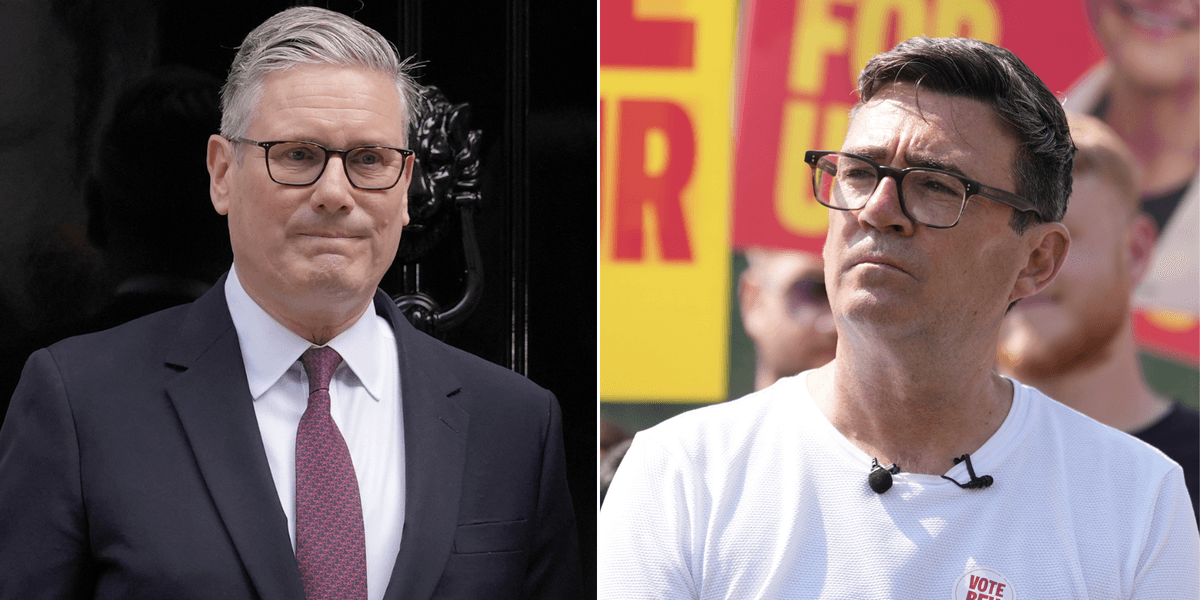
What is striking is how little we know of Andy Burnham's policy plans, write Christopher Hope and Keith Bays
It has been an extraordinary 10 days in British politics. Sir Keir Starmer was in Evian-les-Bains on June 15; by June 22, he was standing in front of Number 10, resigning as Prime Minister.
Sir Keir’s fate was sealed as soon as Andy Burnham won the Makerfield by-election, especially after securing his "messiah" status amongst Labour supporters by winning over 55 per cent of the vote share, 20 percentage points more than Nigel Farage’s Reform UK.
When Mr Burnham said: “We must hear it, we must act upon it, and we must get it right. There will be no second chance", the starting gun was fired for him to begin his march to Westminster to test the will of this politically vulnerable Prime Minister and challenge him for the top job.
And despite promising to fight on days earlier, Sir Keir wilted under the pressure and resigned, promising an orderly transfer of power, something reminiscent of what took place in 1922 in Italy, when King Victor Emmanuel III did not fight Benito Mussolini’s March on Rome; instead, he made him Prime Minister.
More than a century later, democracy had taken a back seat, this time in the UK.
The Labour leader had lost the confidence of his Cabinet, more than 100 of his backbench MPs, possibly more and his political capital simply evaporated after the by-election result came in.
He must have known then that his time was up. Baroness Harman, a former Labour deputy leader, summed up the drama, saying: “The herd is not just moving against Sir Keir Starmer, it’s stampeding.”
With his authority gone, Sir Keir has now turned to his legacy, something all Prime Ministers worry about.
Nowhere is this clearer than in defence: the Prime Minister has made signing the Defence Investment Plan (DIP) before the start of the Nato summit in Turkey on July 7 a key priority.
On Friday, the MP for Holborn and St Pancras appeared less than keen to say whether Mr Burnham will have to sign it off; but he will have to, in what will be giving the former mayor of Greater Manchester an effective veto over the defence plan.
Sir Keir also attempted to send a warning to his successor over immigration saying that same day: "Fewer crossings mean there are less people that need to be housed.
"Now there is more to do, but in a much better place than we were two years ago.
“The ambition is to close those asylum hotels, reduce those channel crossings. Nobody should be making that crossing.
"And having got it more under control it’s about keeping it under control and not letting it spiral like the last government.”
But warnings like these are all the PM has left as the clock is now ticking down fast on Sir Keir's time in office.
He will have served just over two years as PM when he hands over power as expected to Mr Burnham on July 20.
What is striking is how little we know of Mr Burnham's policy plans - for now he is a blank canvas upon which Labour MPs from the left and right of the party are projecting their ideas.
This cannot last - and won't, with Mr Burnham due to give a vital speech on the economy on Monday.
What he says is vital - so the country can understand what on earth our next Prime Minister has in store for us.