Thank you for subscribing!
Critics described the double standards between the private and public sectors as a 'two-tier economy'
New analysis shows a growing divide between public and private sector pay under Labour – rewarding the public sector while private sector workers are being left behind to foot the bill.
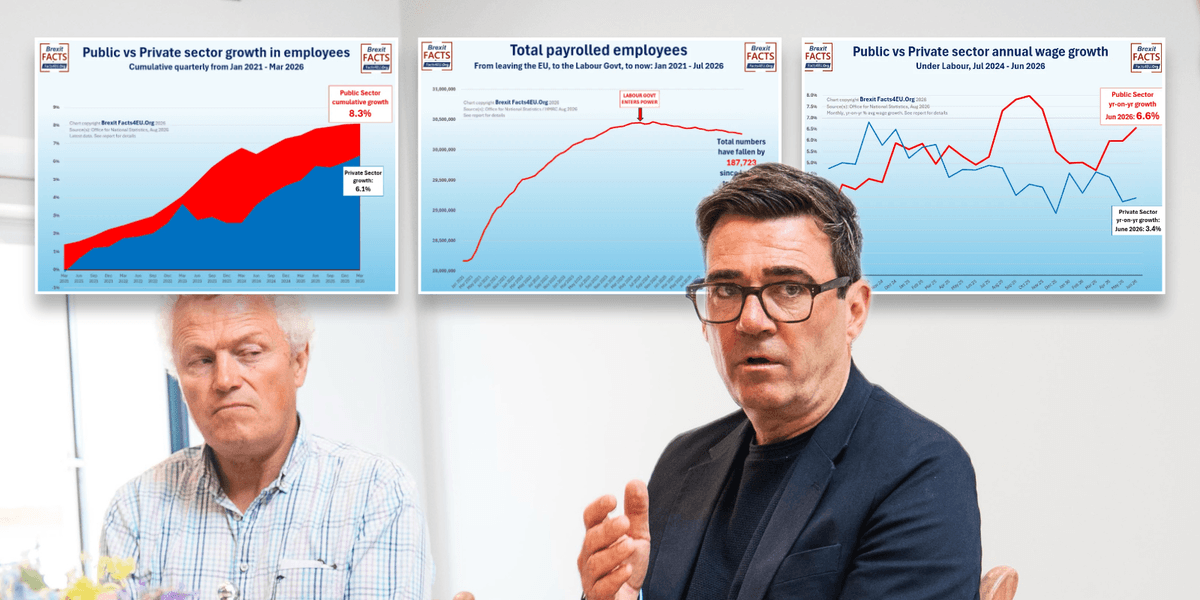
A report by Facts4EU shared with GB News shows public sector pay has risen by 6.6 per cent since Labour came to power, while private sector wage growth has barely kept pace with inflation.
Tuesday's revelation Chris Wormald, the former head of the civil service, removed from post under Sir Keir Starmer, is to get a severance payout of around £500,000 only rubs salt into the wounds of private sector workers as tax rises emerge to pay for such things.
Former Conservative minister Lord Redwood said: "This Government is a government of the public sector, by the public sector, for the public sector. They have been busily recruiting even though they inherited a well-staffed civil service with plenty of administrators in key public services.
“They have been boosting their pay well above the average pay awards in the economy and well above inflation, claiming they needed to catch up when in some cases, like train drivers, they were already well ahead.
"Their aim to end strikes in the NHS and on the railways did not succeed, with public sector employees getting a taste for well above average awards.
“The Government failed to ask for higher quality and smarter working when making the awards, so they were giving something for nothing to services with a big productivity problem.”
Since the UK left the European Union in 2020, the overall number of people in payrolled employment has only grown, only rising for years – but from the time the current government won the July 2024 general election, there has been a steady fall.
Additionally, public sector employment for the many does not suffer from the threat of compulsory redundancy, as the Government has been expanding its workforce and shows no sign of slowing down.
Meanwhile, Net Zero, high energy costs and taxes are bankrupting some businesses while forcing others to slim down as they cannot afford salaries – laying waste to work opportunities on the High Street and in hospitality.
Any state slimming usually comes with generous voluntary severance packages, while most senior officials rarely feel the rough hand of firm management when they make serious errors or lose money.
While some senior staff, such as past chief executives of the Post Office, have even been awarded bonuses, the Post Office has plunged into heavy losses, having to pay compensation to many employees it wrongly accused of fraud and sent to prison.
Meanwhile, the HS2 connecting London and the North is as much as £100billion over budget and running more than a decade late, yet that has not stopped staff bonuses with former chief Mark Thurston taking home £4.5 million of taxpayers’ money/
Lord Redwood said: “The generous treatment of the public sector comes at a big cost to the struggling private sector. Two Reeves budgets thumped private enterprise with the Jobs Tax, higher business rates, and the small business and farm taxes.
"That left the private sector reeling, having to cut back on its employee numbers and now offering them less than inflation for a pay increase."
He described the circumstances as a "two-tier economy", pointing to the public sector's "inflation-linked pensions and no pressure to work smarter".
The public sector also generally finds more opportunity to work from home, with allegations some abuse the privilege by spending more time on their own matters and less on working the full hours for the state.
Staff often rely on contractors to do actual work, while the private sector expects more of its in-house staff and does not want to pay twice.
Taxpayers will need to meet the bills for the NHS, teachers, civil servants and other large employers to provide more generous pensions than others can afford.
Only local government and Parliament have funded schemes where there are assets from people's savings to pay for the pensions, in the same way as happens in the private sector.
The public sector is also good at granting early retirement, which adds to the burden on the private sector having to pay for those generous pensions for longer.
Lord Redwood concluded: "The private sector works smarter, raises quality and tries harder but has to shrink its staff and go mean on the pay awards just to survive.
“The grabbing government takes too much in tax, starving businesses of money to invest and expand. Customers have less money to spend as they too are caught having to pay more tax and ever-higher rip-off energy bills thanks to Net Zero policies.”