Thank you for subscribing!
The Troubles Legacy Bill is intended to replace the controversial 2023 Legacy Act
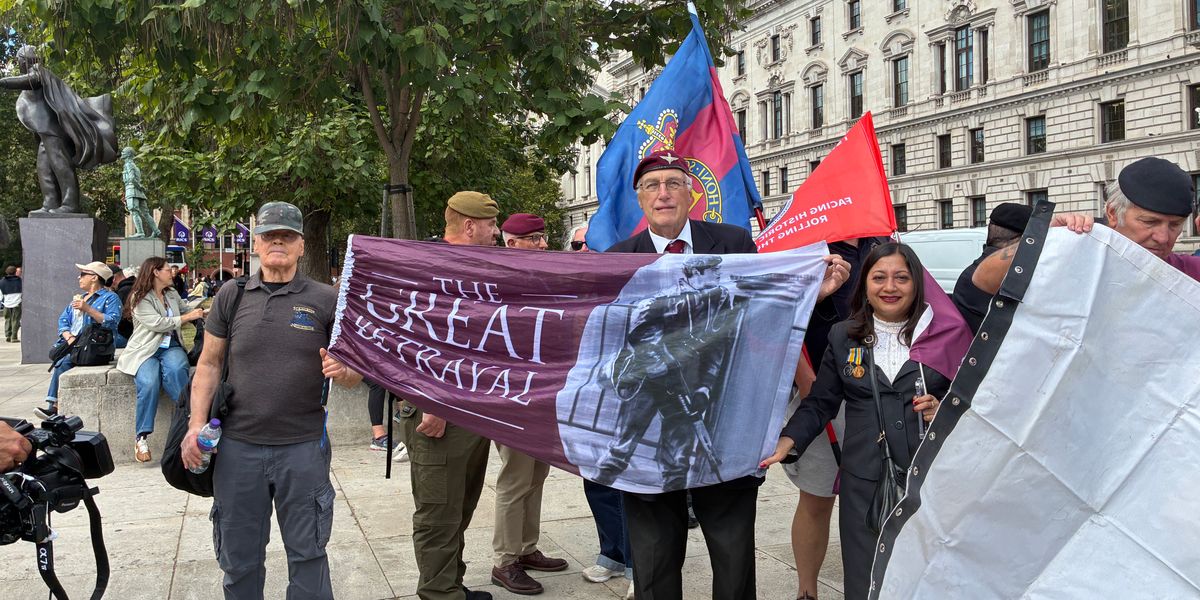
Concerned veterans took to the streets of London to protest against Labour’s plans to overhaul how Troubles-related killings are investigated.
The demonstration comes amid growing concern among former soldiers that the Government’s proposed Troubles Legacy Bill could leave them facing renewed investigations into incidents dating back decades.
The Bill is intended to replace the controversial 2023 Legacy Act, introduced by the previous Conservative government.
That legislation offered conditional immunity to people responsible for some Troubles-related offences in return for cooperation with the Independent Commission for Reconciliation and Information Recovery, which was tasked with investigating the conflict.
Labour’s replacement would establish a new Legacy Commission to investigate Troubles-related killings, alongside a separate information recovery body and a dedicated legacy unit within the Irish police force, An Garda Síochána.
Ministers say the new framework is needed to provide answers to families who lost loved ones during the Troubles and to deliver a system capable of securing greater public confidence.
But veterans at the protest say they fear the new arrangements could result in former servicemen being dragged back into investigations over events for which they have already been questioned or cleared.
The Government has proposed a package of protections for military veterans and insists they will be protected from repeat investigations.
But those assurances have failed to convince some former soldiers.
Veteran Gary Noland told GB News: “The Government appears to hate us and they want to hound us until they can get us put in prison.
The protest was also attended by shadow Armed Forces and Veterans Minister Mark Francois, who has strongly opposed the Bill amid concerns over the potential for veterans to face renewed scrutiny over Troubles-related killings.
Speaking at the demonstration, veteran Geoffrey Butler said: “We are letting our Prime Minister know that we are not going away and we are totally opposing this bill.
“They pardoned all the terrorists, they can’t be prosecuted and yet they can prosecute soldiers for defending ourselves.”
The row comes as the Government faces pressure from both sides of the debate over how the legacy of the Troubles should be dealt with.
A report by Westminster’s Joint Committee on Human Rights said Labour’s Bill represented a “significant improvement” on the previous Conservative legislation, but warned that further changes were needed to ensure investigations were fair to everyone involved.
The committee said it recognised the “sincerely held concerns” of veterans and called for additional safeguards around prosecutions.
Its recommendations include calling on the Government to consider requiring the consent of the Attorney General before any future Troubles-related offences could be prosecuted.
The committee said this could provide an additional layer of assurance over prosecution decisions in what remains an exceptionally sensitive area.
It also raised concerns about the handling of sensitive information, recommending that decisions over disclosure should be made by a judicial panel rather than ministers.
Some victims' groups and politicians have raised concerns that veterans could receive preferential treatment under the new system.
Stormont First Minister Michelle O’Neill has accused the Government of giving ex-soldiers “preferential treatment”, as ministers fight to strike a balance between protecting veterans and ensuring accountability for Troubles-era deaths.
Northern Ireland Secretary Sir Chris Bryant has insisted the plans are “full steam ahead”, while adding amendments will be brought forward.
The Government says it has engaged extensively with veterans and will introduce a “significant package of amendments” aimed at improving confidence in the legislation.