

You are about to be charged £0.00






Officials in Donald Trump's administration are working on a proposal to give married families with a stay-at-home spouse up to $9,000 annually.
The policy, long championed by Vice President JD Vance, would use funds from a federal programme intended to assist working parents.
Parents who stay at home with their children would benefit from a Health and Human Services Department fund created in the 1990s under the draft policy.
The plan is being pushed from the White House and is considered a top priority by Mr Vance, sources familiar with the discussions told the New York Times.
The Vice President's wife, Usha, a former corporate lawyer, gave birth to the couple's four child in July.
He has long advocated for more mothers to stay at home with young children, writing in 2021 that nursery was harmful for children.
"Young children are clearly happier and healthier when they spend the day at home with a parent," he wrote for The Wall Street Journal.
He also said "normal Americans" want a "family policy that doesn’t shunt their kids into crap day care so they can enjoy more 'freedom' in the paid labor force".
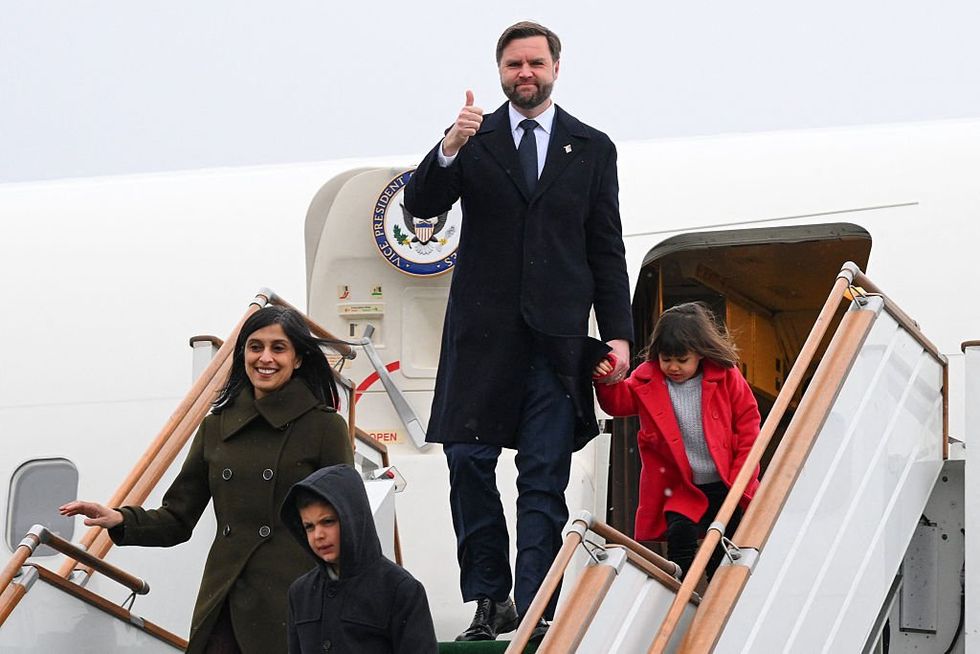
JD Vance, whose wife Usha just gave birth to their fourth child, is said to have made the policy his priority
|GETTY
The policy was also included in Project 2025, a 900-page policy document published by the Heritage Foundation.
Mr Trump disavowed himself of the outline while on the campaign trail, saying he had "nothing to do" with it, but has followed through with many of its proposed policies.
The document said: "Instead of providing universal day care, funding should go to parents either to offset the cost of staying home with a child or to pay for familial, in-home child care."
Roger Severino, a vice president at the Heritage Foundation who wrote the section on child care policy, told The New York Times existing programmes could be used to "end discrimination against stay-at-home parents".
LATEST US POLITICS:

Roger Severino said the policy would 'end discrimination against stay-at-home parents'
| GETTY"It would be a welcome change to see equal treatment between commercial day care and the contribution stay-at-home parents provide in caring for and raising the next generation," he said.
"It doesn't get more pro-family than that."
Opponents of the idea said it would leave single parent households worse off because the Child Care and Development Fund is currently used on parents with an income lower than 85 per cent of their state's median income who are in work, school, or training.
Policy analyst and former Democratic speechwriter Madeline Summerville told GB News: "The vast majority of people who are currently receiving child care subsidies are one working parent. They're working already, and two, they're single.
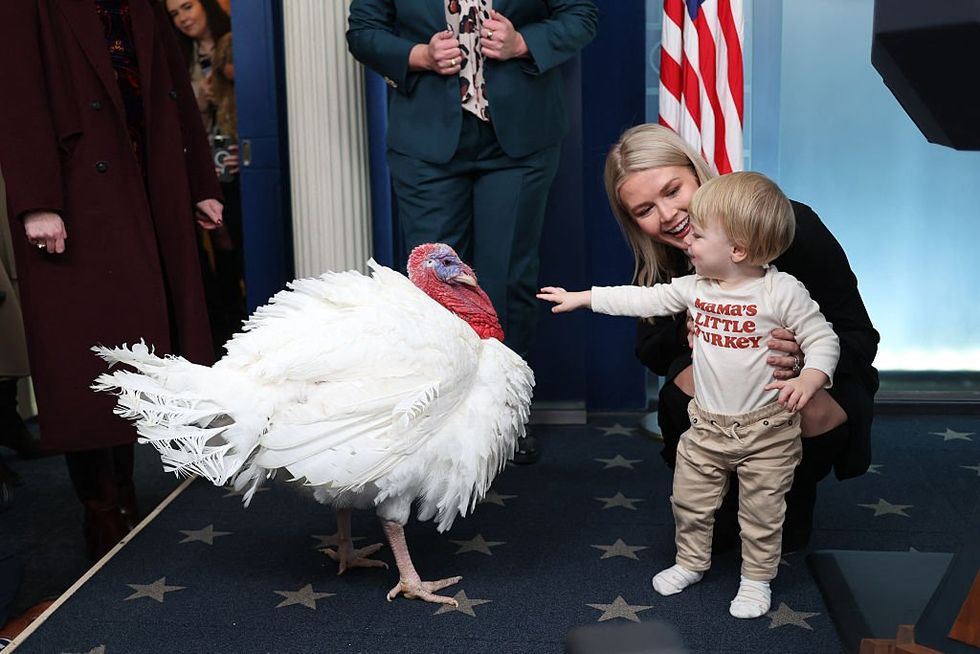 Karoline Leavitt, pictured with her first child, said it was a 'bittersweet decision' to leave the White House | GETTY
"They're single parent households, and a lot of them are women. And so a lot of the money that would be diverted in order to pay for this $9,000 per kid would come directly from that pool.
"It's actually functioning less as evening things out and more as giving a bonus to people who decide to stay home."
Describing the policy as a "ploy", she added that Republicans hoped to "push the traditional family and to create more detriments for those who are the poorest in our society".
Karoline Leavitt, former Press Secretary, left the administration earlier this month to focus on her own family.
Some lawyers within Mr Trump's administration have raised concerns around the legality of requiring recipients to be married, the US outlet reported.
Concerns around the risk of fraud because the money would be going to individuals rather than businesses have also been raised.
The rule could go into effect as soon as next year but has yet to be approved by the White House.