Thank you for subscribing!
The treasures include a 1949 Royal Household social club ticket and old newspapers
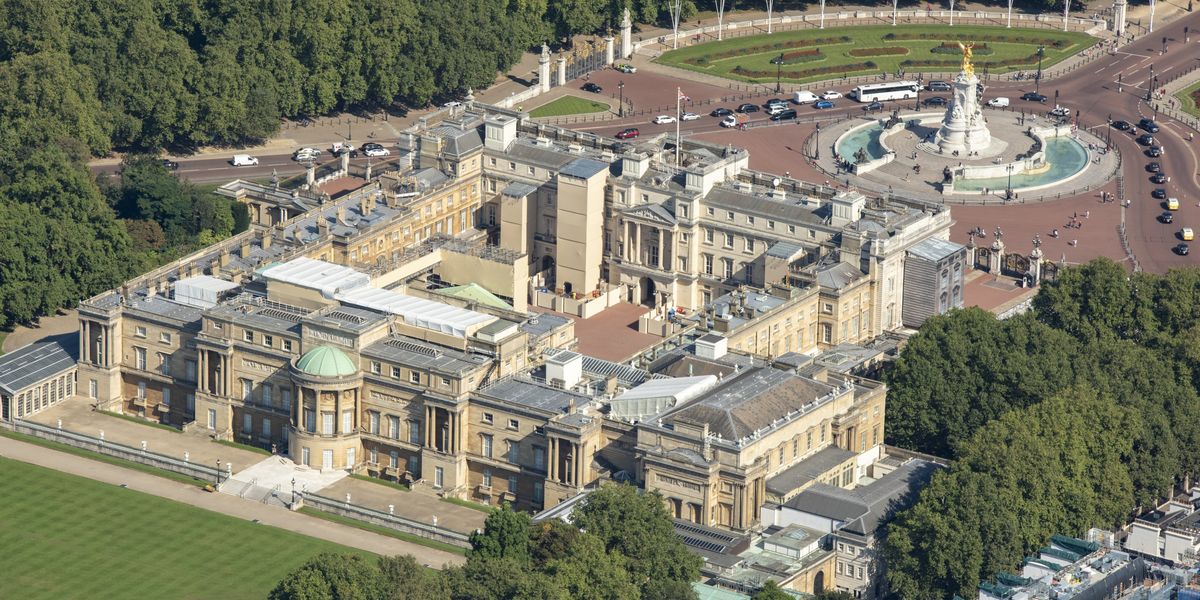
Buckingham Palace's decade-long £370million restoration has yielded an unexpected trove of lost objects, hidden for decades beneath floorboards and within the building's fabric.
Among the most striking discoveries is a small, once-white ticket to a staff whist drive dated April 14, 1949, priced at sixpence, along with unused Littlewoods Football Pool betting slips from 1957 and a pair of worn black hobnail boots.
Workers also unearthed a typed schedule detailing how Queen Elizabeth II would navigate a diplomatic reception during her 1977 Silver Jubilee year, moving through the Ballroom in a "clockwise direction".
The items, which range from an empty Silk Cut cigarette packet to a fragment of West End theatre listings published in The Standard in 1889, provide a window into the daily lives of those who worked and resided behind the scenes at the royal residence across multiple generations.
The reservicing project, which began in 2017 and is scheduled for completion next year, was launched to rewire the Palace's electrics, modernise its plumbing and heating systems, and carry out a comprehensive infrastructure overhaul to avert long-term structural damage.
Electrical wiring insulated with Vulcanised Indian Rubber (VIR) cabling represented the most serious fire risk to the building. This type of cabling grows brittle over time, and its removal was treated as a priority from the outset.
Approximately 2km of the hazardous rubber-coated wiring has been stripped out and replaced to date — a length equivalent to 40 Olympic-sized swimming pools laid end to end.
It was during this extensive programme of works that the collection of misplaced belongings came to light, preserved within the structure of the Palace for decades before construction teams uncovered them.
The whist drive ticket was discovered embedded in a lump of building rock. It bears the inscription "Royal Household Social Club Buckingham Palace: A Whist Drive to be held on" followed by a faded, stamped date reading "14 APR 1949".
The sixpenny pass would have admitted a member of Palace staff to an evening of progressive rounds of whist, the traditional trick-taking card game.
At the time of the event, King George VI, grandfather to King Charles, was on the throne. The future Queen Elizabeth II was still known as Princess Elizabeth, having been married to Prince Philip for fewer than 18 months.
Her eldest son, the present King, then Prince Charles, was just five months old.
The ticket's survival, lodged within the building material itself, suggests it had lain undisturbed for close to eight decades.
A typed sheet outlining arrangements for the 1977 Diplomatic Corps reception revealed the precise choreography behind royal entertaining. The document instructed staff that "In the Ball Room, Her Majesty and other Members of the Royal Family will move round the room in a clockwise direction".
Some 350 British guests were expected to attend the event, at which white tie and decorations or national dress were required, and royal women would have worn tiaras.
Aides received clear directions to ensure the British attendees mixed with the diplomatic corps: "The British guests will be distributed throughout the State Rooms, except the Music Room and West Gallery, where they should be encouraged to talk to the Diplomats."
Timings were tightly controlled. Drinks were served in the Blue Drawing Room, State Dining Room and West Gallery between 9.30 and 10.00pm, while Ball Room guests received theirs in the Annexe from 9.30pm until roughly 10.15pm. "Smoking will not be permitted in any of these rooms," the schedule stated.
Beyond the whist ticket and reception schedule, the restoration unearthed objects spanning more than a century of Palace life. A fragment of West End theatre listings from The Standard newspaper, dating to 1889, was among the oldest items recovered.
Pages from the Daily Express in 1966 were also found, carrying a report on the "maximum security" prison holding the Great Train Robbers and noting that "the men who were found guilty of stealing a fortune in mailbags spend their week stitching them for nine shillings".
Other discoveries included a section of decorative Minton ceramic tiles from a fireplace hearth, with a design estimated to date from the mid-1800s, an aged pewter tankard, a bottle of Schweppes Still Malvern English Spring Water, a wooden junction box, and a faded box holding six Christmas cards.