Thank you for subscribing!
The animal rights group has urged the King to reject his namesake breed
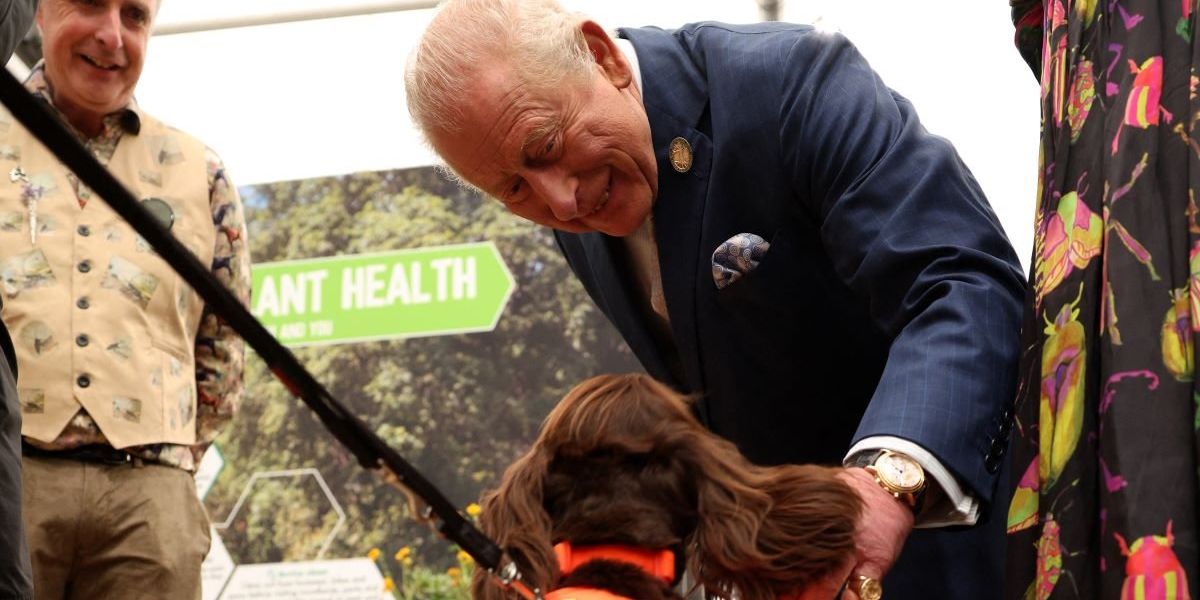
Animal rights organisation Peta has written to King Charles, asking him to distance himself from the Cavalier King Charles Spaniel breed publicly.
The group argued that the breed's association with the monarchy lends it prestige and fuels demand, much as a royal warrant does for commercial products.
In its letter to Buckingham Palace, Peta said decades of selective breeding to achieve particular physical traits, including large eyes, shortened muzzles and rounded heads, had left the dogs prone to "debilitating" health conditions.
The organisation urged the King to make clear that the Crown does not wish to be seen as endorsing the continued breeding of these animals.
Peta president Ingrid Newkirk stated that the pursuit of these exaggerated features had "come at a terrible cost" for the animals.
She wrote that generations of breeding for aesthetic traits had made the dogs vulnerable to serious neurological conditions, mobility difficulties and, in certain cases, full paralysis.
"Such words from you would send a powerful message that there is nothing noble about breeding dogs for exaggerated features that condemn generations of them to painful, debilitating disease," she told the King.
Among the most severe consequences, Ms Newkirk claimed, was that some dogs' skulls were too small to accommodate their brains, resulting in brain tissue being forced through the opening at the base of the skull.
The breed traces its lineage to the small toy spaniels that appeared frequently in royal portraits from the 16th to 18th centuries, taking its name from Charles II and his Civil War supporters, the Cavaliers.
Charles II was rarely without a group of the dogs by his side, and diarist Samuel Pepys recorded his irritation at the spaniels being permitted into council meetings and the King's private chambers.
The current monarch is understood to favour Jack Russells. He and Queen Camilla rehomed two of the breed, Bluebell and Beth, from Battersea Dogs and Cats Home in 2017.
Both dogs later appeared as "girls in pearls" in the July 2022 edition of Country Life magazine.
Sir John Hayes, the senior Conservative MP who chairs the Common Sense group, dismissed the proposal outright.
"The King Charles Cavalier Spaniel has been a much-loved dog breed for generations," he told The Telegraph. "As someone who identifies with both the King and Cavaliers, I would be delighted to oppose this strange suggestion."
He acknowledged that responsible breeding practices mattered but said stripping the royal name from the breed had no bearing on that issue.
"On that basis we'd be renaming all dogs and all kinds of dogs that have developed these kinds of issues. Where does that begin and end? It's making something serious into a nonsense," he said.
Sir John added that the campaign did nothing to advance the cause of safe dog breeding.
Michael Levy, who chairs the Cavalier King Charles Spaniel Club, pushed back against the characterisation of the breed as unhealthy.
He said the dogs were popular with families owing to their "fantastic, friendly temperament and easy maintenance routine."
"The average life span for a Cavalier according to Royal Kennel Club statistics is 11 years old - considerably older than many pure-bred breeds," he told The Telegraph.
Mr Levy rejected the suggestion that the breed was universally afflicted by illness. "The current narrative from some quarters that all Cavaliers are a sick is totally untrue as many have long active lives," he said.
He also pointed out that many preservation breeders were committed to selecting only the "healthiest stock possible" for future litters.