Thank you for subscribing!
The ‘Life Through a Royal Lens’ exhibition at Blenheim Palace explores how photography shapes the Royal Family's image
As GB News’ Deputy Royal Editor, I was invited to review Life Through a Royal Lens, a photography exhibition at Blenheim Palace - Winston Churchill's birthplace.
The exhibition, which runs until September 27, features more than 100 photographs spanning Queen Victoria’s reign to the present day.
Almost 200 years after photography was invented, it remains an important way for the Royal Family to communicate with the public. Chris Jackson, Leigh Keily, and John Waddell Rankin, who have all photographed the royals in recent years, contributed towards the exhibition.
A sign at Blenheim Palace read: “The invention of photography humanised the Royal Family and the publication of more relaxed and relatable images created a new relationship between sovereign and subjects that set the tone for future generations.”
Queen Victoria and Prince Albert were among the earliest royals to embrace the technology. Photography was publicly announced in 1839, shortly after Victoria became Queen.
As monarchies across continental Europe fell, Victoria and Prince Albert recognised the medium's revolutionary potential. They joined the Photographic Society in 1853 and used photographs to present themselves and their growing family to the public.
One photograph displayed at Blenheim, dating from 1852, showed Victoria with five of her children. The Queen’s face, however, was notably scratched out. Victoria was unhappy with her appearance and altered the photograph herself, writing in her journal: “Mine was unfortunately horrid, but the Children’s were pretty.”
The image provided an early example of royal control over photography, something that remains relevant in the social media age.
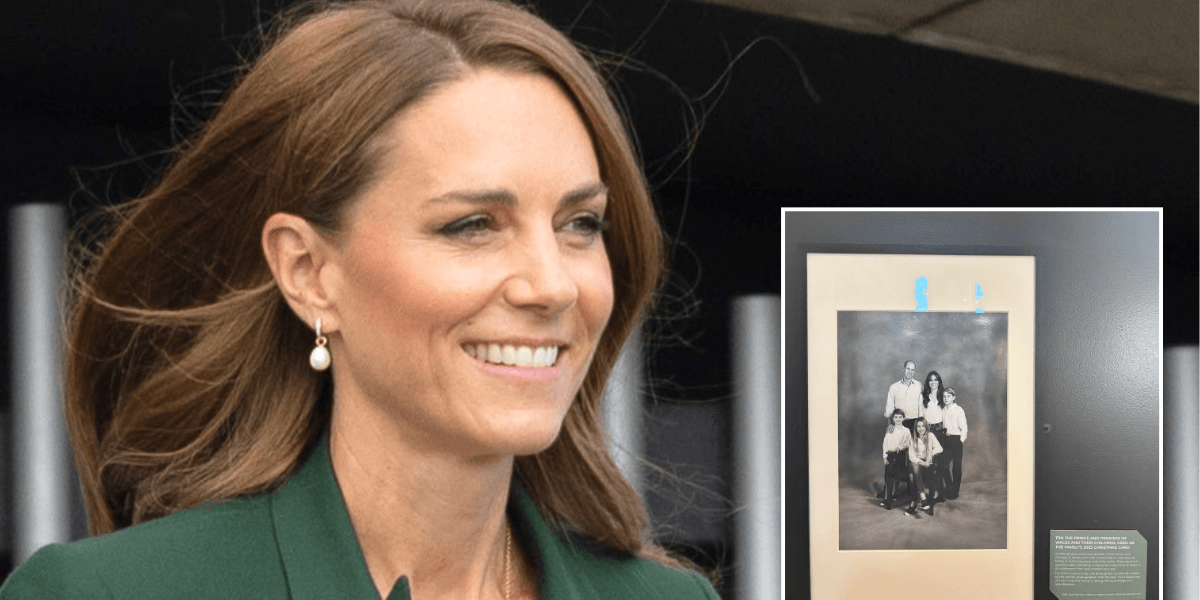
In 2024, Catherine, Princess of Wales faced intense scrutiny after a photograph of her with her three children, released for Mother’s Day, was withdrawn by several major picture agencies over concerns that it had been digitally altered.
Catherine subsequently issued a statement, writing: “Like many amateur photographers, I do occasionally experiment with editing. I wanted to express my apologies for any confusion the family photograph we shared yesterday caused.”
The contrast is notable. Victoria could alter an image of herself without having to publicly account for the decision. Over 170 years later, Catherine was required to explain herself after agencies questioned an official royal photograph. The technology had changed, but the desire to control the royal image had not.
As photography became increasingly important to newspapers and magazines, the Crown adapted to the growth of photojournalism. King George V and Queen Mary became the first British monarchs to hire an official press manager in the 1930s.
LATEST ROYAL DEVELOPMENTS
Royal tours, hospital visits, factory openings and walkabouts became opportunities to show members of the Royal Family carrying out their public duties, allowing those engagements to reach audiences far beyond those physically present.
The tradition of letting the public into personal milestones took a huge leap in 1981. When Princess Anne and Captain Mark Phillips presented their newborn daughter, Zara Tindall (then Zara Phillips), on the steps of St Mary's Hospital in Paddington, they birthed a cultural phenomenon.
That single photo-op set the template for generations to come, from Princess Diana presenting William and Harry to the world, to William and Catherine posing outside the Lindo Wing decades later.
Diana, Princess of Wales became associated with more informal portraits, helping move royal photography away from its traditional formality. Pictures of her with Prince William and Prince Harry, who had played table tennis with the photographer John Swannell between takes, captured a more relaxed side of family life.
One photograph showed Queen Elizabeth II holding a Leica camera at the Royal Windsor Horse Show in 1982, although the Palace noted that no pictures taken by the late monarch have ever been publicly released.
Meanwhile, in 2016 Prince William became the first member of the Royal Family to appear on the cover of Attitude magazine, using the opportunity to discuss homophobic and transphobic bullying and its impact on mental health.
The exhibition then moved into the digital age. Prince William and Catherine have used both formal and informal family photographs to document milestones involving their children.
The exhibition notes: “By appearing to let the public in and sharing their family milestones, photography has created a reassuring image of stable dependability.”
That approach has become more complicated as social media has allowed royal photographs to be examined and questioned immediately after publication.
The exhibition included one of the most significant royal photographs of recent years: the final public image of Queen Elizabeth II, taken at Balmoral shortly before her death in September 2022. It showed the Queen meeting Liz Truss, the 15th and final Prime Minister of her reign.
Placed alongside photographs taken almost two centuries earlier, the image illustrated how the technology has changed and the scrutiny has intensified, but the importance of controlling the royal image remains.
Life Through a Royal Lens is on display at Blenheim Palace until September 27, 2026.