Thank you for subscribing!
Archaeologists have made an incredible discovery, finding a Roman coin revealing Britain's breakaway emperor.
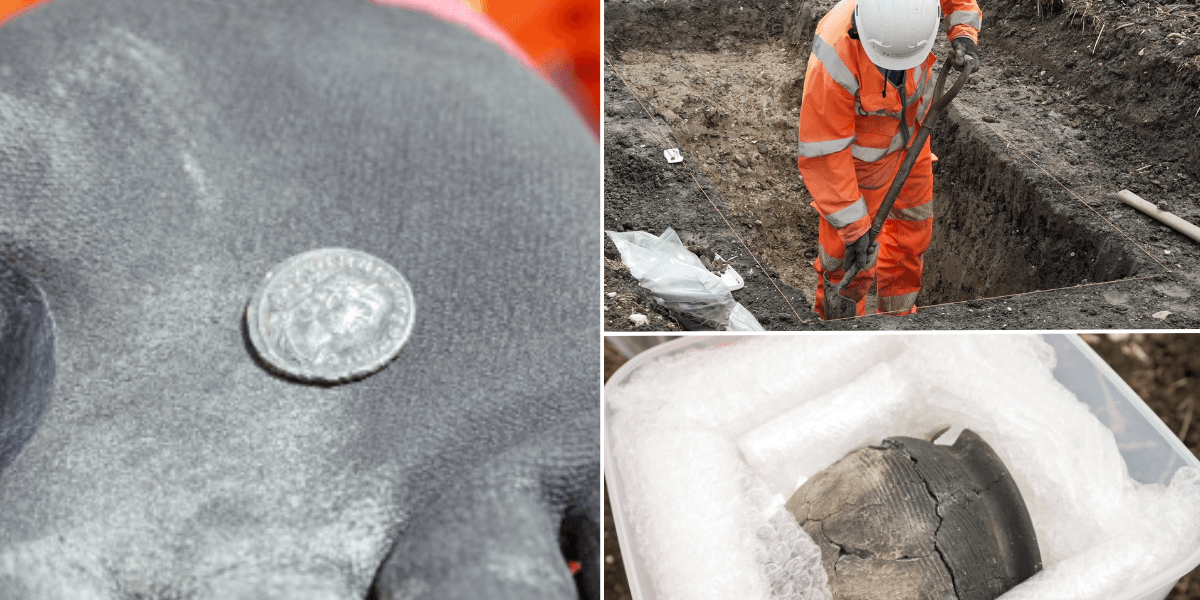
The rare find dating to 287AD, bearing the image of the usurper Carausius, has been unearthed by archaeologists working along the proposed East West Rail route through eastern England.
The discovery was made as part of a large-scale dig spanning 1,000 trial trenches across Bedfordshire and Cambridgeshire, where the new railway line will eventually link Oxford, Bedford and Cambridge.
The excavation teams are seeking to compile a comprehensive record of what lies beneath the planned route and to safeguard archaeological heritage where possible.
Alongside the Carausius coin, researchers have already recovered additional Roman-era coins, pottery fragments, and a jar from the Late Iron Age — offering a glimpse into centuries of settlement across the region.
Carausius was the commander of a Roman naval force known as the Classis Britannica, which patrolled the English Channel.
After facing accusations that he had pocketed plunder seized from pirates, Emperor Maximian ordered his death — prompting Carausius to flee to Britain.
Once there, he proclaimed himself Emperor of Britain and northern Gaul, carving out an independent state that he governed from 286AD until 293AD.
His reign came to a violent end when Allectus, his own finance minister, assassinated him.
The coin discovered along the East West Rail route, now approximately 1,740 years old, bears the inscription "Emperor Carausius" — making it a particularly notable find for the archaeological teams working across the two counties.
Beyond the Carausius coin, a second Roman coin recovered from the site has been dated to the second century and was probably struck during the reign of either Emperor Antoninus Pius or Marcus Aurelius.
Diggers also retrieved a handcrafted rilled jar, fashioned from a fine shell and grog-tempered fabric, which dates to between 50BC and 50AD in the Late Iron Age period.
"Every discovery helps build a richer picture of the people who once lived here," said archaeology survey manager Joss Piper-Jarrett.
"When you're excavating these features, you're often the first person to see them in 2,000 years, sometimes even longer, which is a really special feeling. It's pretty amazing."
Each find adds another layer to the understanding of human activity across this stretch of the English countryside over millennia.
The archaeological programme is set to expand significantly, with plans to investigate 6,000 sites along the East West Rail corridor over a two-year period.
"It's a really exciting time for the project because this programme represents an important step in helping us better understand the historic environment while continuing to progress East West Rail responsibly," said programme manager Jorn Pace.
"By carrying out targeted investigations informed by detailed surveys, we can reduce unnecessary disturbance and ensure we take a careful approach to both the environment and the communities around us."
Once fieldwork concludes, all recovered artefacts will undergo cleaning and analysis before being formally recorded and deposited in the archaeological archive for future study.