Thank you for subscribing!
The civilisation 'lived in harmony in that way with the forest,' the researchers stated
A sprawling ancient society, dubbed the Aquiry civilisation by researchers, has been uncovered beneath the dense tree cover of the Amazon rainforest using laser-scanning technology known as Lidar.
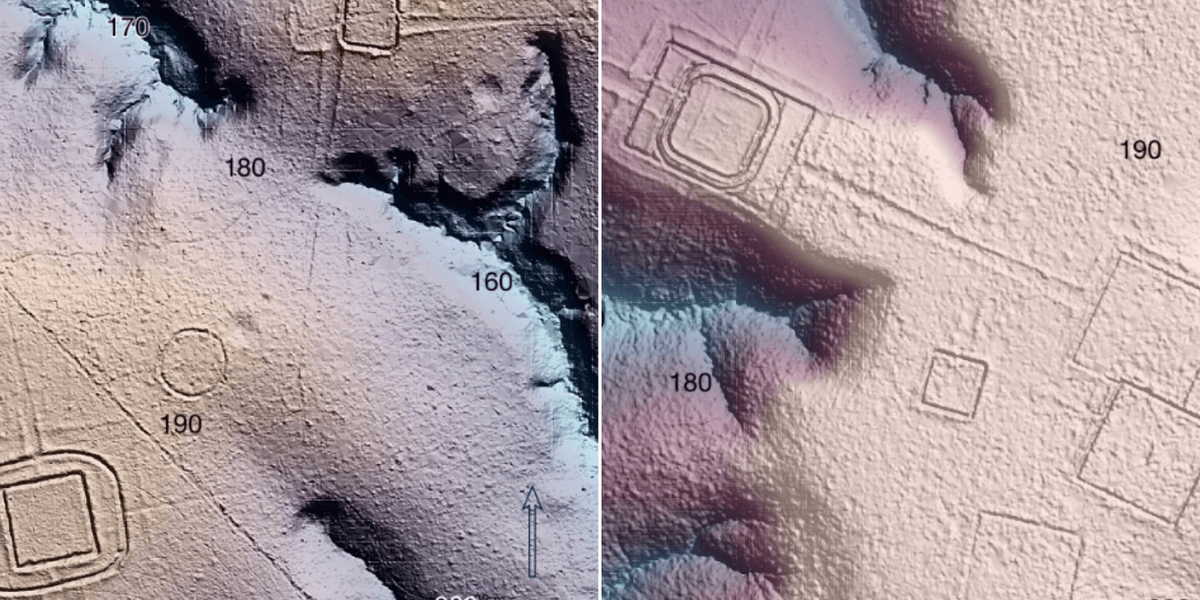
The findings, published in the journal Nature, reveal a network of enormous geometric earthworks, ceremonial pathways and forgotten roads that had remained concealed for centuries.
Led by Martti Parssinen of the University of Helsinki, the study exposes a highly organised population that thrived in South America roughly 2,000 years ago.
Researchers have drawn direct parallels with ancient Greece, describing a collection of autonomous communities bound together by common religious practices, architectural traditions and public gatherings.
The discovery fundamentally challenges long-held assumptions about the Amazon basin.
"It was a common idea that the Amazonian forest was a virgin wilderness, occupied only by small groups of hunter-gatherers," Mr Parssinen said.
"These earthworks totally change our understanding of the supposedly pristine Amazon."
During its peak, between approximately AD 100 and 300, the Aquiry civilisation is thought to have sustained a population of between 1.25 million and 3 million inhabitants, roughly comparable to Roman Britain at the same period.
While Roman engineers constructed roads and temples across Europe, the Aquiry were simultaneously shaping immense circles, squares and monumental enclosures into the landscape on the opposite side of the globe.
The civilisation's reach was vast, stretching across some 183,000 sq km of southwestern Amazonia, an expanse just slightly smaller than Britain itself.
This territory spanned portions of present-day Brazil, Bolivia and Peru.
The sheer scale of the society upends the conventional view that pre-colonial Amazonia was sparsely populated.
Far from being home to scattered bands of foragers, this region supported a dense, well-organised population capable of reshaping its environment through monumental construction projects.
The breakthrough was enabled by airborne Lidar, which works by emitting rapid laser pulses from an aircraft that penetrate gaps in the forest canopy, reflect off the ground surface and return to a sensor overhead.
This process allows scientists to construct detailed maps of terrain otherwise invisible beneath thick vegetation.
Parssinen's team scanned nearly 4,500 sq km of rainforest, identifying 432 earthworks, of which just 36 had been previously documented. The biggest single structure encompassed close to 50 hectares.
When these survey results were combined with satellite imagery, the researchers calculated that the broader Aquiry territory could harbour between 24,000 and 30,000 such constructions.
The figures suggest that what has been uncovered so far represents only a fraction of the civilisation's true footprint, with tens of thousands of monuments still awaiting discovery beneath the canopy.
Mr Parssinen likened the Aquiry's political organisation to that of ancient Greece rather than a unified empire.
He said: "Greek civilisation was composed of more than 1,000 independent city states, and what was common was the same kinds of gods and traditions and the Olympics. I think we have something similar with the Aquiry."
The large enclosures his team identified were likely not densely populated urban centres but rather served as ceremonial and political hubs where scattered communities convened for decision-making, feasting and ritual observance.
Oral histories and early colonial records offer further glimpses of Aquiry life, describing music, dance, running competitions, wrestling and ball games, with separate communities entering their own teams.
Community leaders appear to have enhanced their standing by hosting lavish festivities.
Mr Parssinen drew a comparison between the monuments and European cathedrals, characterising both as grand physical expressions of a collective belief system built through coordinated labour and careful planning.
Despite its enormous population, the Aquiry civilisation managed to thrive without devastating its natural surroundings.
Its people grew maize, squash and manioc, tended Brazil nut trees and palms, and employed agroforestry techniques that preserved the wider ecosystem.
"They lived in harmony in that way with the forest," Mr Parssinen said. "They made clearings, but not too big to change the ecological systems. Despite their huge numbers, they never converted the rainforest into savanna."
The civilisation, he stressed, was only ever "lost" from the perspective of outsiders.
Indigenous communities in the region have long been aware of the ancient earthworks, with some sites still regarded as sacred.