Thank you for subscribing!
Experts believe the sheer weight of treasure overloading the Blessing of Burntisland caused it to sink
Treasure hunters believe they have tracked down a 17th-century vessel, after three decades of painstaking searching off the coast of Scotland.
The Blessing of Burntisland, a wooden baggage ferry that formed part of King Charles I's coronation tour, was long considered irretrievably lost beneath the murky waters of the Firth of Forth.
Volunteers from Burntisland Heritage, a community group based in the Fife town, now say they have pinpointed what they believe to be the ship's remains lying just one mile offshore.
Breakthroughs in underwater scanning technology enabled the team to make the promising discovery after conventional methods had repeatedly failed.
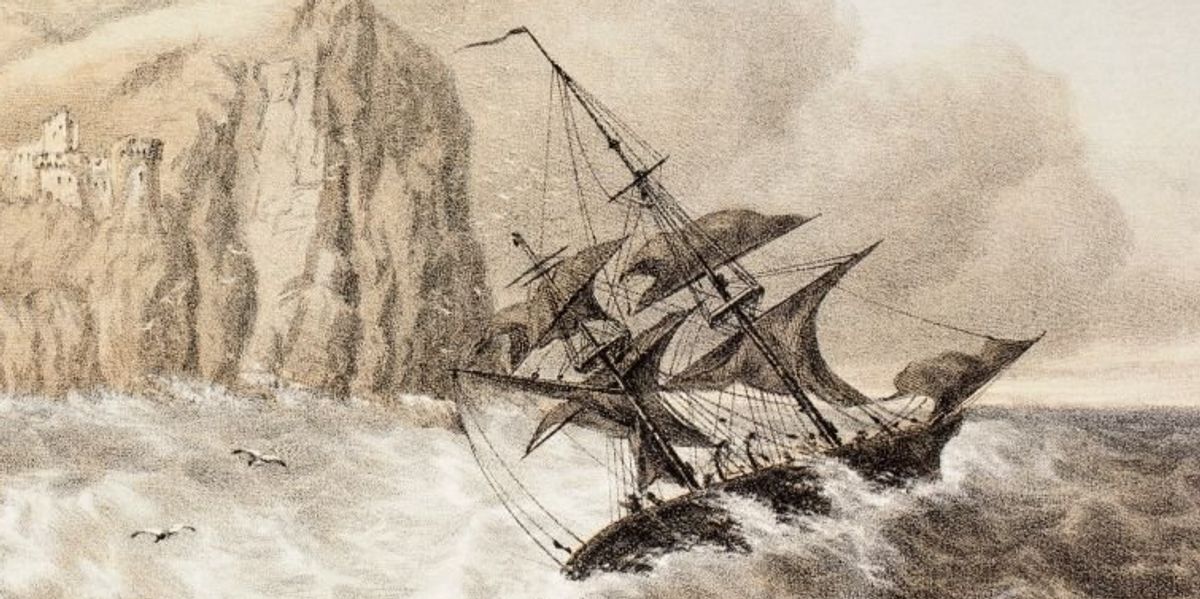
The vessel capsized in violent, unexpected seas while crossing from Burntisland to Leith in July 1633, as the newly crowned monarch made his way through Scotland.
Charles I was travelling separately aboard his own ship, the Dreadnought, and watched helplessly as the Blessing went down.
Of the 35 passengers and crew on board, just two survived the disaster.
The royal cargo lost to the depths was valued at approximately £100,000 at the time, a sum the Bank of England's inflation calculator puts at around £20million today, with haul included jewellery, clothing, coins and plates.
Ironically, the true cause of the sinking was most likely the sheer weight of treasure overloading the 60ft craft.
The breakthrough came through the deployment of subsea ground-penetrating radar and advanced scanning techniques that were previously unavailable to the search team.
A sonar survey of the seabed revealed a black crescent-shaped formation believed to be the wreckage of the Blessing, buried beneath layers of estuarial silt, as searchers physically explored the site and managed to extract a timber sample from the location.
Core samples taken from the area "strongly point to the wreck being that of the Blessing," according to Burntisland Heritage.
Despite the encouraging signs, the project's leader has urged restraint.
Director of the Charles Wrex Project and convenor of Burntisland Heritage Ian Archibald told The Telegraph: "We may have found the site of a historic wreck but we have not yet identified it.
"Further, detailed work will have to take place to determine what, if anything, lies there."
Mr Archibald stressed that the retrieved timber has not yet undergone carbon dating, and its origin remains uncertain, adding: "We do not know at this stage what ship that has come from, even, indeed, if it has come from a ship."
Among the treasures believed to be resting on the seabed is a 280-piece gold and silver dinner service originally commissioned by Henry VIII, which reportedly included kitchen utensils such as soup ladles.
The find has been formally reported to the UK Government's Receiver of Wreck team, which will examine questions of ownership alongside archaeologists and museum professionals.
Officially, the wreck belongs to the Crown, though Burntisland Heritage would be recognised as "salvor in possession".
Representatives from the heritage group, the Burntisland Harbour Access Trust, Fife Council, Crown Estate Scotland and the Scottish Government have already met to discuss the potential creation of a visitor centre and museum in the town to display any recovered artefacts.