Thank you for subscribing!
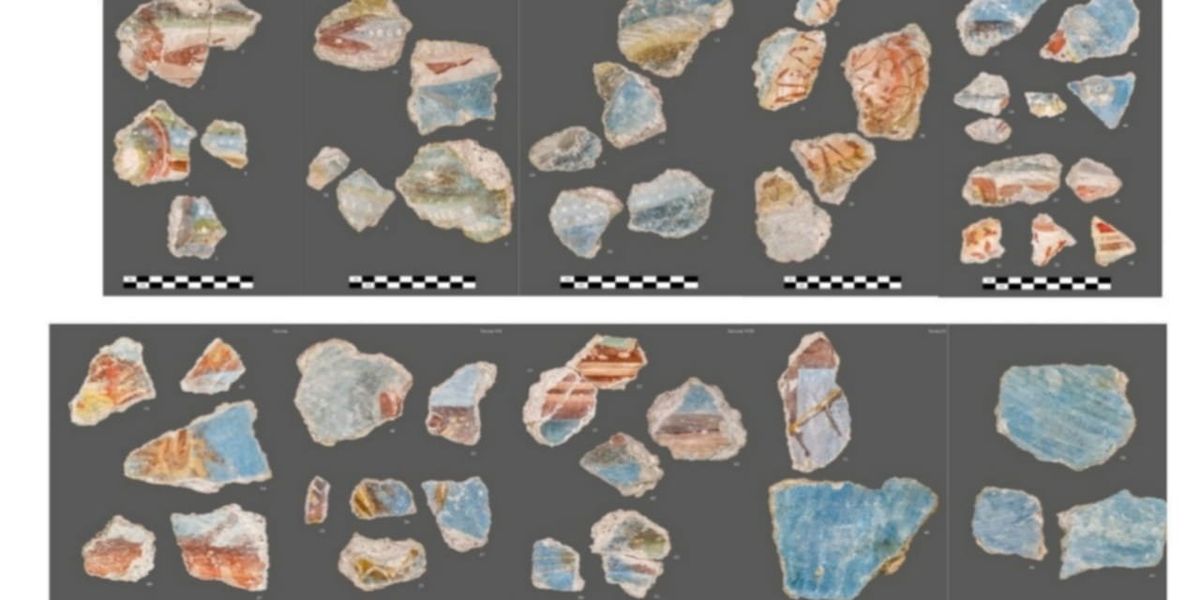
The painted surfaces feature mullets, scorpionfish, octopuses and lobsters among other marine creatures, all set against the distinctive blue ground
An Archaeological discovery of a rare Roman painting reveals an ancient artistic technique used by craftsmen of the time.
Expensive Egyptian blue pigment was blended directly into their lime mortar, rather than simply painting it onto the surface, according to a new study of wall-painting fragments.
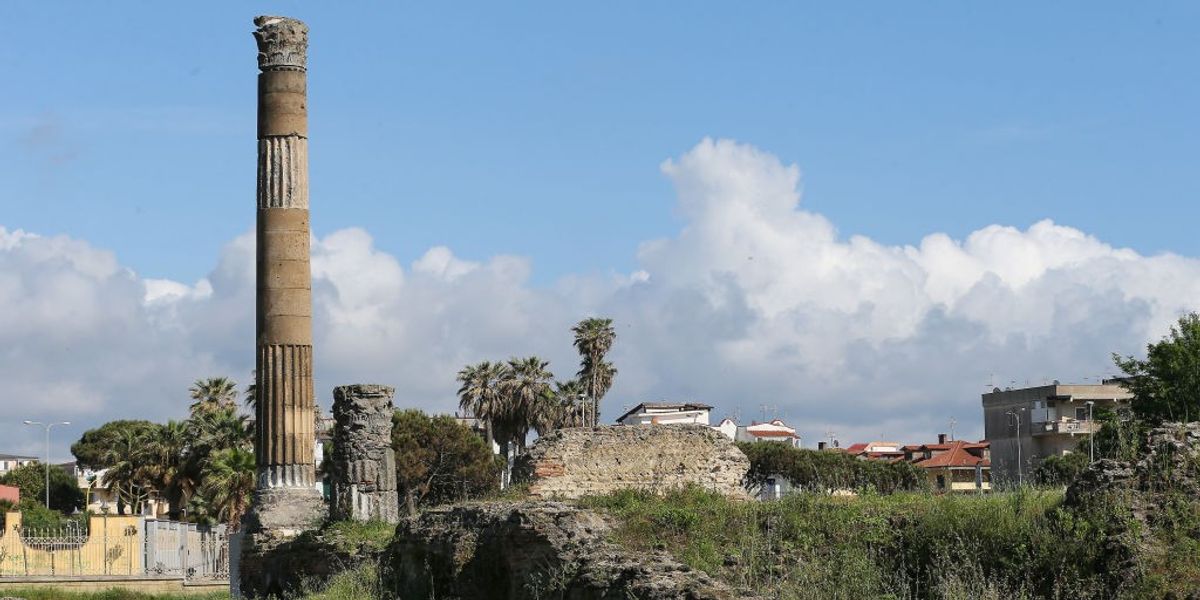
Researchers made the discovery at the villa of Torre di Pordenone in the Friuli-Venezia Giulia region in Northern Italy, where workers created a marine scene depicting fish, octopuses, lobsters and other sea creatures against a vivid blue backdrop.
They believe the decoration formed part of a painted fishpond, with the blue-tinted mortar serving as a uniform base layer for the aquatic imagery. The fragments date to the late first or early second century CE.
Archaeologists recovered the fragments from secondary deposits within Sector 2 of the villa site.
Comparable fishpond scenes have been documented at Roman sites in Brescia, Pompeii and Rome, and the team used these parallels to arrive at its dating estimate.
To investigate the mortar and the blue material embedded within it, the researchers analysed ten fragments using a battery of techniques.
These included optical and scanning electron microscopy, X-ray diffraction, Raman spectroscopy and micro-X-ray fluorescence, methods that together allowed them to map the pigment's distribution through the plaster layers.
The analyses identified cuprorivaite, the principal crystalline component of Egyptian blue, not only on the painted surface but also deep within the underlying mortar layer.
Certain pigment grains were detected more than one millimetre beneath the surface, with Raman spectroscopy confirming their presence at depths of roughly two millimetres.
Micro-X-ray fluorescence mapping revealed copper-rich clusters reaching approximately three millimetres into the plaster.
Such depths cannot be explained by pigment seeping in from a wet fresco surface, which would allow only shallow penetration.
The evidence instead indicates that workers stirred the blue pigment into the lime and aggregate mixture before trowelling it on, producing what specialists term pigmented mortar.
This approach yielded a consistently blue foundation for the marine decoration and simplified the workflow by removing the need to closely synchronise plasterers and painters.
Incorporating Egyptian blue into mortar was notably costly, as the pigment was far more expensive than the earth-based alternatives typically used for such purposes.
Red ochre, for instance, was the more common addition to pigmented plasters across the Roman world.
The study estimates the blue pigment made up around five per cent of the mortar mixture, meaning a large decorative surface would have required a considerable quantity.
Notably, the craftsmen paired this premium material with locally sourced fossil-rich limestone rather than the fine sparry calcite associated with superior Roman plasterwork, which made up around five per cent of the mortar mixture, meaning a large decorative surface would have required
The researchers argue the volume of pigment used points to reliable supply networks for Egyptian blue in Roman markets.
They describe the Torre di Pordenone find as an exceptionally rare documented instance of this technique and urge further investigation of other blue-ground Roman decorations, including Nilotic scenes and garden paintings, to determine whether the practice extended beyond this single villa.