Thank you for subscribing!
The mission will aim to discover more than the Hubble Telescope
Nasa's Nancy Grace Roman Space Telescope is due to launch on Sunday, marking one of the American space agency's most ambitious astronomical endeavours this century.
The observatory has an unlikely origin story, its 2.4-metre mirror system was originally developed from surplus US military reconnaissance hardware, repurposed for peering into space rather than down at Earth.
Once operational, the telescope will scan areas roughly 100 times broader than the Hubble telescope can manage, all while delivering comparable image sharpness.
Its mission goals are sweeping in scope, charting hundreds of millions of galaxies, investigating the mysterious forces of dark matter and dark energy, and hunting for thousands of previously unknown exoplanets.
Among those distant worlds, scientists hope to find some resembling our own, potentially bringing humanity closer to answering whether Earth-like planets are commonplace or vanishingly rare across the galaxy.
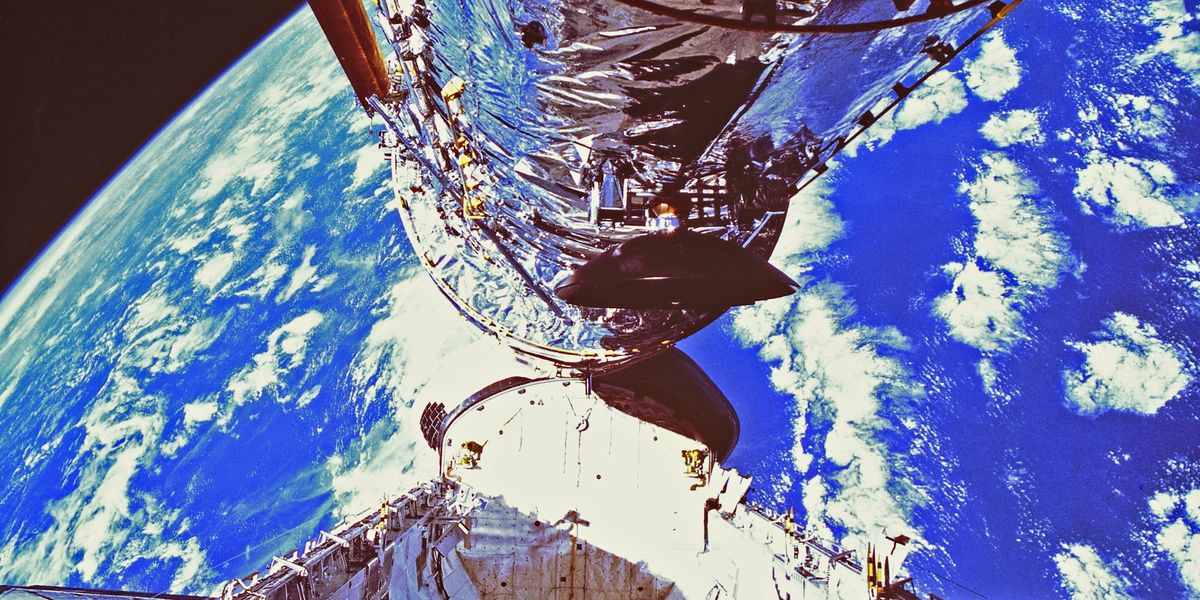
The telescope honours Dr Nancy Grace Roman, born in 1925, who became the first person to lead Nasa's astronomy programmes and played a pivotal role in bringing the Hubble Space Telescope into existence.
As a schoolgirl, she resolved to pursue a career in astronomy despite widespread prejudice against women in the field, and she joined the fledgling space agency in 1959.
"During her nearly two decades at Nasa, she sought political and financial support for the Hubble Space Telescope: she brought together scientists, engineers and politicians, shaped the telescope's scientific aims, and contributed to key technological decisions.
"Her colleagues even nicknamed her 'Mother of Hubble'," says Associate Professor Edita Stonkutė, an astrophysicist at Vilnius University.
That one of Nasa's boldest 21st-century observatories now carries Dr Roman's name is, as Prof Stonkutė notes, fitting — its ambition mirrors her own lifelong drive to fundamentally deepen our understanding of the universe.
The telescope's backstory is remarkable. After the attacks of 11 September 2001, the US National Reconnaissance Office commissioned powerful space-based telescopes for surveillance purposes, but part of that programme was later scrapped, leaving surplus 2.4-metre optics without a mission.
In 2012, one of these systems was transferred to Nasa, which seized the chance to build a world-class observatory from hardware never intended for stargazing.
"In a sense, this is a telescope that was never meant to exist. Designed for military purposes on Earth, it will now be used to explore the most distant galaxies and the greatest mysteries of the Universe," Professor Stonkutė explained.
Weighing approximately 10.5 tonnes, the telescope will be stationed at the Sun–Earth second Lagrange point, some 1.5 million kilometres away, the same orbital perch occupied by the James Webb Space Telescope.
Its primary mirror matches the Hubble's diameter, yet its wide-field camera covers a vastly greater area of sky.
Where Webb functions as a deep-focus instrument for studying the earliest epochs of the cosmos in fine detail, Roman is designed as a panoramic surveyor, rapidly scanning broad stretches of space to chart how the Universe has evolved over billions of years.
The observatory's scientific programme rests on three pillars. First, it will tackle dark energy — the enigmatic force believed to be accelerating the universe's expansion — by studying billions of galaxies and thousands of supernovae to reconstruct the history of that expansion with unprecedented precision.
Second, by analysing how light from distant galaxies is distorted, researchers will chart the invisible influence of dark matter, producing some of the most detailed distribution maps ever assembled.
The third objective is the discovery of exoplanets through gravitational microlensing, a technique in which a foreground star's gravity briefly magnifies the light of a more distant one.
Any orbiting planet produces an additional, fleeting brightness shift, revealing its presence and allowing estimates of its mass and orbit.
This approach is especially powerful for detecting small, Earth-like worlds far from their host stars , planets that other methods struggle to find.
With more than 6,350 exoplanets already catalogued, Roman is expected to uncover thousands more.
Because the mission will generate one of the largest publicly accessible astronomical archives ever created, its impact will extend well beyond Nasa and the major research institutions.
Scientists worldwide, including smaller teams in countries such as Lithuania, will be able to work with the same datasets as colleagues at the European Space Agency or leading universities.
The sheer volume of observations will also open fresh avenues for artificial intelligence and machine learning in astronomical analysis, where the capacity to process and interpret big data is increasingly as important as telescope access itself.
Discoveries flagged by Roman could then trigger follow-up campaigns using ground-based observatories, allowing researchers to refine their understanding of the most intriguing or unexpected objects.
As Professor Stonkutė puts it: "Such a partnership between space-based and ground-based observatories is one of the most important drivers of advanced astronomical research today."