Thank you for subscribing!
The eclipse will be safe to look at with naked eyes, unlike the recent solar eclipse
A blood moon is set to light up UK skies later this week, and scientists have revealed the best place to view it.
Later this week, approximately 3.3 billion people across North and South America, along with portions of Europe and Africa, will have the chance to witness a spectacular partial lunar eclipse on the night of 27-28 August.
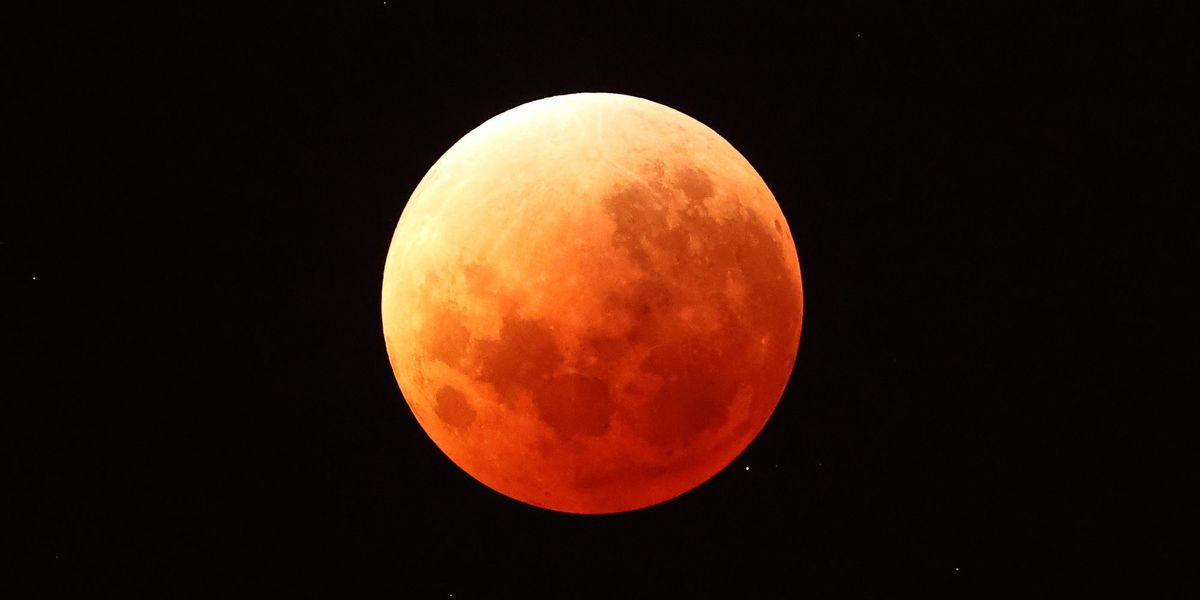
The Earth's shadow is set to engulf 96 per cent of the moon's surface during the event, which takes place as the Earth moves directly between the sun and the full moon.
At the moment of greatest eclipse, only a slender crescent of the lunar disc will remain in direct sunlight.
The remainder could take on a striking crimson hue, caused by sunlight being filtered and bent through Earth's atmosphere before reaching the moon's surface.
The phenomenon will be visible simultaneously for all observers, though local timings will differ depending on geography.
For those on America's West Coast, in cities such as Los Angeles and Portland, the eclipse will reach its peak just a few hours after the sun goes down.
Observers in East Coast locations like New York and Jacksonville can expect the spectacle to climax around midnight local time.
British skywatchers will need to set their alarms, as the eclipse will unfold in the early hours of the morning, shortly before dawn, with the moon hanging low on the western horizon.
The same applies across much of Europe and Africa, where the event will also take place in the pre-sunrise hours.
Precise timings and the moon's altitude during each key phase of the eclipse for specific locations can be found on TimeandDate.com.
Unlike a solar eclipse, no safety glasses or specialist equipment are required to enjoy the spectacle, the partially eclipsed moon is perfectly safe to observe with the naked eye.
That said, a pair of binoculars or a telescope will significantly enhance the experience, offering a magnified view of Earth's curved shadow as it gradually advances across the moon's cratered terrain.
Not everyone will be so fortunate, however. For those in countries on the dayside of the planet when the eclipse occurs, including Australia, India, China and Japan, the moon will sit below the horizon, rendering the event entirely invisible.
Only those on the night side of Earth during the eclipse will be able to take in the full display.
The lunar eclipse arrives just weeks after Britain experienced a once-in-a-generation solar event.
On August 12, the moon obscured more than 90 per cent of the sun across large swathes of the British Isles, drawing crowds to parks, beaches and rooftops nationwide.
It was the most significant solar eclipse to grace UK skies in 27 years, and the deepest partial eclipse visible from Britain since the famous total eclipse of August 1999, when totality swept across Cornwall.
As darkness gave way to sunset that evening, onlookers erupted in cheers. One observer summed up the mood: "Just awe inspiring. Words fail me."
Those hoping to witness a comparable solar eclipse on British soil will face a lengthy wait — the next such event is not expected until September 3 2081, when up to 99 per cent of the sun could be obscured.