Thank you for subscribing!
The findings may prove one of Albert Einstein's predictions correct
A star hurtling around the supermassive black hole at the centre of our galaxy at roughly 56 million mph has been identified as the fastest ever observed in the Milky Way.
Designated S301, the dim star — estimated at around one and a half times the mass of the Sun — is trapped in an extraordinarily tight orbit around Sagittarius A*, completing a full loop every 8.7 years.
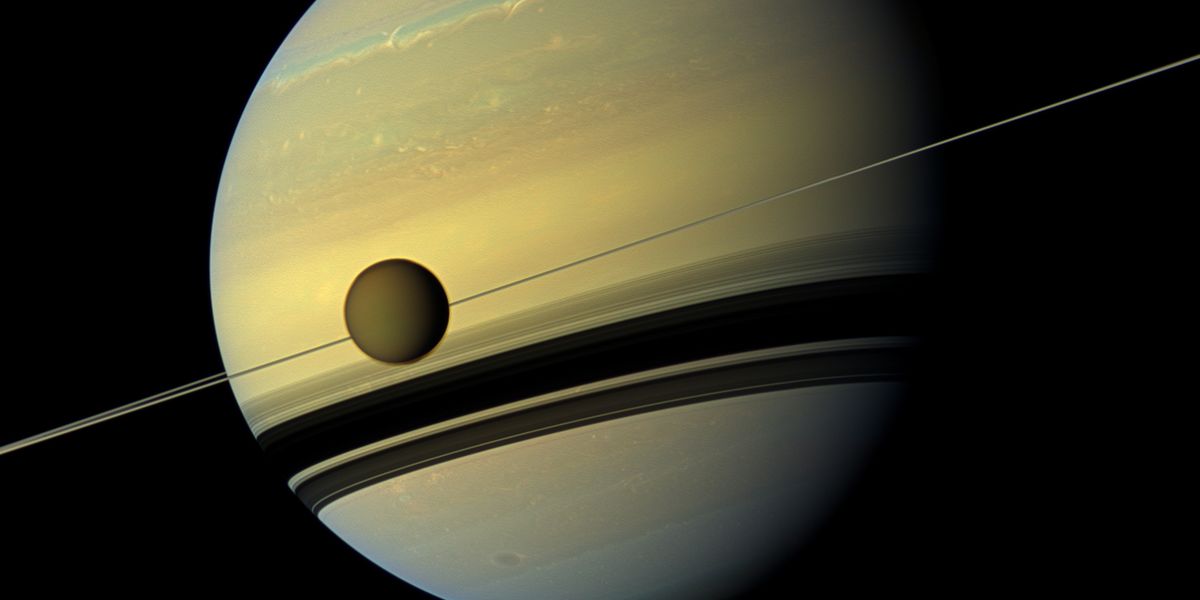
At its nearest point, it passes closer to the black hole than any previously known star, approaching within roughly the same distance that separates Saturn from the Sun.
That peak velocity amounts to more than 8 per cent of the speed of light, or approximately 100,000 times the cruising speed of a commercial airliner.
Because it ventures so deep into Sagittarius A*'s gravitational field, S301 offers scientists an unprecedented opportunity to detect a phenomenon predicted by Einstein's general relativity known as frame dragging, or Lense-Thirring precession, in which a spinning black hole warps the surrounding fabric of spacetime.
That warping should produce subtle but measurable shifts in the star's orbital path, allowing researchers to determine both the rate and direction of the black hole's rotation for the first time.
"With this star we hope to measure, within the next ten years, the spin of the black hole," said Felix Mang, a PhD student at the Max Planck Institute for Extraterrestrial Physics and co-author of the study, published in Nature.
Fellow co-author Stefan Gillessen, also based at the institute, said: "For the first time, we would actually be able to measure very directly the spin of a massive black hole, which would be a key test of Einstein's theory."
S301's orbit is far from circular — instead, it follows a dramatically elongated path that plunges the star deep into the black hole's gravitational clutches before swinging it back out again.
"What is special about this star is that it's orbiting Sagittarius A* on a very tight orbit, taking just 8.7 years to complete it, and is approaching the black hole at a mere 12 times the distance of Earth to the Sun.
The discovery was made with the European Southern Observatory's Very Large Telescope Interferometer in Chile, an instrument that merges observations from four eight-metre telescopes to produce exceptionally detailed images of the galaxy's densely packed core.
Reinhard Genzel, the 2020 Nobel physics laureate who proved the existence of Sagittarius A*, said: "S301 opens a new window to the fundamental properties of spacetime in this extreme black-hole environment."
The research team believes S301 was originally part of a binary star system that wandered too near Sagittarius A*, where the black hole's immense gravity tore the pair apart, capturing one star while flinging the other away at tremendous speed.
Scientists first spotted S301 in data gathered in 2023, subsequently tracing its presence back through archival observations as far as 2017.
Its next closest approach to the black hole is anticipated in 2031, an event that will give astronomers a crucial chance to observe the orbital distortions caused by frame dragging.
Those measurements could, within the coming decade, deliver the first direct reading of how fast the Milky Way's central black hole is spinning — a landmark result for fundamental physics.