Thank you for subscribing!
The impact was not as visible as astronomers were anticipating
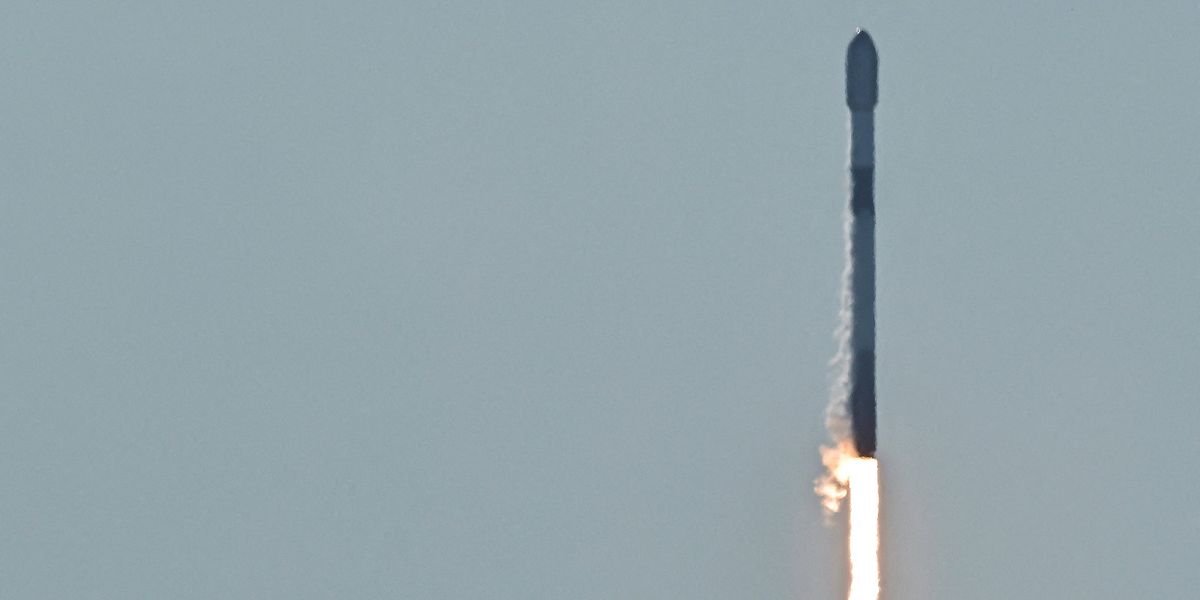
A rogue SpaceX Falcon 9 rocket upper stage is believed to have crashed into the moon, striking with a force equivalent to three tonnes of dynamite.
The 4,000-kilogram piece of spacecraft carved out a fresh crater and sent a vast cloud of dust billowing above the Moon.
Researchers had forecast the impact would occur at approximately 7.35am UK time.
Despite predictions that a faint flash might be visible, amateur astrophotographers monitoring the event through telescopes reported no observable signs of the collision from Earth.
The incident was unintentional with SpaceX never planning for the spent rocket stage to hit the Moon. Nasa officials have emphasised that the crash posed absolutely no threat to Earth.
The upper stage in question formed part of a Falcon 9 mission that lifted off in January 2025, ferrying a lunar lander towards the Moon's surface.
Ordinarily, these spent stages re-enter Earth's atmosphere, where they either disintegrate or plunge into the ocean.
However, delivering the lander to the Moon demanded greater thrust than typical near-Earth missions, leaving the upper stage stranded in space with no fuel remaining to alter its trajectory.
Astronomers discovered earlier this year that the abandoned hardware was drifting on a collision course with the Moon, powerless to correct itself.
Julianna Scheiman, SpaceX's director of Nasa science and Dragon programmes, explained to reporters: "What has happened is essentially a mixture of solar activity and gravity forces have put it on a path toward the moon."
Ground-based telescopes across America were trained on the Moon searching for evidence of the explosion, though resulting images could take days to emerge. Spacecraft currently in lunar orbit are also expected to relay photographs of the impact site as they pass overhead in the coming days.
The collision has generated considerable enthusiasm within the scientific community.
Dr Matt Bothwell, public astronomer at the University of Cambridge, said: "It's something really huge smashing into the Moon. It's not remotely dangerous; we can just watch the show."
He predicted the impact would generate a massive dust plume, potentially reaching 50 kilometres high, gradually spreading outward. Because the Moon lacks an atmosphere, the explosion would be "more impressive than any [similar] explosion on Earth," he added.
Yet experts cautioned that the incident serves as a stark reminder of humanity's mounting space debris problem. Bill Gray, who created widely used astronomy software and published a report on the stage's trajectory in April, said: "It doesn't present any danger to anyone, though it does highlight a certain carelessness about how leftover space hardware (space junk) is disposed of."
Dr Bothwell warned that the situation could deteriorate rapidly. "I think more people should be more worried about space debris," he said. "Every single year we put more stuff in orbit. Sometimes the satellites just collide, and they shatter into more pieces. I think there's a worry about a runaway cascade, if we put so much stuff in orbit."
According to the European Space Agency, more than 54,000 objects larger than 10 centimetres are currently floating in space. Since the dawn of the Space Age in 1957, human activity has generated some 17,000 tonnes of orbital debris.
Such collisions between space junk and the Moon remain uncommon events. The most recent prior incident occurred in March 2022, when the upper stage of a Chinese Long March 3C rocket, originally used for the Chang'e 5T1 lunar test mission in 2014, struck the far side of the Moon.
NASA has, on occasion, deliberately aimed hardware at the lunar surface. In 2009, the agency intentionally crashed a rocket stage into the Moon to examine the plume of material thrown up by the impact. Even earlier, NASA fired objects directly at the Moon to gather data in preparation for the Apollo programme.
Natural objects regularly make contact with the lunar surface, but such impacts are far harder to anticipate, making them considerably more difficult to observe in detail.