Google is working on a new way to verify your age in its app store.
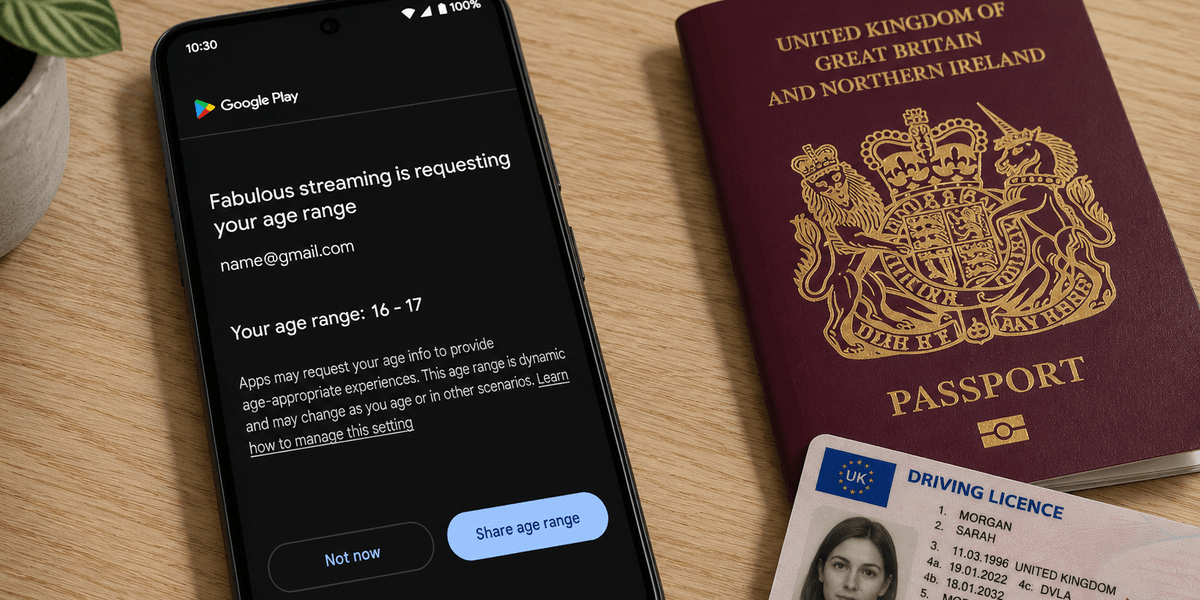
The US tech firm has announced it's introducing Play Age Signals for Android developers to enable apps in the Google Play Store to determine whether smartphone owners are children, teenagers, or adults without requesting any personal information.
It's meant to run on Google's Family Link app, which is the parental controls dashboard that many parents already use to manage their children's devices. Parents can pop in an age range for their child's account — for example, 16 to 17 — rather than giving away an exact date of birth. There's no need to upload an ID or selfie.
Once a parent sets this up, any app developer who's built the API into their product can pick up that age signal and tailor their content accordingly. This means they can avoid seeing content deemed inappropriate for that age range. The clever bit is that parents don't need to fiddle with settings for each app — it's all managed from one central place.
This approach is less direct than the UK's Online Safety Act, which came into effect last summer. Regulated by Ofcom, it requires companies like social media platforms, search engines, and websites to remove illegal material more quickly, reduce exposure to harmful content, and introduce stronger safeguards such as age verification systems. Google already has separate measures in place to comply with this.
The rollout kicks off in Australia and Canada by mid-August, with worldwide rollout expected at the end of the year, Vice President of Product Management at Google Play Paul Feng confirmed. He wrote in a blog post: "Providing a safe online experience and protecting users from harm is a top priority at Google Play.
"We take this responsibility seriously and have been investing continuously to offer baseline protections on our platform while also empowering parents with the tools they need to make decisions for their families. Importantly, we also want to empower Play developers with the capabilities to deliver age-appropriate experiences based on their app's content."
This is similar to what Apple did at the start of this year, when it launched its own age-verification tools baked into the App Store worldwide.
It's worth noting that Google's new feature isn't automatic.
Parents have to choose to opt-in, and it's possible to toggle off or adjust the age range at any time. While many countries, like the UK and Australia, are strictly enforcing age verification, the decision to introduce verification tools to the Play Store may have been triggered by similar actions closer to home. Several US states, including Texas, Louisiana, and Utah, have passed laws putting the responsibility for age checks squarely on app stores.
As it stands, there is no federal law requiring developers have to use the age verification check. But certain US state laws, such as the one in Texas, do require app developers to use age-gating features in app stores.
This isn't the only age verification measure Google has recently put in place. You'll soon be able to add an all-digital version of your ID to your Google Wallet.
The feature is coming to the UK and select European Union countries in the coming months, part of a global push towards digital IDs from the biggest technology firms. Google has confirmed the update will introduce a new way to verify your age with your smartphone — something that's sure to please Facebook parent company, Meta.
Google Wallet is already capable of storing digital versions of your credit and debit cards, UK Railcard, cinema and concert tickets, supermarket and coffee shop loyalty cards, and Covid-19 vaccination record, to name just a few.