Thank you for subscribing!
Samsung's new Galaxy Z Fold 8 has been a hit — so much so that the company can't seem to make enough of them. An estimated 4.7 - 5.2 million preorders have been taken globally for the Fold 8 series, breaking a company record after its debut in London earlier this summer.
The new foldable is so popular that Samsung is even rethinking its next Android release.
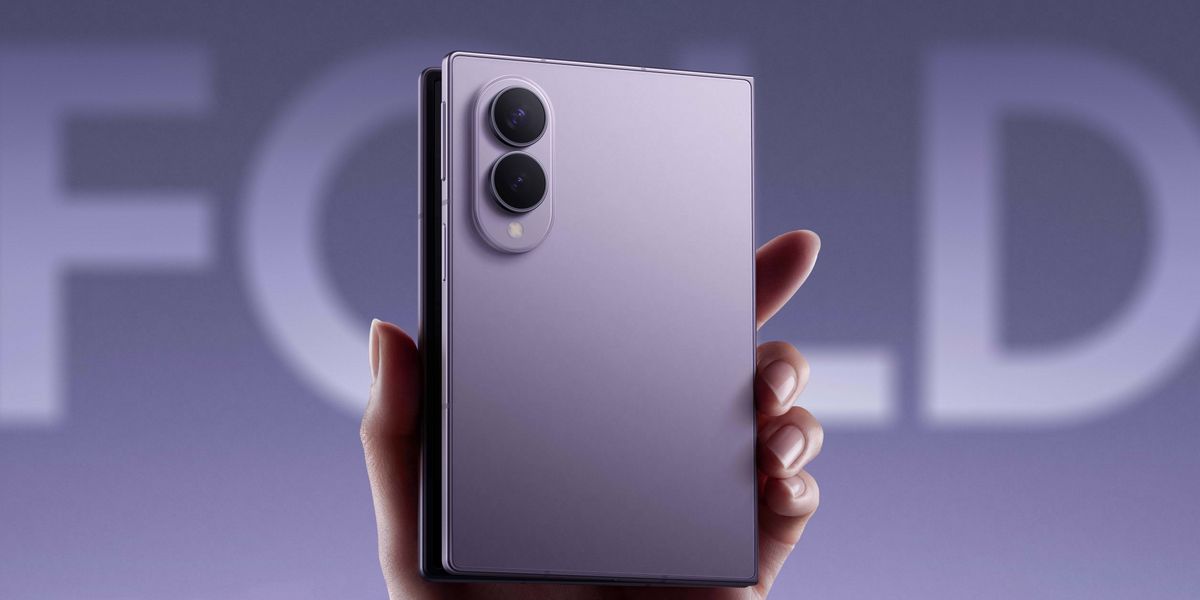
And that's not the only headache the success of the Galaxy Z Fold 8 has caused for Samsung executives. This new handset features a redesigned, wider passport-style screen, meant to rest in your hand more comfortably. It was also built for content consumption — whether that's binging a boxset on Netflix, streaming YouTube or Twitch, watching a must-see match, or enjoying a blockbuster movie on a flight.
Since its release, shipping delays cropped up, and the company even moved to produce an extra one million units to try to keep up. And now Samsung has run into a shortage of a crucial component called the Display Driver IC, or DDI for short. It's a specialised component that tells each pixel on the phone's OLED screen what to do.
Without it, you won't be able to see anything on the display.
To tackle the shortage, Samsung has started diverting DDI stock that was earmarked for future devices and funnelling it towards the Fold 8 instead, according to ZDNet Korea. Given it's taking from future allocations, this could cause future delays with other planned releases like next year's Galaxy S27 series.
Samsung's own System LSI division handles the design of this particular chip for the Fold 8, but it doesn't actually make it. That job falls to United Microelectronics Corporation (UMC) over in Taiwan.
UMC builds these chips using a specialised manufacturing process, and that production line is already running at full tilt. On top of that, ZDNet Korea said Samsung has asked UMC to put the Fold 8's DDI chips through what's known as a "Super Hot Run." This is similar to an express lane — it's UMC's highest-priority manufacturing process, designed to fast-track orders when time is of the essence.
The Fold 8's success appears to come from its smaller design. Users seem to be loving the new, smaller form factor Samsung has gone with this time around.
A user wrote on Reddit: "I'm loving my Z Fold 8. The form factor really is nice to use and the inner screen is great for pretty much anything. Since phone pictures are usually 4:3, they completely fill the screen while viewing and it's nice to just have the largest canvas possible."
Another mobile owner said: "As someone who went to view it in person, I can say it's a really nice form factor. Holding it is great. Bigger than the flip, smaller than the ultra, and small enough to fit into the pocket nicely. It's really tempting me..."
Comment
by u/SlaveKnightSoman from discussion
in Android
Foldables are becoming increasingly popular. As well as three new Galaxy devices from Samsung, Google recently refreshed its own folding Pixel smartphone, and rumours continue to swirl that Apple will use its September event to introduce its own version of the form factor.
Whispers suggest Apple's version will be 5.5 inches when it's closed, and 7.8 inches when it's open, making it just a bit smaller than the 8.3-inch iPad mini. It's worth noting that if true, this would make it only slightly smaller than Samsung's 7.6-inch version.
Apple's new foldable might also be only 4.55 mm thin. This would be even thinner than the iPhone Air, which would make it the smallest Apple phone in width to date.
However, the iPhone Air wasn't as successful as Apple expected — causing the California tech firm to slow down production shortly after its released. And rumours suggest that the starting price for Apple's foldable will start at over £2,000, going £300 above Samsung's starting price.