Thank you for subscribing!
The ground-breaking treatment has the python back to full health
A Python believed to be the largest patient treated with a pioneering cancer therapy has fully recovered after keepers at Chester Zoo feared they might lose her.
Named after the actress Jodie Foster, the 50kg reticulated python turned 23 this year.
Staff first noticed something was wrong when she started eating less and lying still in her enclosure for long stretches.
Vets eventually discovered a fibrosarcoma, a malignant tumour, in her jaw, which they removed with surgery.
It returned, however, destroying part of her jawbone and threatening her ability to feed.
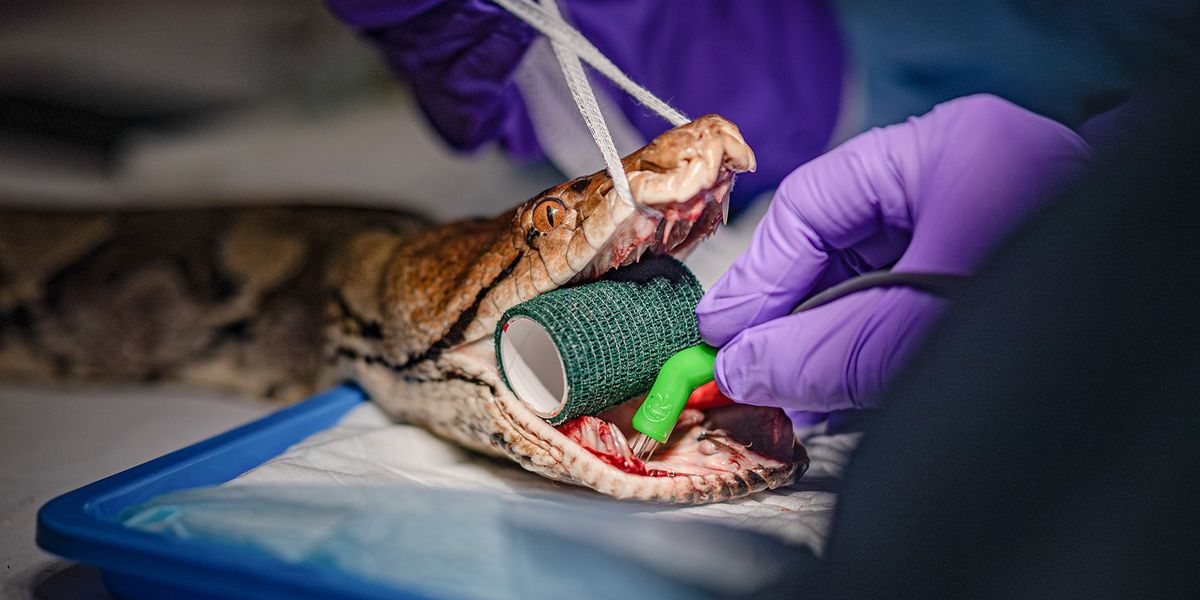
The zoo’s veterinary team turned to electrochemotherapy, a technique typically used in human oncology that pairs the drug bleomycin with targeted electrical pulses that temporarily open cancer cells so the drug can work more effectively.
The zoo’s veterinary officer, Ian Ashpole, said the team feared they were “facing the possibility of losing her” before deciding to adapt the treatment for a snake, something he believes had never been attempted before.
Jodie's size posed the first challenge. No operating table was large enough to hold her, so staff had to push two together to make a surface roughly the size of a double bed.
They anaesthetised her before transporting her to the vet centre for the 90-minute procedure, which combined surgical removal of the tumour and diseased bone.
Months on, keepers say she’s returned to her usual eating habits and - in their own words - is “back to her usual bright and feisty self”.
Jose Alvarez Picornell, from the University of Liverpool’s department of small animal clinical science, worked alongside the zoo on the case and said the collaboration will help the wider veterinary field, with the team planning to publish the procedure so other vets can build on it.
Dr Ashpole noted: “A few months ago, we genuinely didn't know whether she'd survive. Now she's eating normally, exploring her habitat and behaving exactly as we'd hope.
“It also shows how much veterinary medicine is advancing. By bringing together zoo vets and cancer specialists, we've been able to use a treatment developed for people to save an animal in a way that's never been done before.
“One day we're treating a tiny frog that weighs just a few grams, the next we're carrying a 15-foot python into theatre. That's what makes this job so interesting and fun.”