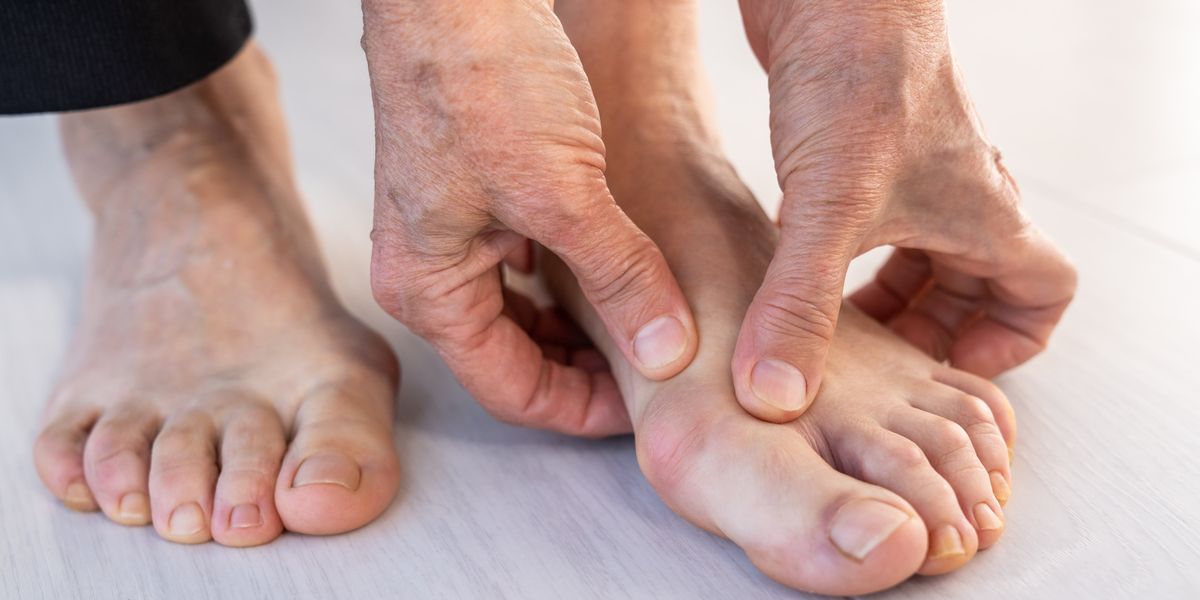
Foot problems are among the more serious complications associated with diabetes
One of the earliest warning signs of diabetes-related foot damage may not be a symptom, but how your shoes fit, scientists have warned.
Attention in diabetes healthcare often turns to symptoms like sores or pain, but new findings suggest one of the most telling signs to watch for isn’t something that happens to the foot, but around it.
For the study, funded by Diabetes UK, people living with diabetes were asked to walk in shoes with different amounts of space between their longest toe and the end of the shoe, ranging from half a centimetre up to two centimetres, while measuring pressure across different parts of the foot.
Counterintuitively, larger gaps were linked to high pressure under the big toe, in some cases reaching levels previously associated with a heightened risk of diabetes-related foot ulcers.
In other words, the pressure caused by wearing shoes with too much toe space may be high enough in some cases to cause ulcers.
The risk is compounded by the fact that elevated pressure on the same point of the foot, repeated with every step, is a known contributor to diabetic foot wounds - and as noted above, many people with the condition can't feel it happening due to nerve damage.
In fact, most people living with diabetes already have some degree of nerve damage or neuropathy.
Podiatric Foot and Ankle Surgeon, Dr David Gitlin, told GB News: "Neuropathy is a condition that damages the nerves in the limb and can lead to loss of sensation in a person’s feet and legs.
"Diabetes in today’s day and age is the leading cause of peripheral neuropathy."
Wounds like ulcers, for diabetes patients, can be slower to heal and more prone to complications than they would be for someone without the condition.
The findings arrive as separate data show type 2 diabetes diagnoses are rising sharply among younger adults in England, particularly women in their twenties and thirties, despite rates falling in older age groups.
Diagnosed earlier in life, these patients face many more years living with the condition, and with it, more years of cumulative pressure on the feet if footwear issues go unaddressed.
Dr Gitlin also cautioned that while a red, hot, swollen foot might look like a minor injury, it could be the first sign of Charcot foot, a serious diabetes-related condition that breaks down the foot.
"Charcot is called a neuroarthropathy - in other words, a nerve-related joint disease," he explained.
"A patient does not necessarily need to have diabetes to get Charcot; they need just the neuropathy that the diabetes can cause.
"A significant number of patients visit the offices of foot specialists who have a Charcot joint with no diagnosis of diabetes."