


A great many weight-loss strategies centre on eating less and moving more, but managing cravings and regulating appetite may be what really determines success.
Following a minimally processed diet, according to registered nutritionist Payton Brewer, is probably the key to reclaiming power over one's eating habits - and it doesn't require limiting calories.
Speaking to GB News, she said: "On what is driving the extra weight loss, my professional opinion is craving control and appetite regulation, more than how fast someone eats."
Miss Brewer also noted that appetite control is a clear indication that something physiological is going on, not just a difference in discipline.
Someone who eats ultra-processed food is more likely to fail at weight loss because it's deliberately designed to suppress the body's natural satiety signals.
This is down to a combination of fat, sugar and sodium creating what researchers term a "bliss point" – a formulation deliberately designed to suppress the body's natural satiety signals.
"If someone cannot put a bag of chips down, that is not a willpower problem," Miss Brewer explained. "That is the product doing exactly what it was formulated to do."
Ultimately, this engineering makes maintaining a calorie deficit considerably more difficult.
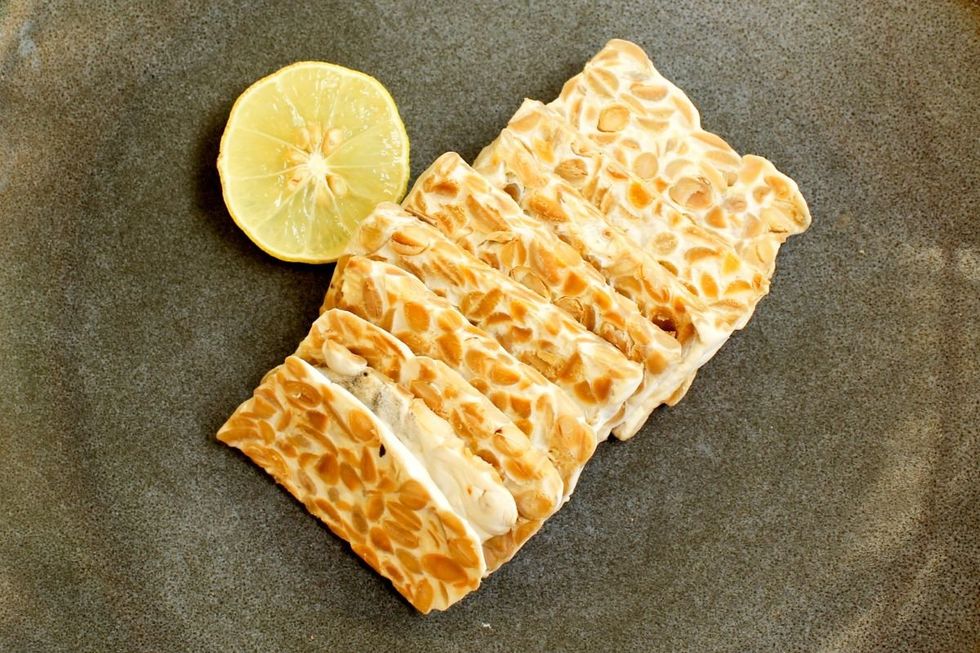
Protein-rich ingredients like tempeh support appetite control
|GETTY
Then on the flip side, there are whole foods, which contain enough natural protein and fibre to stabilise blood sugar and manage hunger.
But there is also a lesser-known physiological benefit to eating minimally processed ingredients, the nutritionist revealed.
"Protein and fibre trigger your body to release its own GLP-1, which is the same hormone that GLP-1 medications mimic," Miss Brewer explained.
The effect remains considerably smaller than pharmaceutical injections, but it is nonetheless genuine and explains why people on whole food diets master appetite control.
LATEST DEVELOPMENTS:
Protein-rich ingredients like tempeh support appetite control
|GETTY
For those hoping to embark on a journey towards healthier eating, Miss Brewer is unequivocal in her recommendation.
"If someone asked me where to start, I would say food quality first, before portion sizes or exercise," she said.
"Once the food itself stops working against you, portion control mostly takes care of itself.
"The foods I would tell someone to swap out first are not the obvious junk food. They are the ones that look healthy on the label.
"Flavoured yoghurts, granola, cereal bars and protein bars, sweetened plant milks, pre-made sauces and dressings, and processed meats."