Thank you for subscribing!
New forecasts suggest the energy price cap could go up again in January 2027
Prime Minister Andy Burnham has hinted that more help with energy bills could be on the way for households across the country.
His comments come at a moment when millions of families are bracing for a painful winter.
Speaking to reporters from a London supermarket, Mr Burnham acknowledged the impact of rising costs. "It's difficult for people and I recognise that," he said.
The Prime Minister pointed to his decision to scrap VAT on electricity bills, announced shortly after entering Downing Street, as an immediate measure. "That kicks in from October," he added.
Looking further ahead, Mr Burnham signalled the Government would explore additional measures.
"We'll continue to look as we go forward at how we get energy prices down in the long term, and that's what we need to do too," he said.
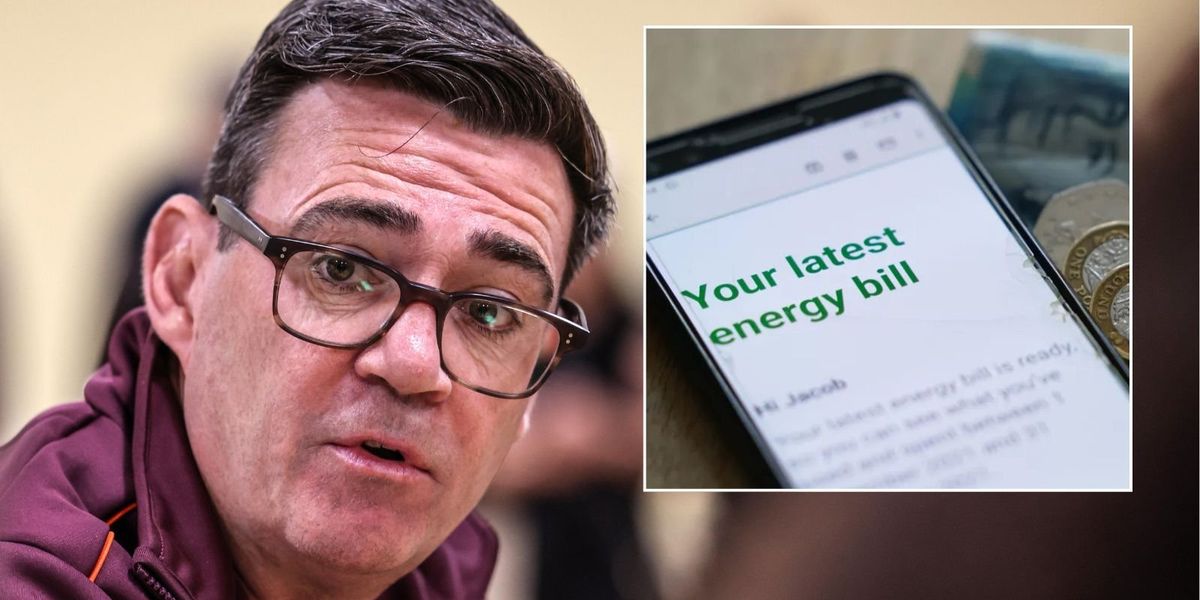
His remarks followed Ofgem's announcement on Wednesday that its energy price cap will climb by four per cent, reaching £1,723 for a typical household using both gas and electricity.
The rise, which takes effect in October and lasts for three months, pushes bills to their highest level in three years.
It has been driven primarily by elevated wholesale gas prices linked to the ongoing conflict in the Middle East, with volatile global markets continuing to be the main factor behind price movements.
Cornwall Insight released forecasts on Wednesday projecting a further nine per cent jump from January, which would take the average annual bill to £1,872, some £149 above the October level.
Neil Kenward, Ofgem's director-general for markets, said elevated international gas prices remain the key force pushing up household energy costs.
Mr Kenward welcomed the Government's move to strip VAT from electricity bills, noting that without it, customers would have been hit with even steeper charges this winter.
He also urged consumers to consider ways to reduce their outgoings. Fixed tariffs are currently available at more than £100 below the October price cap, he said, while smart meter users can access cheaper electricity rates during off-peak hours.
Mr Kenward added that switching payment methods could also make a difference. "Prepayment customers paying the lowest price cap rates" could save around £45 on average compared with those on direct debit, he said.
Consumer groups warned that the VAT cut has done little to cushion households against the broader surge in energy costs.
Dame Clare Moriarty, chief executive of Citizens Advice, said: "Today's price cap rise pushes energy prices to a three-year high.
"It's another sign of the relentless erosion of living standards across the country: energy bills are simply too high, prices leapfrog incomes and debt levels continue to grow."
Ms Moriarty called on ministers to fund a reformed energy support scheme targeting those most vulnerable, including single-parent families and disabled people.
Simon Francis, co-ordinator of the End Fuel Poverty Coalition, stressed that gas prices are the root cause. "Every unit of gas used will be significantly more expensive than last winter and more than 150 per cent higher than at the end of 2020," he said.
Mr Francis urged the Government to move "further and faster" in protecting struggling households.
The Opposition was quick to attack the Government's record. Shadow energy secretary Claire Coutinho said: "Labour promised to cut energy bills by £300, but they have gone up by nearly £400 instead."
Ms Coutinho argued her party's plan to scrap government taxes and levies on bills would bring down costs for households and businesses without costing taxpayers.
Ned Hammond, Energy UK's deputy director for customers, said the increase was particularly concerning heading into winter, when energy use naturally rises. Mr Hammond called on the Government to look at bringing bills down over the longer term.
He added that the impact of the Middle East conflict on gas prices underlined the need for Britain to rely more heavily on its own clean energy sources.