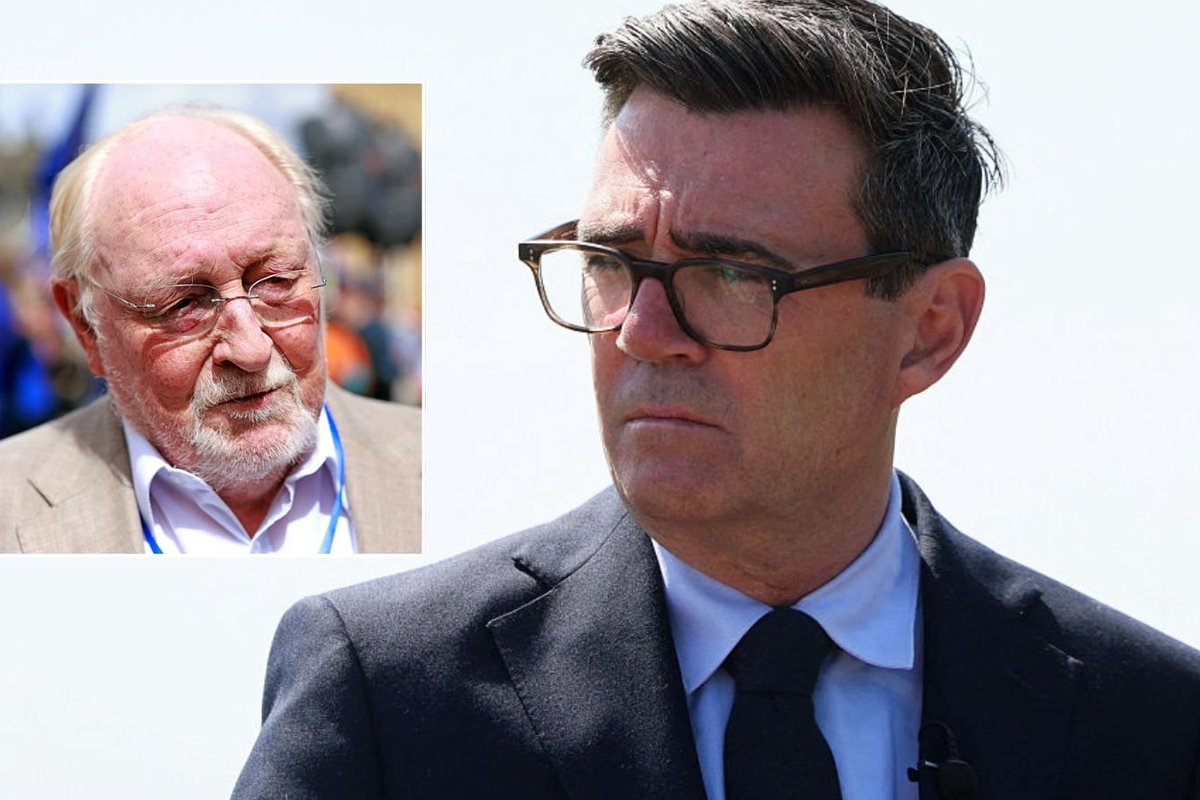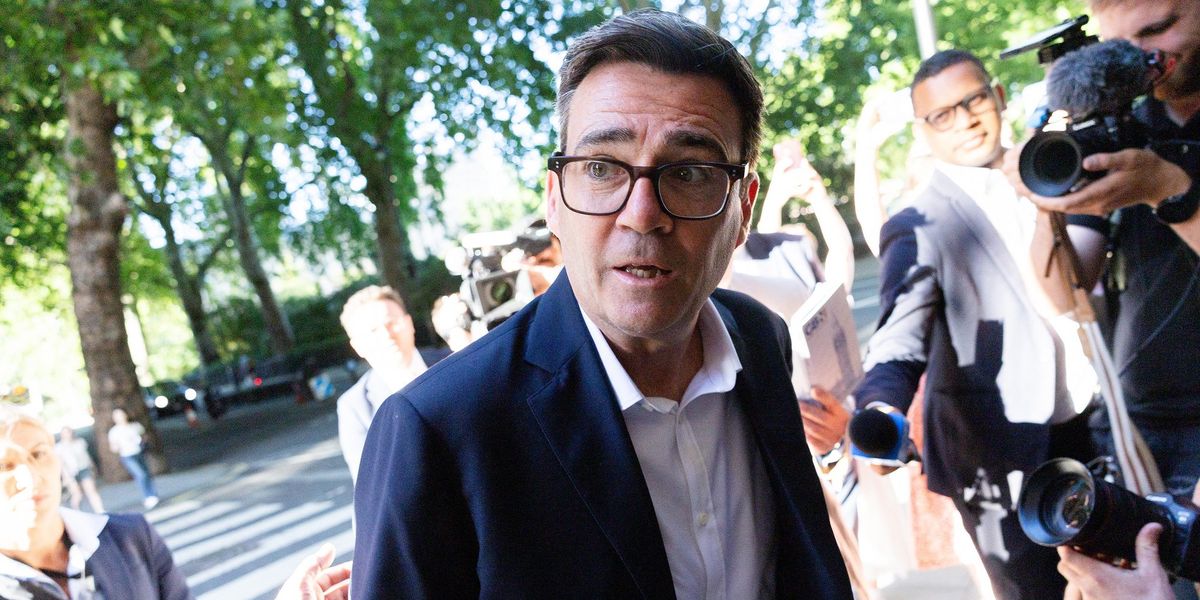
Lord Kinnock has urged Andy Burnham to align capital gains tax with income tax rates ahead of the October Budget
Lord Kinnock has urged Prime Minister Andy Burnham to align capital gains tax with income tax rates ahead of Labour's first Budget on October 28, arguing the move could raise an additional £12billion a year.
The former Labour leader, whom Mr Burnham described as one of his key mentors last month, said increasing capital gains tax (CGT) would provide a significant boost to the public finances.
Speaking to The i Paper, Lord Kinnock said: "I'm sure that the Government understands the utility and the encouragement which the further £12billion revenues that such a fair change in CGT would bring."
The intervention comes as Chancellor John Healey is widely expected to announce tax increases in the Budget, with Mr Burnham previously acknowledging Labour would likely have to ask the public "for a little more".
The Prime Minister has argued Britain took a "series of wrong-turns in the 1980s" when "political power was centralised and economic power was privatised."
Mr Burnham has also previously described Lord Kinnock as an important political influence while setting out his vision for what he called the most radically left-wing Government in four decades.
Capital gains tax is currently charged at 18 per cent for basic-rate taxpayers and 24 per cent for higher and additional-rate taxpayers.
By comparison, income tax is charged at 20 per cent, 40 per cent and 45 per cent, meaning Lord Kinnock's proposal would eliminate the gap between the two systems.
The proposal has already received backing from senior members of the Government.
First Secretary of State Louise Haigh and Defence Secretary Wes Streeting have both publicly supported aligning capital gains tax with income tax rates.
However, some analysts have warned the policy could reduce rather than increase tax revenues.
Research by investment platform IG, based on HMRC's published assumptions, concluded that matching capital gains tax with income tax rates could cost the Exchequer £7.8billion a year instead of raising additional revenue.
Mr Hunt wrote: "Treasury officials told me that 24 per cent was the 'revenue maximising' level for capital gains tax.
"That's because when tax rates change, people change their behaviour and delay selling assets. Go too far in raising tax and revenues start to fall."
Investors have already seen capital gains tax become less generous in recent years.
The annual tax-free allowance has been reduced from £12,300 in the 2022-23 tax year to £3,000.
The investment industry has also warned that raising capital gains tax could discourage long-term investing.
Joshua Raymond, market strategist at investment platform XTB, said: "Capital gains tax has historically been lower than income tax because investing involves the possibility of losing money.
"The lower CGT rate provides an incentive against that risk. If the two were aligned, that recognition would be lost."
The Treasury has not indicated whether the Chancellor intends to make changes to capital gains tax in the Budget.
A Treasury spokesman said the Chancellor remained focused on policies that would "boost business, help with the cost of living and support people in every postcode."
They added that decisions on taxation would be announced by the Chancellor at fiscal events rather than in response to individual policy proposals.