Thank you for subscribing!
The central bank is preparing to pause its sale of Government debt as the Chancellor attempts to bring down Britain's growing borrowing costs
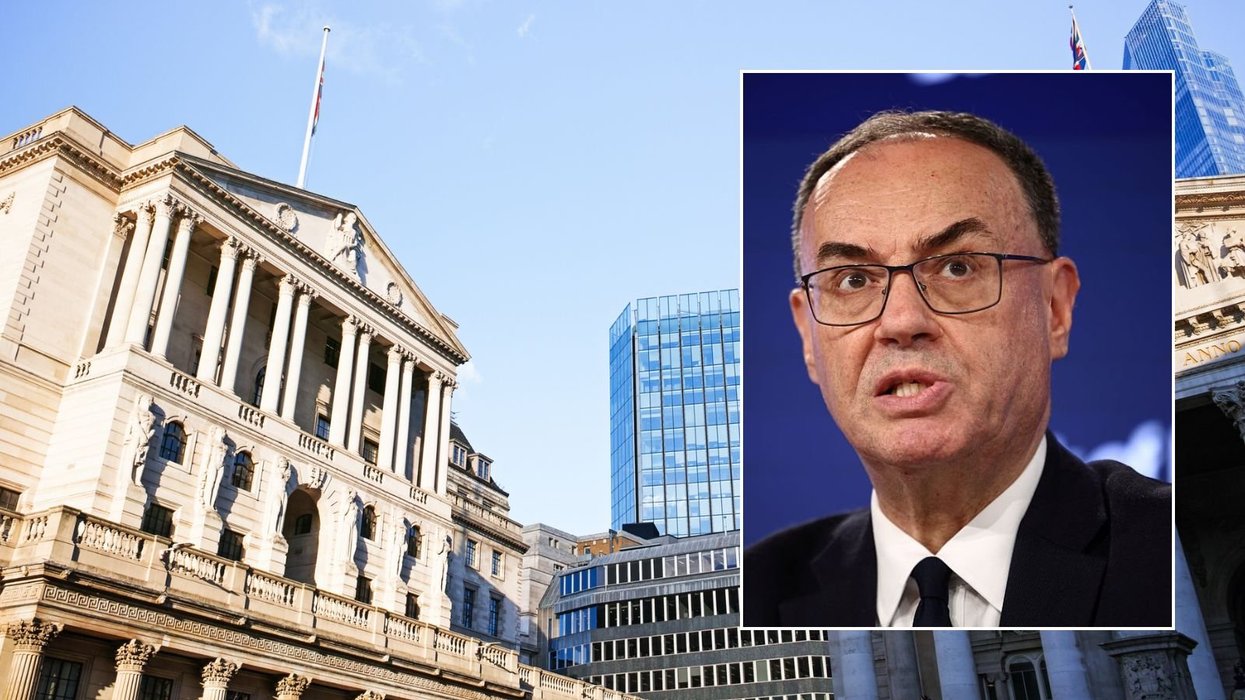
The Bank of England has confirmed a major change to how it will influence the economy in a move that has seen borrowing costs plummet.
Earlier this week, the central bank's Monetary Policy Committee (MPC) voted to keep the base rate at 3.75 per cent despite inflationary concerns.
However, analysts claim the most consequential development from the policymakers' latest meeting reform of its approach to quantitative tightening.
Rather than continuing to sell gilts, a framework that was revisited on an annual basis, the Bank is now proposing to scrap those market disposals entirely.
In their place, a new three-pronged strategy will guide the unwinding process through to 2035, marking a fundamental shift in the institution's approach.
Quantitative tightening is the reverse of the massive bond-buying programme that followed the 2008 financial crisis, when central banks across the globe snapped up Government debt to prop up ailing economies and drive down borrowing costs.
By the time the Bank of England wrapped up this trend in 2021, the institution had built up a gilt portfolio worth approximately £895billion, with the bulk acquired during the pandemic.
Officials began winding down these holdings from 2022 onwards, combining the natural maturation of shorter-dated bonds with a regular schedule of sales on public markets.
Under the revamped framework, the Debt Management Office will take charge of the process, steering clear of large-scale disposals of long-dated gilts that might otherwise push up government borrowing costs.
James Smith, the chief economist at the Resolution Foundation, said: "The Bank's decision today to hold interest rates was welcome but expected.
"The real news instead came via an overhaul of how it unwinds QE and a gloomy outlook for inflation."
He added: "The Bank provided welcome clarity on how it plans to run down its stock of gilts bought as part of its QE program.
Allowing the Debt Management Office to manage the process, avoiding large sales of unwanted long-dated bonds, is welcome as it will ease upward pressures on the cost of Government borrowing".
The Bank's forecasts point to a 24 per cent jump in the energy price cap this January, sending household bills surging during the depths of winter.
Inflation is projected to reach four per cent, a level that would see workers' wages eroded in real terms.
Mr Smith urged Labour ministers to ensure "targeted support with energy bills ready in time for this winter".