Thank you for subscribing!
HMRC indicated that payments should begin flowing "in the next few months"
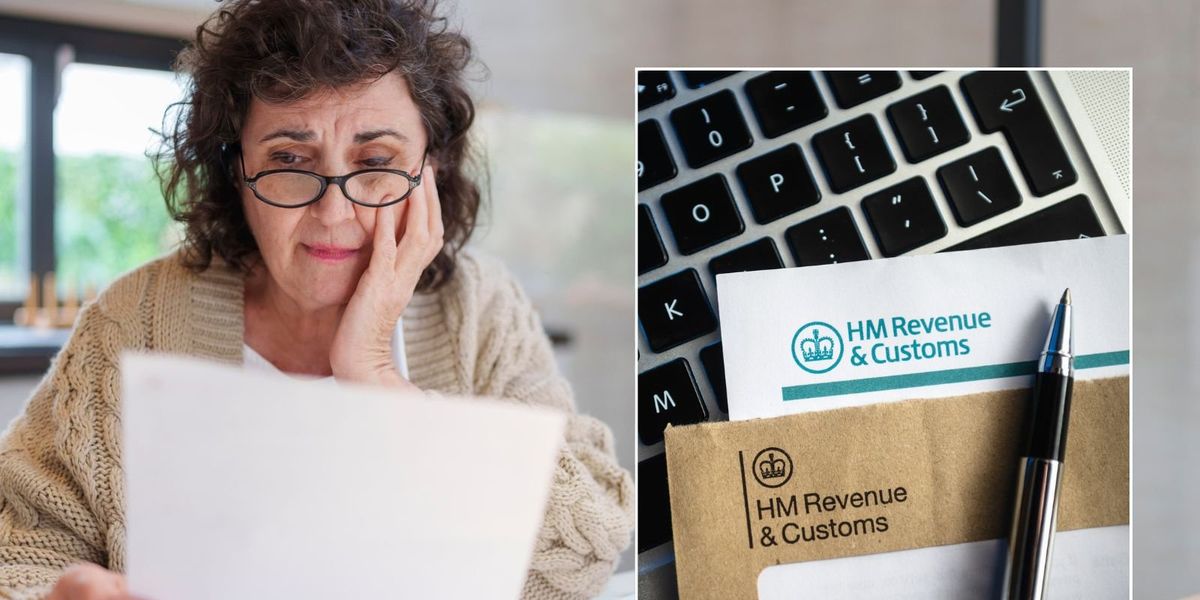
Around a million people across the UK are about to receive unexpected letters from the taxman offering them money they are owed.
Pension experts are now warning that huge numbers of those letters could end up in the bin.
HMRC confirmed today through its Pension Schemes Newsletter that the mass mailout is now underway.
The campaign targets low earners who have been short-changed on pension tax relief.
Steve Webb, a partner at pension consultants LCP, raised the alarm that many recipients will have no idea why they are being contacted.
He said: "Most people will not have a clue about this issue and may be suspicious of a letter out of the blue from HMRC offering them free money."
He cautioned that people receiving an unsolicited letter promising them cash are likely to assume it is a scam and throw it away.
Mr Webb said there is a serious risk of "huge" non-take-up, with payments failing to reach the very people they are designed to help.
Those affected are predominantly women, who make up roughly three quarters of the million people identified. The issue stems from the way their workplace pension scheme handles tax relief, something over which employees have no say.
Under automatic enrolment, workers can be signed up to a pension even if they earn below the income tax threshold, which kicks in at just £10,000 a year.
Depending on which administrative method their employer's scheme uses, these lower earners may have missed out on tax relief they were entitled to.
A government consultation in 2021 put the average amount owed at approximately £53 per person. The precise sum varies depending on how much each individual contributed to their pension. The initial letters relate to the 2024/25 tax year.
The discrepancy comes down to two distinct systems for delivering pension tax relief.
Under the Relief At Source method, used by personal pensions and some workplace schemes, contributions come from take-home pay and HMRC tops up the pot directly.
A worker paying in £80, for instance, receives a £20 boost from the taxman regardless of whether they actually pay income tax.
The alternative is the Net Pay Arrangement, common among occupational pension schemes. Here, contributions are deducted before tax is calculated, reducing the worker's taxable income.
For basic rate taxpayers, both methods produce broadly the same result.
The problem arises for those earning too little to pay tax. Under Net Pay, reducing their taxable income makes no difference to their tax bill, so they receive no relief at all. Successive governments have acknowledged this as unfair.
From this month, the letters will be sent out gradually, with the programme expected to continue into early 2027.
HMRC indicated that payments should begin flowing "in the next few months" as claims come in. Once recipients have registered for the 2024/25 payment, a more automated process will be established for subsequent years.
Mr Webb said: "It is clearly unfair that around 1 million low earners have missed out on pension tax relief, simply because of the way in which their workplace pension is administered.
"But the process of getting these payments to the right people is going to be incredibly painful and there is a real risk of huge non take-up."
He concluded: "Some may suspect it is a scam. It is vital that communications are effective to make sure that people get the money to which they are entitled."