Thank you for subscribing!
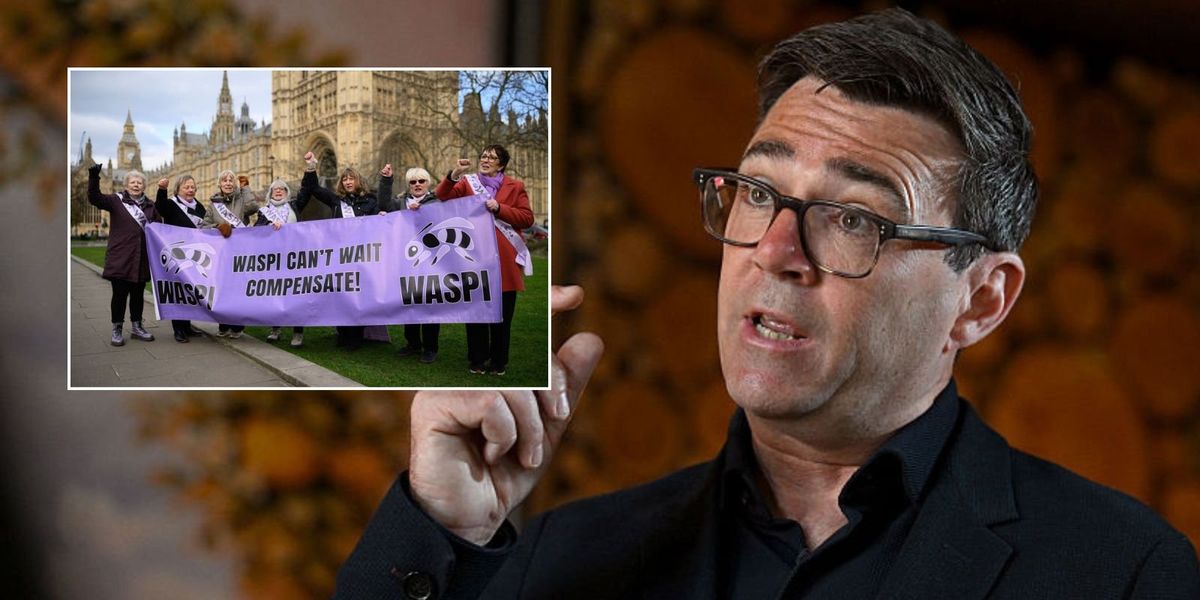
Around 3.5 million women were affected by the change in the state pension age
Millions of women who lost out when their state pension age was raised without proper warning may finally be closer to getting answers from the government.
The campaign group fighting their corner has made a direct appeal to the top of Downing Street.
Angela Madden, chair of Women Against State Pension Inequality (WASPI), wrote to Prime Minister Andy Burnham and Chancellor John Healey on 4 August requesting urgent discussions about compensation.
The letter called on the new government to work with campaigners on a form of redress that would be fair both to the 3.5 million affected women and to the taxpayer.
Ms Madden said: "We are now asking him, alongside the chancellor, to make good on that promise, and to sit down with WASPI to determine what redress for 1950s-born women looks like."
WASPI represents women born in the 1950s who say they were not given sufficient time to prepare for increases to their state pension age.
Many were left financially worse off, with little opportunity to make alternative arrangements for retirement.
Mr Burnham pledged to meet campaigners and hear their case during the Makerfield by-election, which he won before being appointed Prime Minister. That commitment is now being put to the test.
The 72-year-old Ms Madden told the Daily Mail she believes Mr Burnham is in "listening mode" and that "if he can do something, he will."
She acknowledged the Prime Minister faces a lengthy list of priorities but insisted the issue could not be pushed aside. "Us Waspis can't be left with nothing," she said.
Yet Mr Burnham appeared to row back on his support in June, suggesting that redress for WASPI women could simply mean concessionary travel.
It was a proposal that raised eyebrows, given that most women born in the 1950s already qualify for free bus passes by virtue of their age.
Ms Madden, however, remains unfazed. She interprets the remark not as a retreat but as a signal that the Prime Minister intends to act, even if the precise form of that action has yet to be determined.
"When he said that, what he was really saying is that he would do something for us, but he didn't know what that 'something' would be," she insisted.
"The Prime Minister has a golden opportunity to prove he is a man of the people if he works with us."
Ms Madden has called for early engagement from the Chancellor on what options might be workable within the constraints of the public finances. "What we now need to do is sit around a table with Government and talk about what the options are," she said.
The Parliamentary and Health Service Ombudsman previously found that maladministration at the Department for Work and Pensions led to a 28-month delay in writing directly to affected women.
For six sample complainants, the ombudsman said it would have recommended payments of between £1,000 and £2,950.
The previous government accepted the finding and issued an apology but refused to establish a compensation scheme. Labour has so far maintained that position.
Ms Madden said Mr Burnham "might not be able to deliver 100 per cent of what we want," but stressed that some form of redress was essential.