Thank you for subscribing!
Compared with the most recent market peak, real-terms values have dropped by £47,522
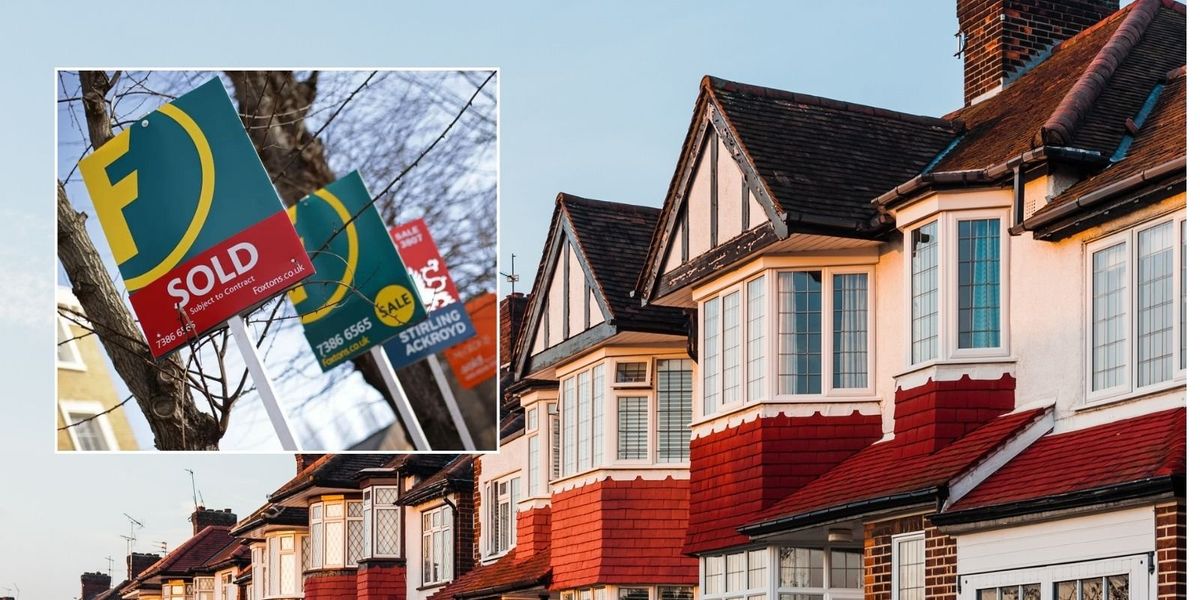
Houses in England are now worth less than they were 20 years ago once inflation is taken into account, new analysis has revealed.
Despite property prices rising significantly in cash terms, the value of the average home has failed to keep pace with the rising cost of living.
The typical English home sold for £293,262 in June when adjusted for inflation, according to analysis by estate agent Hamptons.
That is below the inflation-adjusted average of £296,179 recorded in July 2006, meaning property values have effectively gone backwards over the past two decades.
The decline is even greater when compared with the housing market's more recent peak. Average homes are now worth £47,522 less in real terms than they were in June 2021.
House prices are still considerably higher in cash terms than they were 20 years ago. However, inflation has reduced how much that money is actually worth.
Felix Schmidt, senior economist at Berenberg Bank, said: "The times when investing into houses was a no-brainer are over."
Higher mortgage rates and weak growth in household incomes have contributed to the slowdown by making it harder for people to afford homes.
With fewer buyers able to compete for properties, sellers have had less room to push up prices.
High inflation in recent years has also eroded the real value of property. House prices increased by just two per cent in June, according to official figures, while inflation stood at 2.9 per cent.
Paul Cheshire, emeritus professor at the London School of Economics and a former government adviser, also pointed to weak wage growth as one of the factors weighing on the housing market.
"What changed was the bloody UK economy," Mr Cheshire said. "We had the crash in 2008 and the main thing is that real incomes haven't risen."
The sharpest declines are concentrated in London and the south of England.
In the capital, the average property sold for £553,870 in June, some £168,000 below its 2017 peak in today's prices. That represents a 23 per cent fall in real terms over more than nine years, dragging values back to levels last seen in 2007.
Stretched affordability and high stamp duty on expensive properties have left London particularly exposed to elevated interest rates.
The South East has fared little better. Average sale prices of £380,380 in June sit £78,000 below the local peak reached five years ago.
In the South West, the typical June sale price of £304,562 matched real-terms values from as far back as May 2004.
David Fell, a senior analyst at Hamptons, said: "While most homeowners haven't seen the value of their property fall in cash terms, inflation has eroded previous gains, leaving house prices across much of southern England below their inflation-adjusted peak."
Analysts have warned that declining real property values could drag on the wider economy through what is known as the reverse wealth effect.
When house prices climb above what mortgage holders originally paid, homeowners tend to feel wealthier, spend more freely, and borrow more against their properties. When values fall, that confidence evaporates and the process goes into reverse.
Mr Schmidt said: "If an asset is not growing as much as it did in the past, for the people who own those assets, it will affect their spending behaviours and make them less willing to spend.
"If your wealth is not growing as fast as before, you will eventually also consume less."
The risk is that reduced consumer spending feeds back into slower economic growth more broadly.
The broader picture underscores just how dramatic the shift has been. Since 1982, UK house prices have risen by 300 per cent above inflation, according to Organisation for Economic Cooperation and Development data.
That pace of growth far outstripped every other G7 nation. Italy, by comparison, managed just 11 per cent over the same period.
That prolonged surge has now ground to a halt. England has effectively seen no real house price growth in more than two decades, marking a fundamental change for a market long regarded as a dependable route to building wealth.
Mr Cheshire said: "Houses are not in any decent sense assets. They are certainly not investment assets. [That idea] is a bit of a self-deception."