Thank you for subscribing!
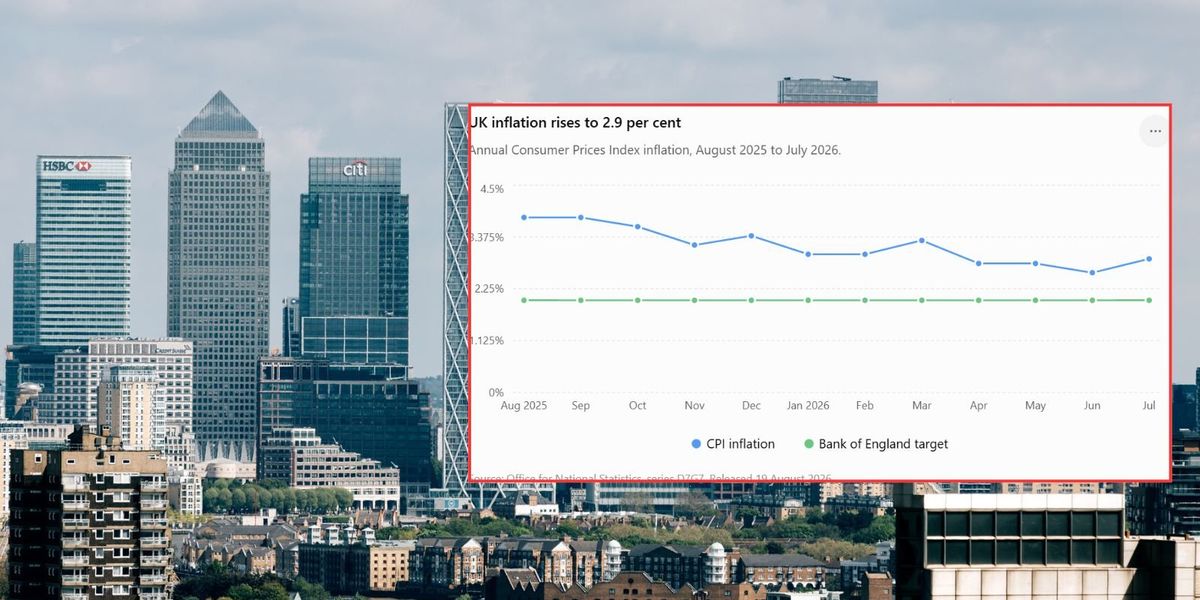
UK inflation jumped to 2.9 per cent in July, dealing households a fresh blow after the energy price cap pushed average annual bills up by £221.
The rate climbed from 2.6 per cent in June and moved further above the Bank of England's two per cent target.
Professor Joe Nellis, emeritus professor and head of economic research at MHA, warned that inflation was "moving back in the wrong direction" and was likely to rise further during the second half of 2026.
He explained the increase would be a setback for Prime Minister Andy Burnham, particularly because rising prices disproportionately affect lower-income households.
The increase had been widely expected, with the FactSet consensus forecasting that inflation would rise from 2.6 per cent in June to 2.9 per cent in July.
Economists had identified the 13 per cent rise in Ofgem's energy price cap, which took effect on July 1, as the main driver.
The change pushed the typical annual gas and electricity bill up by £221 to £1,862, allowing higher wholesale energy costs following the outbreak of the Iran war to feed more directly into household bills.
Mike Hardie, deputy director for prices at the ONS, said: "inflation rose in July, driven by a sharp increase in gas prices following this month’s change to the energy price cap. This was the largest rise in gas prices for almost four years.
"Other upward pressures included furniture prices falling by less than usual for this time of year, and also a smaller fall for clothing prices due to reduced discounting."
The latest figure was the highest rate of CPI inflation since March and has moved inflation further above the Bank of England's two per cent target.
The Bank of England expects inflation to average around 3.2 per cent in the final quarter of the year.
Mr Nellis suggested interest rates could remain at 3.75 per cent for the rest of 2026 if inflation stays close to three per cent.
However, he warned that if inflation moves towards four per cent, the Bank could be "forced to raise interest rates", despite the economy already being expected to slow.
Mr Nellis said the current spike should be temporary, but warned it could become structural if it begins to influence expectations, wages and prices.
Suren Thiru, ICAEW Chief Economist, said: "July’s uptick is unlikely to be a one-off, with drought-related increases in food prices and surging energy costs raising the prospect of inflation topping 3.5 per cent later this year, especially if disruption in the Strait of Hormuz persists.
"Rising inflation is likely to become the biggest threat to UK growth in the coming months as it eats into household budgets by increasing the cost of essentials, while also raising government borrowing costs and eroding the Chancellor’s fiscal headroom ahead of October's Budget."
She added: "While July’s hotter inflation reading is unlikely to trigger a September rate rise, given the dampening effect of a softer labour market on underlying price pressures, it does reignite the prospect of further policy tightening before the end of the year."
Jenny Holt, customer savings and investment director at Standard Life, said the rise in inflation was an "unwelcome reminder that the cost-of-living squeeze hasn't gone away".
Although Andy Burnham's planned temporary removal of VAT from household electricity in October should provide some relief, Ms Holt warned it would offset only part of the increase.
She added that prolonged hot and dry weather could push up food prices later this year, leaving households with less money available for emergency savings and retirement contributions.
Kevin Mountford, personal finance expert and co-founder of Raisin UK, said the rise in inflation would disappoint households hoping that pressure on their finances was beginning to ease.
He warned that prices were "rising at a faster pace again", putting renewed pressure on household budgets and potentially making the Bank of England more cautious about cutting interest rates.
Mr Mountford said this was "not necessarily bad news" for savers, as higher interest rates could keep competitive savings deals available for longer.
However, he urged people not to assume their existing account still offered good value, particularly as 47 per cent of UK consumers lack confidence when planning their financial future.
He added: "If your savings rate is lower than inflation, your money is losing spending power over time. Shopping around and comparing rates can help make sure you are getting the best possible return from your savings."
Harriet Guevara, chief savings officer at Nottingham Building Society recommended dividing savings according to different objectives.
"Easy-access accounts may suit an emergency fund or short-term plans, while fixed-rate accounts can provide more reassurance for money you will not need straight away - and are particularly competitive at the moment for those able to lock money away."
Ms Guevara also highlighted the importance of tax efficiency, noting that Cash ISAs may help savers retain more of their interest depending on individual circumstances.