Thank you for subscribing!
Kellogg's ends production at the landmark Trafford Park factory after 88 years
One of Britain's best-known food factories has stopped production after nearly nine decades, putting around 360 jobs at risk.
The machinery that once churned out breakfast staples for millions of households across the country has ground to a halt for the final time.
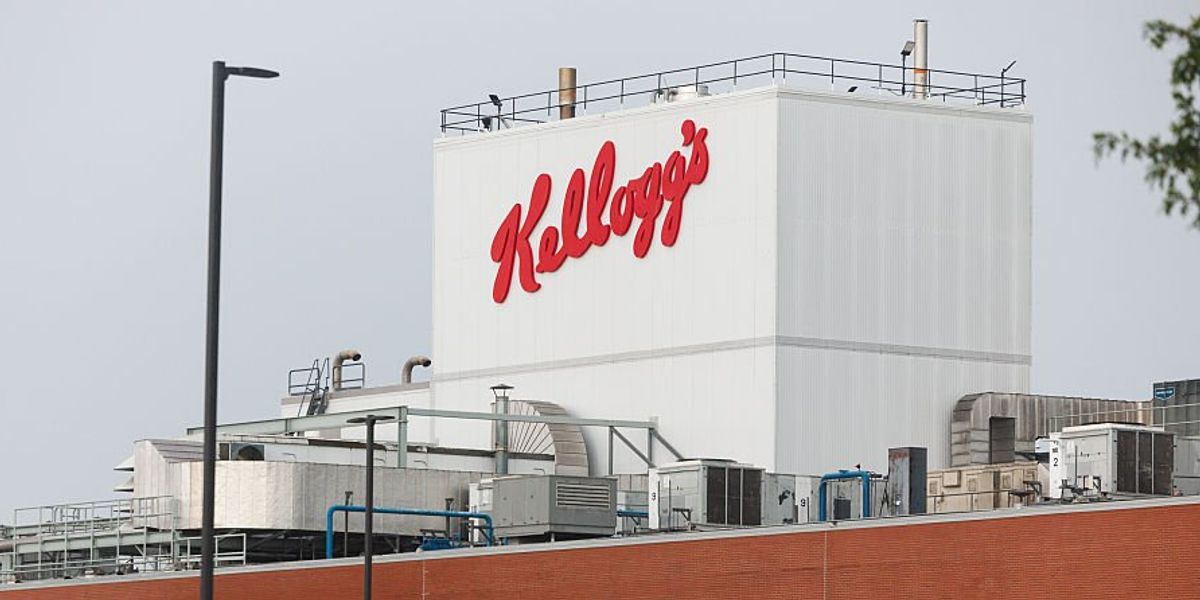
The Kellogg's cereal factory at Trafford Park in Manchester produced and packed its final products this week, bringing 88 years of manufacturing at the site to an end.
Production will now move to the company’s factory in Wrexham, north Wales.
Although the Manchester site will remain open until the end of 2026, its machinery and production lines have now stopped operating.
The 27-acre factory opened in 1938 and was once considered one of Europe's largest cereal plants. At its busiest, it produced more than one million boxes every day.
Over the years, some of Britain’s most popular cereals were made there, including Corn Flakes, Coco Pops, Rice Krispies and Shreddies.
Kellogg's was founded in Michigan in 1906 and began exporting its cereals to Britain in 1922. The company opened the Trafford Park factory 16 years later.
Generations of local families are said to have worked at the factory, which became a well-known Manchester landmark.
Its brick exterior featured Kellogg's famous rooster logo and a large Tony the Tiger figure.
Kellanova, the company responsible for Kellogg's UK operations, first announced plans to close the factory in 2024.
The final decision followed three months of consultation with employees and union representatives.
The company said the factory's design, with ingredients travelling up and down six floors, was "laid out in a way that made sense in the 1930s" but was no longer suitable for modern manufacturing.
Only half the building's space was actually being used for production, and redevelopment costs were deemed too high.
A Kellanova spokesperson said: "A significant milestone was reached this week, as operations across production and packing came to an end."
Mick Murray from the retail union Usdaw described it as "a sad time". Mr Murray said the union had worked to secure an enhanced redundancy package and relocation payments for staff willing to move to Wrexham.
The Trafford Local Studies and Archive Centre in Sale paid tribute to the factory's heritage earlier this year with a dedicated exhibition.
Vintage promotional materials and Tony the Tiger cut-outs were among the items put on public display.
A Kellanova spokesperson said: "We are working with local partners to recognise and celebrate the site's legacy, including supporting a local exhibition of archive material and memorabilia at the Trafford Local Studies Centre, and we'll continue to mark special milestones in the months ahead."
Despite the factory's closure, Kellogg's will maintain a significant footprint in the north-west of England.
Its UK headquarters at MediaCity in Salford employs roughly 520 people. The company also operates a distribution centre in St Helens, where around 500 roles remain.