Thank you for subscribing!
Josh Thomas started Thomas & Co International with no investors and no track record. Five years on he advises 270 business owners, has £112million of live deals — and a warning for anyone thinking of selling up
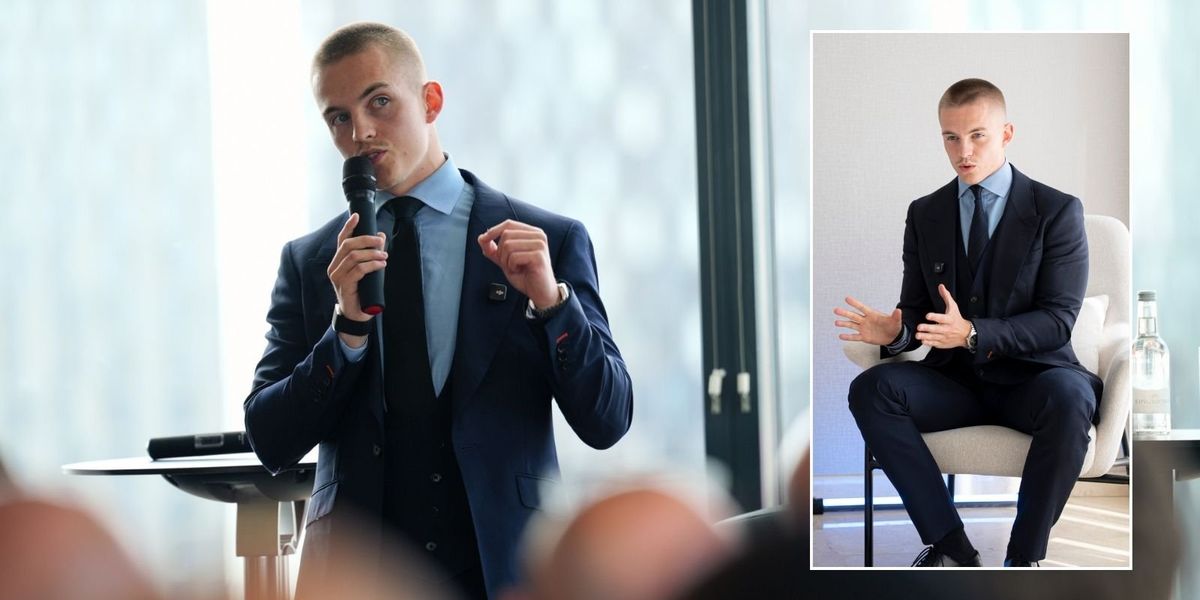
Josh Thomas was 21 when he started knocking on the doors of British businesses in a suit, with a short resume and a plethora of ideas to help other entrepreneurs.
"How I started was really messy," he says. "Why should they trust you? Why should they not go to a Big Four or another advisory firm that's been around two, three decades?"
Five years later, the answer is a firm that turned over £96,000 in its first year and is on track for £6million in this one. Thomas & Co International now employs 46 people, advises more than 270 British business owners, has live deals worth up to £112million and recently helped close a £26million exit.
Mr Thomas, now 26, has been named on the Forbes 30 Under 30 list, sits on Coutts' advisory panel and has been invited to Sir Richard Branson's Necker Island.
He argues that too many advisory firms have become trapped in a cycle of returns and filing deadlines; what he calls a conveyor belt that leaves no room to think.
Speaking exclusively to GB News, he said: "That takes away the time to then actually think outside of the box and advise founders on how they can actually improve their financial situation, save tax, structure in a better way to protect their wealth.
"So you're no longer an advisory firm; you're more of a compliance firm that's ticking boxes for clients."
In his view, timing matters because founders are under pressure and they need advice "to be able to thrive, to be able to put food on the table, to be able to grow the businesses".
Winning those first clients meant giving away more than he was paid for, doing work outside the scope of the engagement to build case studies he could take into the next pitch.
Then came the decision that separated Mr Thomas from the profession he was trying to break into. The traditional route to clients was business cards, local newspaper advertising and the occasional LinkedIn post.
He went to Instagram instead, with a single thesis: explain complicated things simply enough that a business owner could follow them.
"Every time I solved a problem for them in that 60-second clip, there's a little bit of extra trust. Every time that trust barrier continues to increase, they're closer and closer to reaching out to me."
Recently, he measured the payoff by a show of hands. While speaking at an event, Mr Thomas asked a room of more than 100 people who had seen his content before. Around 60 per cent raised their hands.
The entrepreneur then asked who was more likely to buy from him as a result. The same 60 hands went up.
"That is the win. You don't have to go out there and prove yourself. You already have trust in your audience. You just then need to be able to deliver on your promises."
According to the businessman, the commercial effect is that the firm can hire ahead of the work, taking bigger bets on growth because the pipeline is already there.
However, Mr Thomas noted he is aware that promoting himself in such a way does not come without a cost: "You have to be open to doing things differently," he says. "Growth comes from uncomfortable places, not comfortable places."
Overseas buyers are acquiring British companies at the fastest rate in two decades. Mr Thomas's explanation starts with Britain's own pension funds walking away.
He cited that a quarter of a century ago UK pension schemes held around half their assets in British businesses. Today it is a few per cent.
"When you take out one of the largest domestic buyers, you naturally have a decrease in prices. And then the decrease in prices makes it a valuable asset class for those that have money."
Asked what would turn the tide, Mr Thomas does not reach for a tax cut first. He reaches for stability. He would love to see British funds and private equity pouring money back into the UK economy, but says investors first need confidence that the rules will hold.
"When we've had so many prime ministers and even more chancellors in the past 10 years, people can't see around the corner. You can't see a year in advance at the minute, because the next Budget may completely change everything again."
Investors' Relief has changed. Inheritance tax (IHT) has changed. As a result, he claims that people no longer want to hold British assets for fear of the next levy attached to them.
His prescription is to widen the base rather than squeeze the same names: "Rather than trying to tax the same businesses or the same entrepreneurs more, to the point where they want to leave.
"How do we bring in new businesses, new innovation, to actually set up their own businesses, grow and innovate in the UK?"
The uncomfortable conclusion is that more British founders now build to cash out than to hand on. Mr Thomas recently asked a room of founders how many were looking to sell. Between 40 and 50 per cent raised their hands immediately.
"Whereas traditionally, businesses were built to be family, generational, and passed down to the children," he shared.
However, Mr Thomas does recognise green shoots that are sprouting across the UK economy, with the younger generation continuing to exercise serious entrepreneurial prowess.
The business advisor cited that children now have options their parents did not: a laptop that could turn into an idea and a business proposal that can be running in an afternoon.
"So do they want to stay in the family business? It's not always the case."
Technology is accelerating the impulse from the other direction. With a breakthrough in AI seemingly every month, owners are less certain their business will still be needed in five years.
"When they have a valuable asset, they're looking to cash in on that asset to mitigate some risk for themselves, because they don't want to be disrupted in five years when their service offering is no longer required."
And when they do sell, the highest bidder is rarely British.
"You've created an asset and you're looking to sell that asset. Typically, you want the highest price. And the highest price is currently being paid overseas by foreign investors — and that is why UK assets are flowing overseas."