Thank you for subscribing!
As much as £28million is on offer as part of the newly-launched scheme
Millions of pounds of Government funding is on offer to businesses that can help crack the problem of storing renewable power.
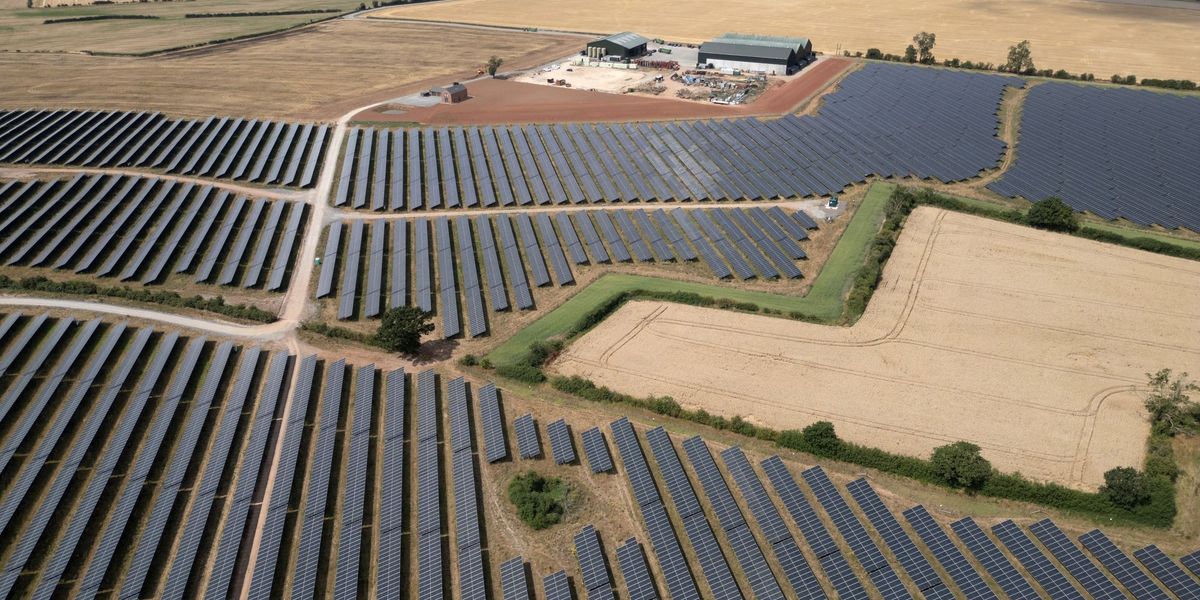
While renewable sources such as wind and solar have low marginal costs, a key drawback is that they are weather dependent.
Although energy is abundant when the wind is blowing or the sun is shining, generators struggle when conditions change. This intermittency means firm power - such as gas or nuclear – is needed as a back-up.
It can also lead to wind farms being paid not to generate electricity on particularly blustery days because the current grid is unable to cope.
Battery storage is seen as a vital solution. It would mean that surplus power could be stored and then dispatched to the grid when required. But, at present, storage is limited to a number of hours.
Ministers have announced that innovators developing methods to store clean energy for days at a time can bid for £28million of Government funding.
The newly-launched scheme will offer grants to support technologies such as advanced batteries and underground hydrogen storage.
The ultra-long duration energy storage challenge aims to back projects capable of storing electricity that can then be supplied to the grid for 100 hours of more – powering homes and businesses for at least four days.
Science minister Chris McDonald said: “If we can meet the challenge of storing energy from renewables, we will improve our energy security, bring down energy bills in the long-term and leave all of us better-off.”
Energy minister Michael Shanks said: “Homegrown clean energy is our route to more affordable bills and energy security, and storing it for when we need it most is critical.
“By backing new cutting-edge battery technology and hydrogen storage with this £28million grant, we will store more clean power, reduce reliance on expensive gas generation and deliver a more secure energy system.”
The project will have two main areas of focus – the development of new battery technologies capable of providing energy for more than 100 hours, which are yet to be commercialised at scale, and the development and testing of systems that store hydrogen underground and release it when needed.
It comes as the Government continues to roll out measures to help remove almost all fossil fuels from the country’s electricity grid by 2030.
Ministers argue that reducing the country’s reliance on natural gas – and therefore its exposure to volatile global prices – will bolster energy security, help to tackle climate change and reduce cost-of-living pressures.
Jenny Hill, director of UK Research and Innovation’s (UKRI) clean energy challenge, said: “Ensuring the UK has the technologies capable of storing energy efficiently and effectively is a vital part of the equation in the move to a clean and more secure energy system.
“This challenge will help propel the UK to the forefront of the global energy storage market, creating skilled jobs and attracting private investment.”
As part of the scheme, UKRI has also launched a competition offering up to £3million to fund studies into electrochemical ultra-long duration energy storage technologies.
It is hoped this could bring new battery technologies capable of supplying cost-effective electricity to the grid for 100 hours or more to market.
This week, the Tories unveiled an alternative plan for the energy system which includes keeping gas as a 23 per cent part of the energy mix for electricity generation.
They argue that this would still see emissions reduce while retaining firm power they say is essential for the economy.