Consultations on Jackdaw and Rosebank are due to run until August 10 and August 17 respectively
There is an “overwhelming” case to approve drilling at two controversial oil and gas fields, industry leaders say.
Greenlighting work at Rosebank and Jackdaw could prove a “powerful reset” for the sector, according to David Whitehouse, chief executive of trade body Offshore Energies UK.
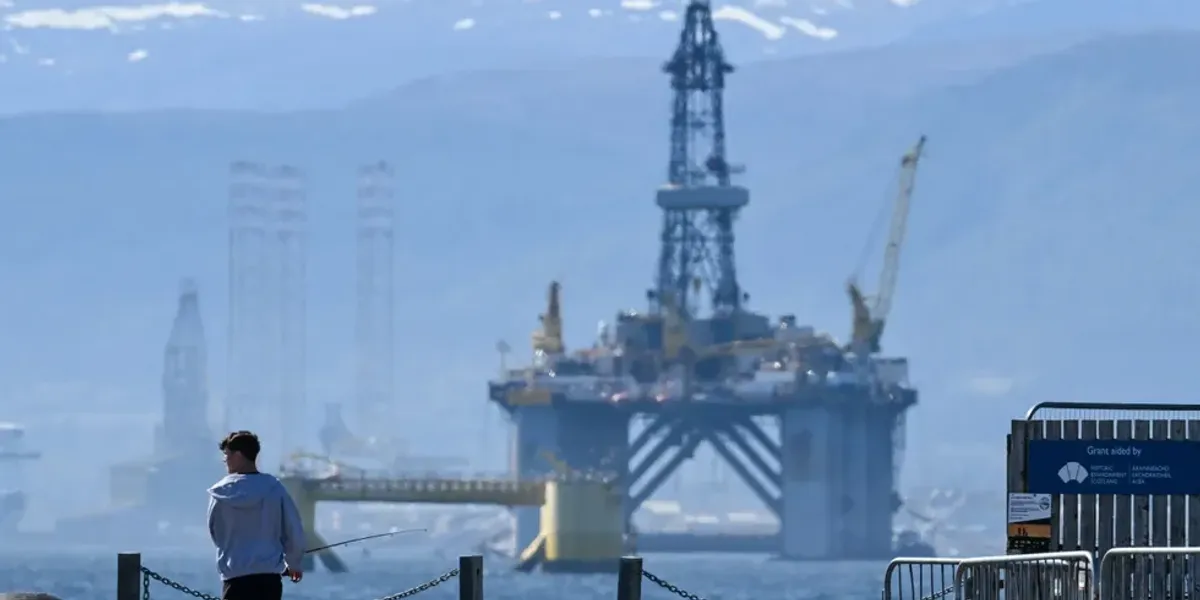
Rosebank is Britain’s largest untapped oil field and Jackdaw is a giant gas field. Work at both has been halted after legal challenges on climate grounds.
Environmentalists have objected to drilling, and former Energy Secretary Ed Miliband once described Rosebank as “climate vandalism”.
But reports have claimed the UK Government could approve them as early as August.
Mr Whitehouse said: “What would be really significant, and what we look for now, is for this UK Government to say while we use oil and gas we back our own production, that is what we want to hear.
“That would be significant, and what would flow from that I believe is positive decisions about Jackdaw and Rosebank.”
He went on: “The case to support them is overwhelming, both from an environmental perspective, but also the wider social impacts of the fact that they will support jobs and value in the economy.”
Consultations on Jackdaw and Rosebank are due to run until August 10 and August 17 respectively, with the Offshore Petroleum Regulator for Environment and Decommissioning (Opred) due to make a recommendation to the UK Government after that.
If the decision is in their favour, work could commence “very quickly”, Mr Whitehouse added.
He told how “considerable amounts of money and considerable activity” had already been put into both fields, adding that “the Jackdaw platform itself is installed, the wells are drilled”.
While climate campaigners continue to object to the planned developments, the OEUK chief executive said both these, and a “significant number of additional projects” which could come afterwards could “help the UK meet more of its own production” needs for oil and gas, without having to rely on imported fuels.
Adding a decision on Jackdaw could be made towards the end of August or possibly in September, Mr Whitehouse said: “Jackdaw will produce a significant amount of the gas the UK will need over the winter period.
“In my view it would be right to approve it. But we need it online ahead of winter.”
While the UK Labour Government has so far been opposed to new oil and gas developments – in line with its 2024 manifesto pledge – Mr Whitehouse said the new Energy Secretary Miatta Fahnbulleh had told him she would take a “pragmatic approach”.
He met with Ms Fahnbulleh on Thursday, as she went to Aberdeen in what was her first visit since taking over from Ed Miliband. Mr Whitehouse pointed out that Mr Burnham also “speaks a lot about the importance of place, and the importance of industry, reindustrialisation”.
He said: “That narrative lends itself, I think, that the UK should be supporting its own industries.”
The OEUK chief executive accepted it is “fundamentally right we build out renewable energy, it is right that we tackle climate change”, but added the UK will “use oil and gas for decades to come”. He went on to say it was “right that the Government should be supporting our own production over imports”.
He stated: “When we produce oil and gas in the North Sea we will produce it cleaner than imports, and we put real value back into the economy. We pay significant taxes which the Chancellor can use to support people’s bills.
“For all those reasons it is right we should be backing UK industries.”
However, he warned the “consequences would be truly significant” if consent for both Jackdaw and Rosebank is refused.
“It would send a signal that the UK is choosing not to support its own industries,” Mr Whitehouse said.
“It would send a signal that jobs of people up and down the country are not important, it would send a signal that the value in our economy, the taxes that those projects would pay are not important.
“And it will send a signal that actually the UK doesn’t want to control its own emissions. So I think that would be significant.
“Certainly, there would be a huge impact on what we see as a £50 billion pipeline of projects that would follow.”
In a video of her visit to Aberdeen, posted by her Department for Energy Security and Net Zero, Ms Fahnbulleh said “we need to back Aberdeen”.
She went on: “This part of the world has been at the very heart of home-grown energy for the UK and that must continue to be the case.
“We need to make sure that we are building renewables, that we are building nuclear but that we also are really clear, that oil and gas will be part of the energy mix for years to come.
“The key bit for me, and the message I’ve heard, is we have got to make sure we are sustaining and we are creating good jobs that pay a wage that people can raise a family on.
“And, if we get that right, we will make sure we are breathing life into this community and ensuring it plays a vital role in our energy system that is has in the past and it absolutely must do in the future.”