Higher borrowing costs could squeeze public spending, delay business investment and keep mortgage rates elevated
Britain's economy is facing renewed pressure after government borrowing costs climbed to their highest level in months. The increase could affect public spending, business investment and the mortgage rates offered to households.
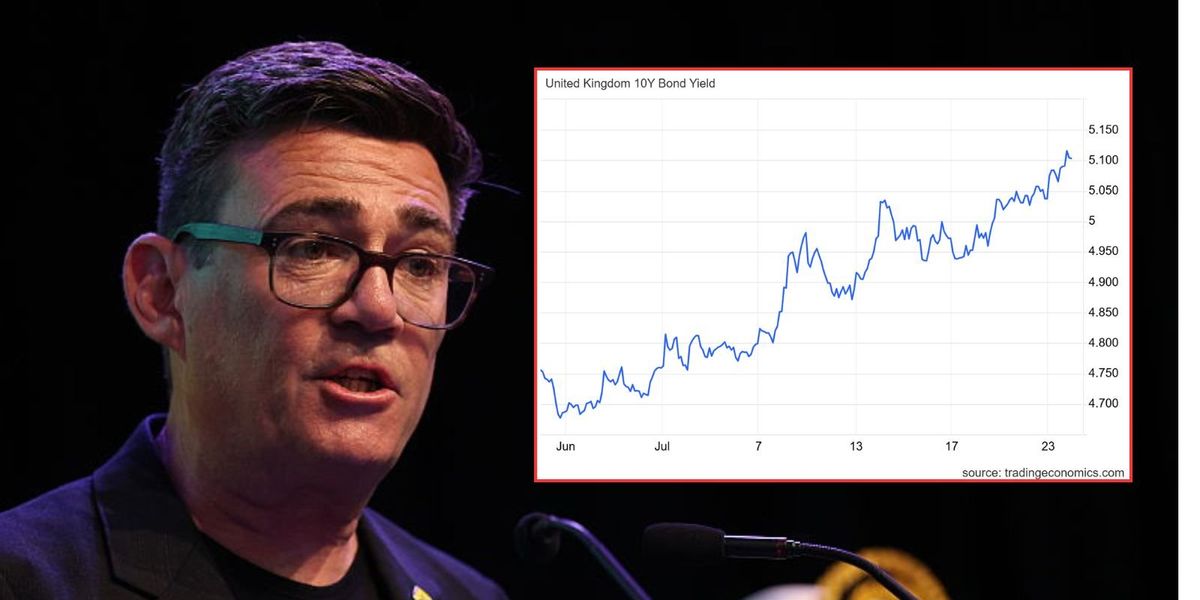
The yield on benchmark 10-year government bonds rose as high as 5.0862 per cent in early trading on Thursday, July 23. This was its highest level since May 20, following an increase of as much as five basis points.
Thirty-year gilt yields, which are sensitive to concerns about the public finances, reached 5.7775 per cent. This was their highest level since May 19.
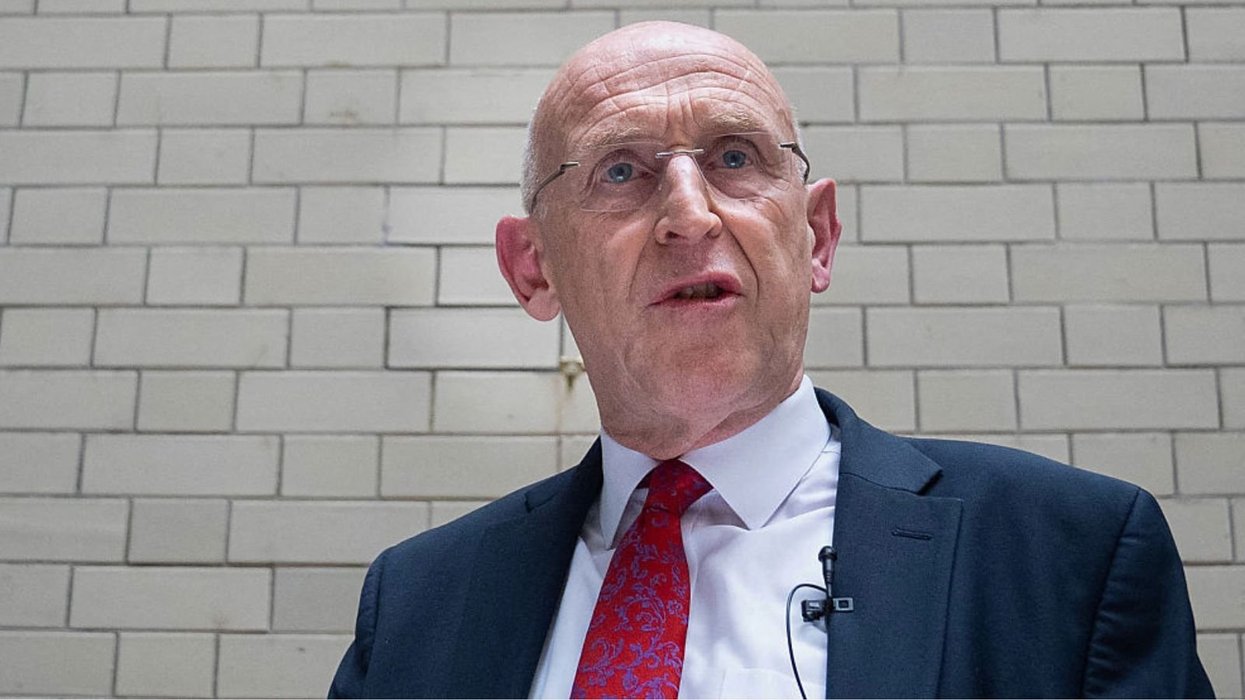
Professor Joe Nellis, economic adviser at accountancy and advisory firm MHA, said bond markets were sending a "clear warning" that Prime Minister Andy Burnham could "not afford to ignore".
Britain's 10-year bond yield is currently the highest among the G7 countries. This means the Government must pay more to borrow over the long term than its major developed-economy counterparts.
Equivalent yields stand at around 4.6 per cent in the United States, 3.3 per cent in Italy and 3.2 per cent in Canada. They are close to three per cent in France, 2.8 per cent in Germany and 2.5 per cent in Japan.
Professor Nellis said: "The significance of this is clear: financial markets are demanding a bigger risk premium to lend to the UK than they are to any other leading advanced economy."
Current yields are also higher than those seen following former Prime Minister Liz Truss's mini-Budget in 2022. At that time, gilt yields briefly reached around 4.5 per cent as confidence in the Government's economic plans fell.
Professor Nellis said the current situation was different because it had not been caused by one policy announcement or a sudden market reaction.
Instead, investors are responding to prolonged government borrowing, persistent inflation, higher global interest rates and concerns about Britain's medium-term economic and fiscal outlook.
The national debt now stands at almost £3trillion, equivalent to around 95 per cent of gross domestic product. This is its highest level for more than six decades.
Higher gilt yields make it increasingly expensive for the Government to service that debt. When borrowing arranged at much lower interest rates matures, it must be replaced with new debt carrying today's higher costs.
Annual debt interest payments are already running at around £110billion. This absorbs approximately nine per cent of total government revenue, meaning around £1 in every £11 collected is spent on interest without reducing the amount owed.
Professor Nellis said: "Money spent servicing debt is money that cannot be invested in infrastructure, public services or tax reductions. With every increase in gilt yields, the new Chancellor's room for manoeuvre becomes a little more restricted."
Businesses could also face higher costs because government bond yields act as a benchmark for borrowing across the financial system.
Companies seeking money to expand, purchase equipment or refinance existing loans may have to pay higher rates. This could result in some investments being delayed or abandoned.
Economists call this the "crowding out" effect, where costly government borrowing indirectly restricts private-sector investment and weighs on economic growth.
Households could also feel the consequences through the mortgage market. Around four in five UK mortgages are on fixed rates, while high gilt yields could prevent borrowing costs from falling as quickly as homeowners and prospective buyers hope.
Shorter-term gilt yields also increased on Thursday. The two-year yield rose by four basis points to 4.4729 per cent, while the five-year yield climbed by the same amount to 4.656 per cent.
UK rate futures indicated around 48 basis points of Bank of England policy tightening by December, close to pricing in two quarter-point rate increases. This was up from approximately 40 basis points on Wednesday.
The market movements came as new Chancellor John Healey said he was concerned about both the cost of doing business and the cost of living.
Mr Healey pledged to maintain budget discipline, saying: "Fiscal credibility is the bedrock of economic stability, just as it is of national security."
He added: "The Prime Minister and I have talked together about how we will work in lock-step to ensure that we meet our fiscal rules with a buffer against uncertainty."
Earlier on Thursday, Mr Burnham announced that business rates for pubs, clubs and live music venues would be reduced by 20 per cent from April. It was his third announcement of measures aimed at helping businesses and households in three days.
Professor Nellis warned that high borrowing costs, combined with Britain's debt burden, leave the economy more vulnerable to future shocks and reduce the Government's ability to respond.
He said restoring confidence in the public finances, improving productivity and delivering stronger, sustainable economic growth would be essential to reducing the debt burden and rebuilding the Government's financial headroom.