Thank you for subscribing!
The number of pensioners paying the 40 per cent higher rate tax has doubled to 977,000 in the past five years
A record number of retired people in Britain are now handing over a significant share of their pension income to the taxman.
The scale of the shift has been dramatic, with new official figures revealing that more than a million pensioners are paying top rates of income tax.
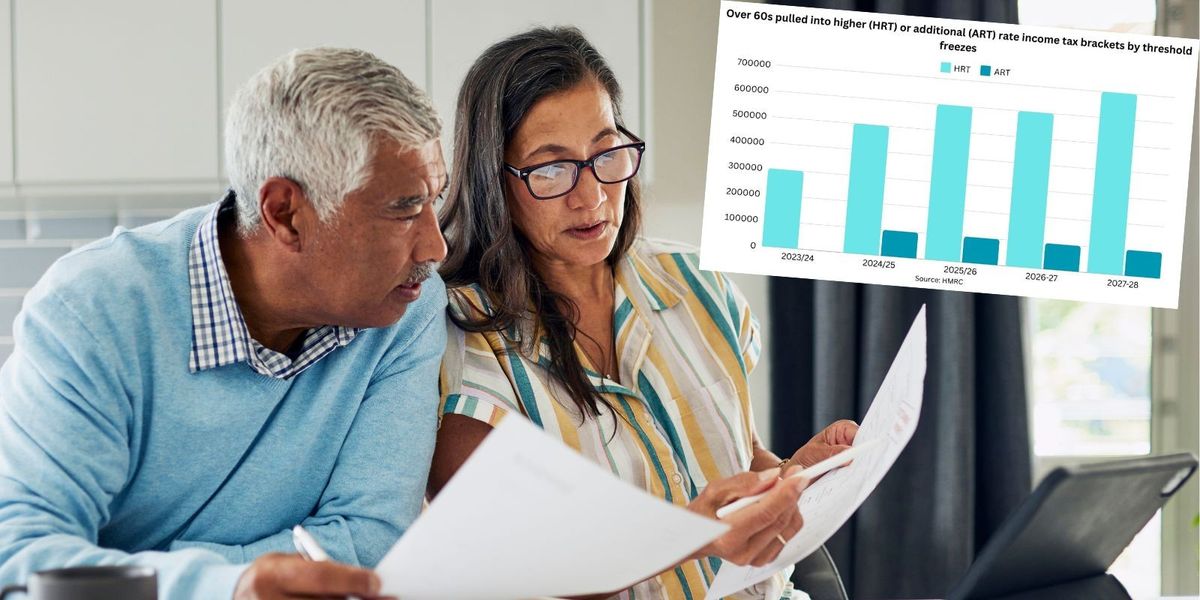
HMRC figures obtained through a Freedom of Information request by former Pensions Minister Steve Webb show that 977,000 pensioners are now paying the 40 per cent higher rate of income tax. This is twice as many as five years ago.
The number paying the 45 per cent additional rate has risen even faster, tripling to 115,000 over the same period. Meanwhile, the number of pensioners paying the 20 per cent basic rate has increased by a third to 8.48million.
The rise is largely being driven by the freeze on income tax thresholds, which is now in its fifth year and is due to continue until 2031. The tax-free personal allowance has remained at £12,570, while the 40 per cent higher rate still begins at £50,270.
The threshold for the 45 per cent additional rate has also been lowered. It was initially frozen at £150,000 but was cut to £125,140 from the 2023-24 tax year, bringing more people into the highest tax band.
Mr Webb, who is now a partner at pension consultancy LCP, said inflation-linked increases to the state pension and other retirement income have added to the problem.
As pension incomes rise while tax thresholds remain frozen, more retirees are being pulled into higher tax bands.
"Many people of working age may have expected that they would be basic rate taxpayers in retirement, but few will have expected to find themselves paying 40 per cent or more out of their pensions in tax," says Mr Webb.
He warns that this is now the reality for over a million retirees, and the numbers will only continue to grow.
Mr Webb urges those still planning for retirement to factor in the likelihood that a substantial portion of their expected income will face tax at 40 per cent or above. "For some that means more pension saving will be needed today to compensate," he says.
The message is clear: retirement finances that once looked comfortable on paper may prove considerably less generous once the taxman has taken his share.
In total, more than ten million pensioners are now paying income tax, a new record since the threshold freeze began. Official figures published in July confirmed the milestone.
By the end of the current tax year, nearly a quarter of all taxpayers are expected to be over state pension age.
That proportion has climbed steadily from around 14 per cent when records began in 1999-2000, but has accelerated sharply in recent years.
The government's income tax receipts tell their own story. This year the nation is expected to pay £347billion in income tax, an increase of £121billion compared with 2021-22, the last year thresholds were raised.
In the past twelve months alone, the Treasury is forecast to collect an additional £18billion.
Laura Suter, director of personal finance at AJ Bell, describes the dilemma now facing prime minister Andy Burnham.
"While the frozen tax bands are squeezing the nation's pay packets until the pips squeak, they are a very lucrative source of income for the government, one it can ill afford to lose," she says.
The triple lock mechanism, which guarantees annual state pension increases in line with the highest of inflation, wage growth or 2.5 per cent, has played its own part.
Rising state pension payments combined with the frozen personal allowance have pushed more retirees closer to or beyond their tax-free limit on state pension income alone.
For Mr Burnham, unwinding the freeze would offer relief to millions but blow a sizeable hole in the public finances.