Thank you for subscribing!
Thanks to the triple lock, state pension payment rates are guaranteed to rise by at least 2.5 per cent each year
The state pension triple lock has been declared "unsustainable" despite pulling millions of retirees out of poverty, according to new data.
Analysis by the Intergenerational Foundation has revealed that the share of pensioners living in relative poverty after housing costs has been cut in half over the past three decades.
The proportion of older Britons living in relative poverty, which is defined as happening when a family's income is too low to maintain an average living standard, has dropped from 28 per cent in 1994-95 to 14 per cent in 2024-25.
Under the triple lock mechanism, which was introduced in 2010-11, state pension payment rates are increased annually by the highest of either the rate of inflation, average wage growth, or 2.5 per cent.
Post-pandemic rises have been especially significant, with a record 10.1 per cent uplift in 2023 helping to drive pensioner poverty down from 18 per cent in 2019-20.
By contrast, poverty among working-age adults has barely shifted over three decades, hovering around 20 per cent, while child poverty has edged down only modestly from 32 per cent to 27 per cent.
A survey of 2,000 adults conducted by the Intergenerational Foundation found that 43 per cent of respondents mistakenly identified pensioners as the demographic most likely to experience poverty.
More than a third of those questioned incorrectly assumed their National Insurance contributions were being set aside in an individual fund for their own retirement, when in reality the pension bill is met directly through taxation of the current workforce.
Only 38 per cent of respondents correctly recognised that benefits paid to pensioners account for more than half the total social security budget, while a fifth believed the claim to be false.
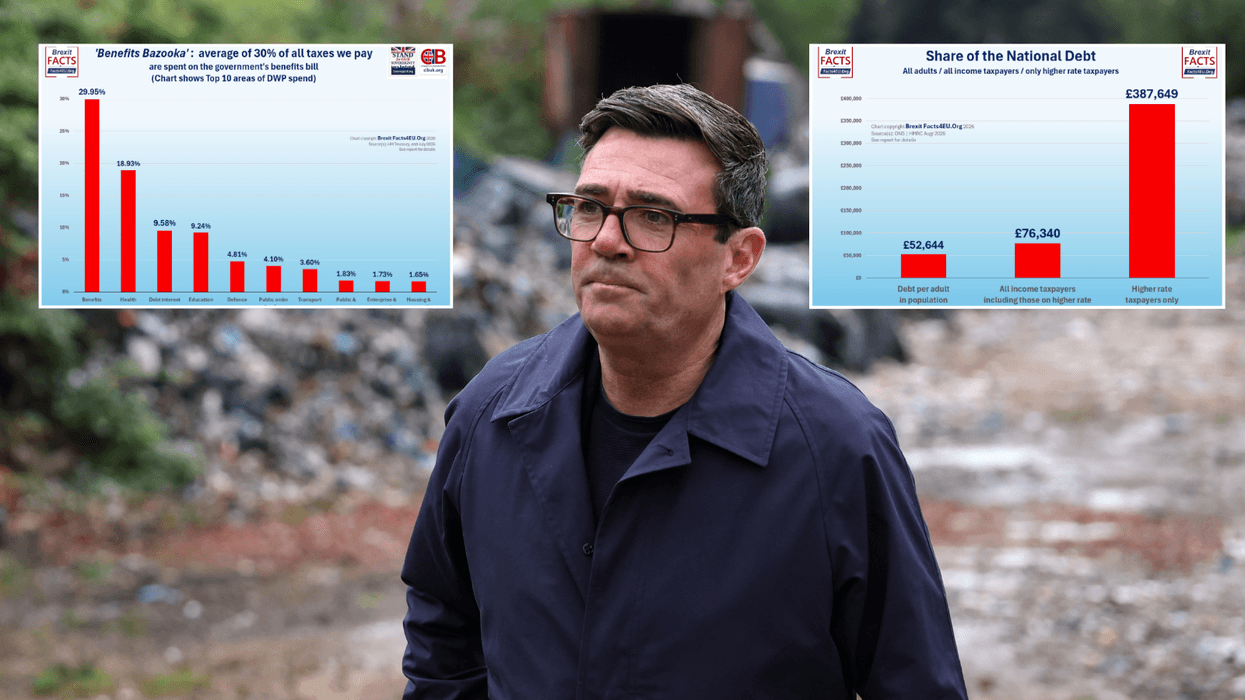
The state pension and associated benefits such as pension credit now consume roughly 55 per cent of the entire welfare budget, a proportion that has remained around the halfway mark for more than a decade.
The total cost this year stands at approximately £178billion. The full new state pension has climbed 31 per cent since the onset of the pandemic, rising from £8,767 per annum to £11,502 by 2024-25. It currently stands at £12,547.
Prime Minister Andy Burnham is under mounting pressure to overhaul or abandon the triple lock, despite having pledged to retain it for the duration of this parliament.
Toby Whelton, an economic researcher for the Intergenerational Foundation said: "Policy must adapt to the changing face of poverty, with resources directed towards those who need them most. Age alone can no longer be treated as a proxy for financial need."
John O'Connell, the chief executive of the TaxPayers' Alliance said: "While the triple lock may have been needed in the past, as more than half of welfare spending is now being paid to pensioners, it is simply unsustainable and not affordable. To ensure fairness, future increases to the state pension should be solely linked to inflation."
A spokesperson for the Department for Work and Pensions (DWP) said "The state pension is the foundation of financial support for people in retirement, and we are committed to ensuring the system works fairly for present and future generations."