Thank you for subscribing!
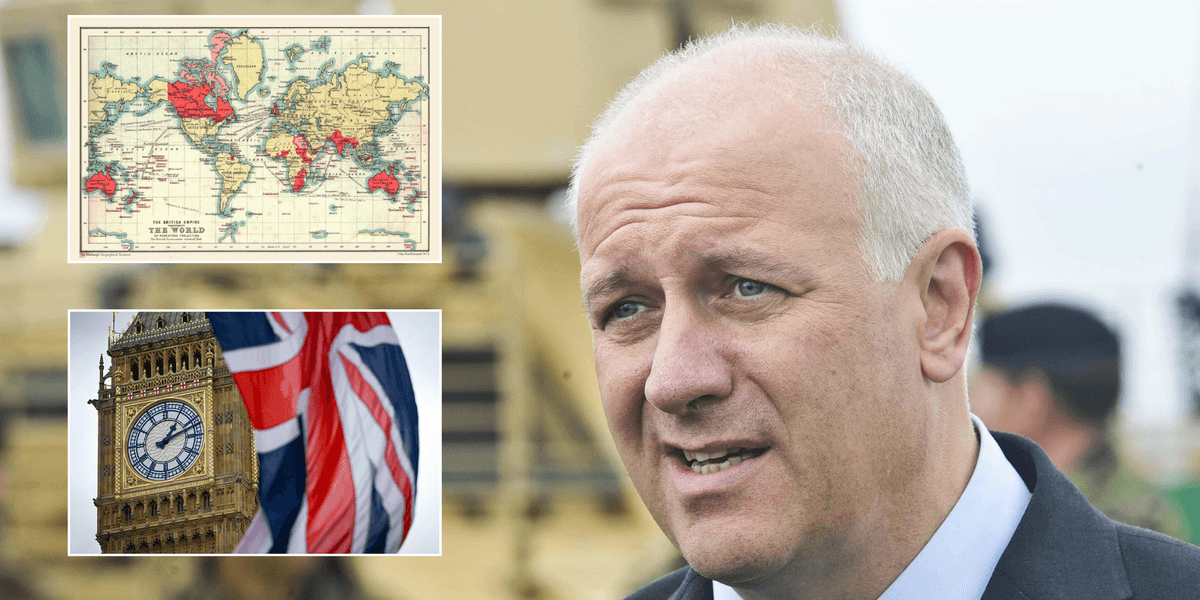
Former Labour minister Bill Rammell said the majority of Britons were in favour of teaching 'contested history'
Pupils will be encouraged to debate the "polarising" British Empire as an educational charity launches a new book on the topic for schools.
Parallel Histories, led by former Labour minister Bill Rammell, worked with over 3,000 schools, providing them material containing contrasting perspectives on contentious parts of history.
The charity’s latest eBook, On British Empire, follows other resources on the conflict in Northern Ireland, between Israel and Palestine, and on Russian president Vladimir Putin and Ukraine.
Mr Rammell told GB News the majority of Britons understand the importance of debating "contested history".
"We commissioned YouGov last year on whether or not schools should teach contested history, and an overwhelming majority, 74 per cent, thought that they should," he told The People's Channel.
Participants are encouraged to form two teams and make arguments based on sources in the book – which will be free – before swapping materials to argue the other side.
"We get students to look at the raw historical sources, to look at whether empire was a force for progress or whether it was a system for exploitation and oppression," Mr Rammell, a former Higher Education Minister under Sir Tony Blair, said.
"And we get students to need the service to look at it from both perspectives and then to debate first from one perspective, with an opposing team arguing from the other point of view.
"And then, crucially, they reverse sides so that they argue it from both perspectives."
The initiative by Parallel Histories comes as students head back to school on Tuesday.
Mr Rammell said it was important for pupils to learn history and for teachers to trust them to "decide for themselves".
– Empire spread the infrastructure of the modern world versus British imperial growth was built through systemic exploitation.
– Empire built modern government versus empire made exploitation and oppression lawful.
– Empire secured order through trade and alliance versus empire imposed rule by coercion.
– Empire was defended at the time as a means to reform and improvement versus empire was challenged at the time as exploitative and oppressive.
LATEST ON EDUCATION:
The former Labour MP admitted some critics may be concerned the source material provided to pupils was unbalanced, but reassured The People's Channel the book was well sourced.
He said: "We go through a rigorous process of one, determining is this a really important historical issue where there is a live debate both for and against?
"We go through a rigorous process of sourcing and looking for the historical sources.
"We test it out independently with teachers and educators from both sides of the perspective to ensure that the sources are accurate, they're rigorous, they're balanced, and it is a contested issue."
Under the heading of empire spreading infrastructure, the materials say: "Britain had profited from slavery, but empire changed direction.
"It abolished slavery, suppressed slave trading, then built railways, ports, steamships, telegraphs and public services.
"These developments drove economic development, connected regions to wider markets and made distance less of a barrier to travel, work, news, prices and opportunity."
Under the argument that growth was built through systemic exploitation, the book says: "British imperial growth was built through systemic exploitation.
"Slavery was foundational: enslaved people were treated as property, coerced into forced labour, and converted into imperial wealth. Plantation profits helped build the infrastructure of empire: ports, banks, insurance, and manufacturing.
"Exploitation continued through extractive policies that created colonial dependency on Britain."