Thank you for subscribing!
After the First World War, she became HMS President and an iconic part of London's riverscape
A former senior Royal Navy commander has warned a "long and important" chapter of British naval history could disappear forever.
Admiral Lord West says HMS President is an important part of the nation's wartime past, saying, "When you lose something like that, it's gone forever."
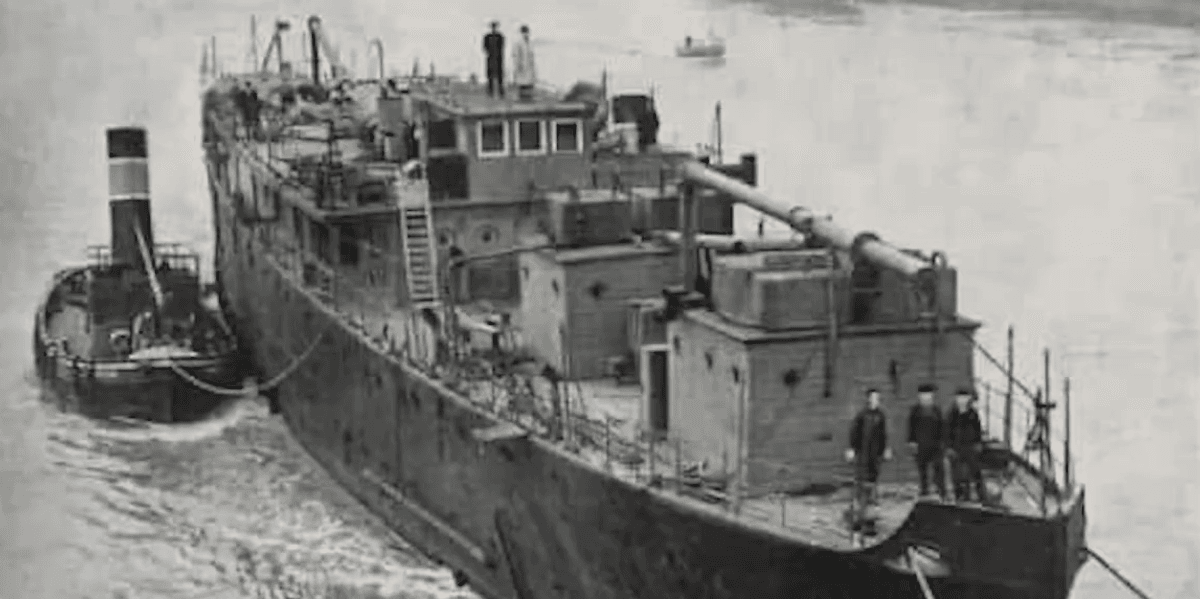
The historic vessel is the last surviving First World War Q-ship: warships disguised as ordinary merchant vessels to lure German U-boats into attacking.
Launched in 1918 as HMS Saxifrage, she was heavily armed with hidden guns, designed to surprise enemy submarines.
Lord West says the ship's role continued into the Second World War.
"She trained generations of reservist naval officers who fought in the Second World War," he told GB News.
She was also used to train defensive gunners protecting merchant shipping.
After the war, she became HMS President and an iconic part of London's riverscape.
Ian Fleming once had an office aboard the ship, where he was inspired to write the stories of Britain's most famous spy.
The House of Lords has described President as a national treasure.
After being forced from her Thames berth in 2016, President spent years at Chatham before being towed to Erith earlier this year.
Campaigners from the Q-Ship Society have spent 5 years trying to save her and turn her into a museum.
"It would be heartbreaking" if they failed, Toni Jones said.
The group says it urgently needs funding, as well as somewhere to permanently house the ship.
"A place we can call home would be a good start," Dan Broom said.
The campaign has set up a GoFundMe to help save HMS President.
With time running out, campaigners fear the last surviving Q-ship could soon be lost for good.
Lord West says Q-ships were created because Britain had "no way of responding" to the German submarine threat during the First World War.
He says German U-boats came close to "strangling Britain" and the Q-ships were one of the "desperate attempts" to lure enemy submarines to the surface.
The vessels were made to look like merchant ships because the Germans would think they were an easy target.
"When they came close, suddenly they would drop the pretence and gunners would take on the submarines," Lord West said.
Lord West says the tactic also forced German submarines to change how they attacked merchant ships.
He says Saxifrage is "the last of a class" that once numbered almost 100 vessels.
"It's got a long and important history in terms of the defence of our nation", he told GB News.
The former Royal Navy commander says historic vessels have "very huge poignancy" and are important for Britain's "national story and for memories."
But he warns that President has been "allowed to deteriorate very badly," making a rescue increasingly difficult.
"You have to actually find a proper berth... and then all of the repair work," he said.
And he warns the cost of bringing her back could be huge, saying: "You have to keep maintaining them forever thereafter. I fear this has been left too late. And it's just very, very sad."