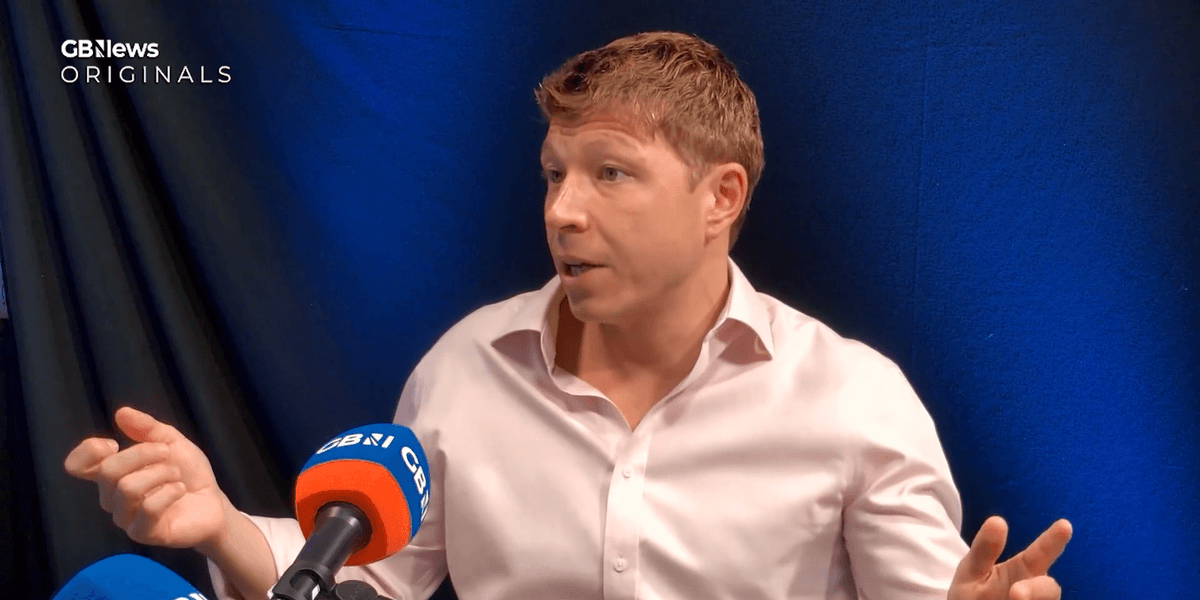
The GB News presenter joined Will Kingston for his latest episode of Fire At Will
Patrick Christys has launched a scathing attack on progressive activists and politicians for their unwillingness to acknowledge Islamist extremism as the driving force behind a car-ramming attack at a pride event in Germany.
Speaking to contributor Will Kingston, the GB News presenter demanded to know "how many more excuses are the hyper woke people in those communities going to make for the people who are doing these attacks?"
Patrick called for a reckoning among those who champion open borders and inclusivity, arguing they must confront the reality that some of the very people they advocate for harbour violent intentions towards them.
He pointed to footage from Berlin showing a woman who admitted she had hoped the perpetrator would turn out to be a white, Christian German man.
"Well, no, no, it wasn't, was it? It almost never is, and that is like a psychological problem," Patrick said.
The attacker, identified as Abdul B, had a well-documented history of Islamist radicalisation, according to Patrick.
He had previously attempted to travel to Lebanon to join ISIS before being sent back to Germany, where authorities arrested and subsequently released him on at least two occasions.
Patrick noted that the man was recognised as being embedded within Islamist networks, yet sarcastically observed that officials "make it sound like he's a techno DJ" rather than acknowledging he belonged to what the presenter described as "a jihadi death cult."
In the days leading up to the attack, police had even searched his residence in pursuit of weapons but came up empty-handed.
Patrick mocked the apparent nonchalance of the authorities' response: "You crack on, Abdul, back out you go, and then there you go, the car ploughs into a load of people."
He took particular aim at Labour MP Chris Bryant, who had responded to the attack by posting about the importance of pride marches. However, when pressed to identify the ideological motivation behind the violence at the German pride event, Bryant reportedly deflected.
"He was asked to name the problem. Could he actually name what had killed people or injured people at this pride event in Germany? He said, well, that's for the German courts to decide," Patrick recounted.
The GB News presenter clearly regarded this as a wholly inadequate response, given the attacker's extensively documented connections to ISIS and the broader Islamist extremist movement.
Mr Bryant's evasion exemplified a wider pattern among politicians who are willing to express solidarity with victims in general terms but refuse to confront the specific ideology that motivated the assault.
Patrick argued that the refusal to name Islamist extremism stems from a fundamental inability among politicians and activists to accept that their ideological framework has been flawed.
"They would have to admit that the policies and the ideologies that they've been forcing upon the rest of us have actually endangered us all, and they are not big enough to be able to do that. It's cowardice," he said.
The presenter went further, characterising this silence as not merely politically convenient but actively dangerous. He said that if he personally had championed positions that were contributing to loss of life, he would openly acknowledge his error and call for a change of course.
"There'll probably be a little bit of 'I told you so', but really, people will be like, okay, well done, fair enough, let's crack on. And they are not capable of doing that," Patrick added.
He also drew attention to what he sees as a glaring double standard in how the political establishment responds to acts of terrorism depending on the perpetrator's background.
He argued that when an attacker is linked to far-right extremism, politicians waste no time in identifying the ideology responsible.
"If that had been someone who had been a far right attacker, either in Paris or in Berlin, and we've seen cases here in Britain where it's been suspected that someone who has attacked a mosque or something like that may have been a member of the far-right, the political class is all over it like a rash. Far right, anti-Muslim hatred," he said.