Thank you for subscribing!
Charity volunteers were met with 'unacceptable' abuse from protesters
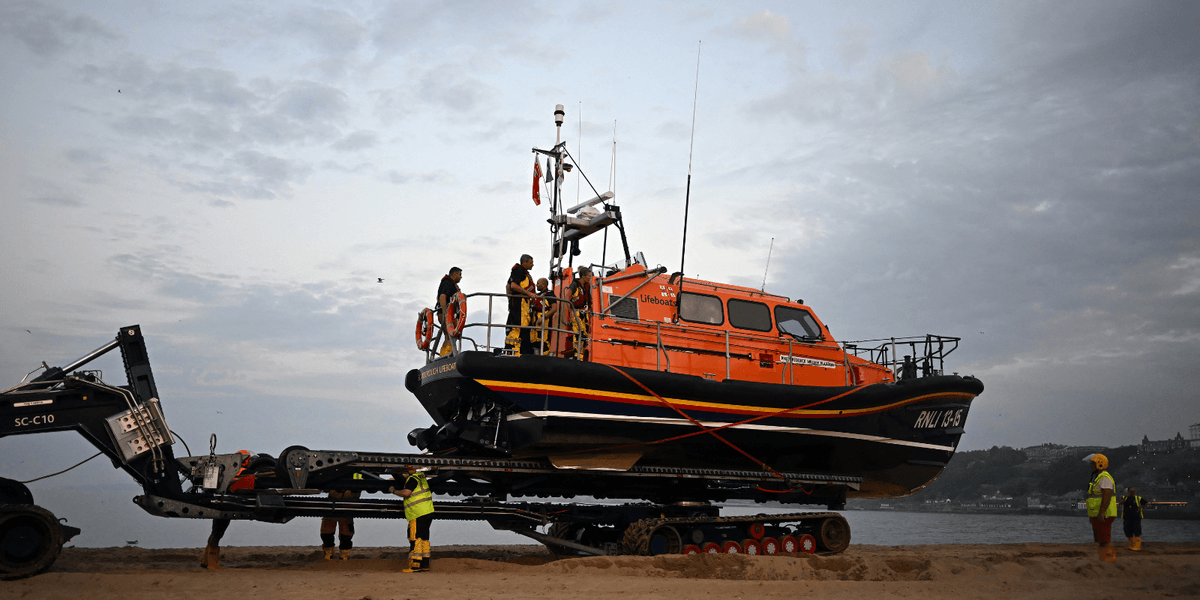
The RNLI has suspended its services in Portsmouth in the wake of abuse of its volunteers after anti-migrant protests.
The charity’s volunteers have been targeted for helping migrants at sea, with footage posted on social media showing them described as "traitors".
Footage was posted on social media of volunteers bringing a dinghy to safety in the Hampshire port city.
An RNLI spokesman said the Portsmouth Lifeboat Station has been "temporarily off service" since September 10.
The spokesman said: "We hope to have the lifeboat station back on service as soon as possible.
"Search and rescue cover continues to be provided through established contingency arrangements, including flank RNLI stations and other declared assets."
The charity has another lifeboat station on Hayling Island and there is another lifeboat station independent of the RNLI in Gosport.
Hundreds of protesters blocked roads overnight on September 6 and vowed to stop migrants from leaving Portsmouth after they arrived in a dinghy across the English Channel.
The boat, reported to be carrying about 140 migrants, is thought to have made one of the longest journeys of any small boat, and landings as far west as Hampshire are rare.
The RNLI later issued security advice warning volunteers and staff not to wear the charity’s branding because of “unacceptable abuse”.
The charity’s chief executive, Peter Sparkes, has said abuse of RNLI volunteers was "wholly unacceptable in a civilised society".
He said recent protests generated "deliberate misinformation and a misunderstanding about the RNLI, our purpose, our tasking, and particularly our lifesaving work in the Channel".
Images of some RNLI crew members who were apparently involved in the operation off the Hampshire coast were published on social media with the accusation they were complicit in an "invasion" of the UK.
An RNLI spokesman said: "Given the unacceptable abuse our people have faced, and with protest activity taking place at RNLI locations, we have taken action to help ensure the safety and wellbeing of our volunteers and staff.
"As well as enhancing security at RNLI locations, we issued guidance to our people earlier this week on how to keep themselves safe.
"This guidance included how to manage potentially challenging interactions with members of the public, and where appropriate, choosing not to wear RNLI-branded clothing.
"Our people have been reminded that their safety comes first, and they are encouraged to report relevant incidents internally and, where appropriate, to the police."
Culture Secretary Lisa Nandy told MPs she had spoken with tech companies about how the names, addresses and photographs of RNLI staff and volunteers were reportedly shared online.
The Wigan MP added she was "concerned" about the risks posed to adults and children from "doxxing", which refers to when private information about an individual is shared online without their consent.
Criminologist at the University of Hertfordshire Dr Anna Tippett told the BBC how doxxing can create a "profound sense of vulnerability", as the "boundary between online abuse and potential offline harm becomes increasingly difficult to judge".
She added how doxxing "could discourage others from taking on these kinds of public-facing voluntary roles".