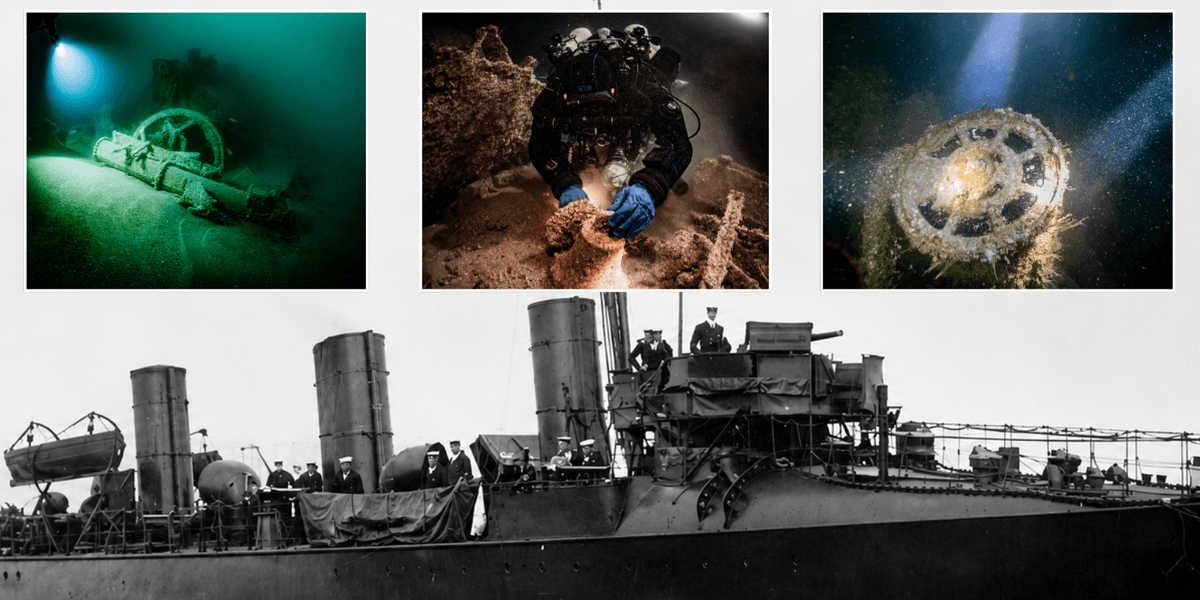
The HMS Tiger was lost in 1908, with her remains unknown until now
A Royal Navy warship that was shipwrecked in the English Channel over 100 years has been found in a stunning discovery.
Divers from ProjectXplore located the wreck of HMS Tiger, a Royal Navy warship that vanished beneath the waves off the Isle of Wight 118 years ago.
The vessel met her fate in 1908 when she was lost during a training exercise and her remains have eluded searchers ever since.
The announcement coincides with proposed legislative changes currently before Parliament through the Armed Forces Bill, which would grant the wreck immediate legal safeguards.
Under the new measures, HMS Tiger would receive an automatic "protected place" designation, shielding the site — and the graves of those who perished aboard — from interference from the moment of its discovery.
HMS Tiger's demise came about when she inexplicably veered into the path of a fellow warship during the exercise, a collision that sliced the vessel cleanly in half.
The disaster claimed the majority of those on board — fewer than half of her 57-member crew made it out alive.
Since that fateful day, the wreck's precise location had remained a mystery, defying repeated attempts to find her.
The ProjectXplore team, a collective of divers and historians, dedicated five years to archival research, sifting through historical records to assemble the data needed to narrow down where the shattered hull might rest.
The group already had a notable find to their name, having located the wreck of the cruiser HMS Nottingham in the North Sea the previous year.
The Armed Forces Bill would make it a criminal offence to disturb or remove artefacts from military wreck sites without authorisation, though divers would remain free to visit on a "look but don't touch" basis.
Currently, the Protection of Military Remains Act — in force since the mid-1980s — only covers vessels lost within the past 200 years, a restriction the new legislation seeks to abolish.
Removing that cap would extend safeguards to military ships dating as far back as the Spanish Armada, encompassing wrecks of former adversaries and merchant vessels pressed into service under Admiralty orders.
Armed Forces Minister Louise Sandher-Jones said: "These protections go further to ensure that these vulnerable and nationally significant monuments are protected from day one of discovery, giving lost sailors the dignity and respect they deserve."
ProjectXplore co-organisers Leo Fielding and Dan McMullen said: "It has been the privilege of a lifetime to research, discover and document the wreck of HMS Tiger.
"We sincerely hope that our work will ensure that HMS Tiger, her story and the memory of those connected with her endure for future generations."
They added that the proposed amendments in the Armed Forces Bill represent "a constructive step forward in protecting the United Kingdom's maritime heritage."
Royal Navy Deputy Fleet Wreck Officer Lieutenant Commander Jen Smith said: "Protecting military wrecks helps to ensure they are preserved for future generations.
"This is beneficial for our rich maritime heritage and the diving community who keep the stories of our lost shipwrecks alive."
She urged divers to enjoy and learn from these sites while ensuring they remain undisturbed.