The restrictions accompany those already in place across Kent
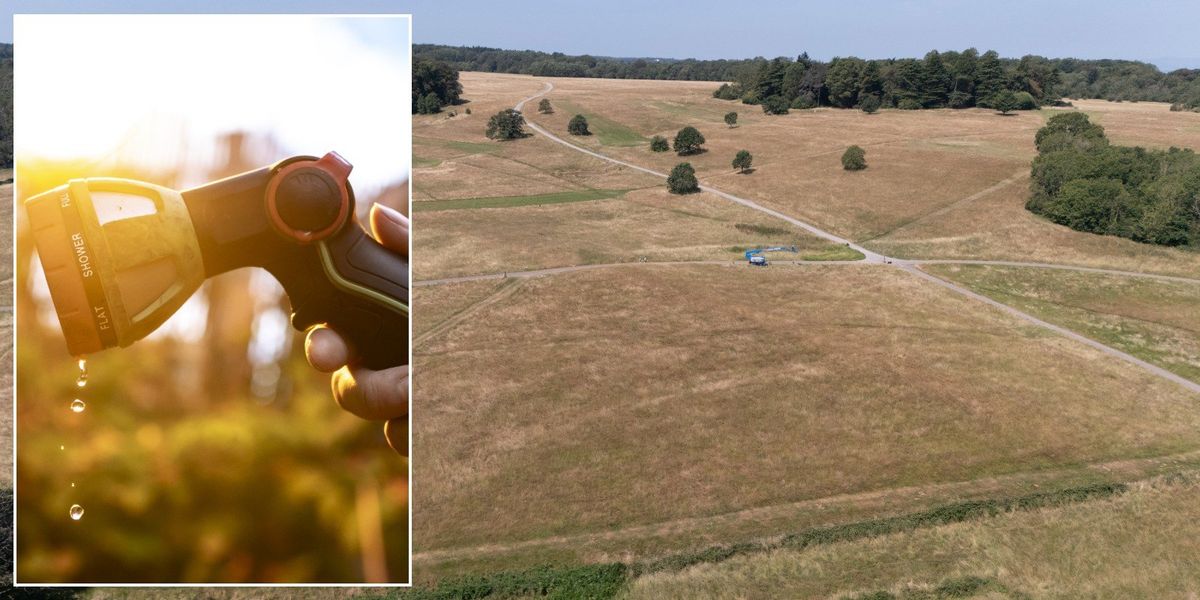
A new hosepipe ban has been imposed on millions of customers across the south of England following a continuous dry spell of weather.
The restrictions imposed by South East Water will impact Britons in Sussex, Surrey, Hampshire, and Berkshire in addition to a ban already placed on residents in Kent.
Residents have been told to immediately begin reserving water with the ban coming into force officially on July 25 at one minute past midnight.
Central and south-east England have experienced more than 14 consecutive days without measurable rainfall between July 2-15, marking the longest dry spell in both regions since the 1990s.
South East Water wrote on its website: "Due to lower than average rainfall, continued hot weather and high demand, we’ve started to see a decline in river levels and need to protect some groundwater sources.
"This means we must now introduce hosepipe restrictions in Sussex, Surrey, Hampshire and Berkshire to join Kent where there are already restrictions.
"We’re urging everyone across Sussex, Surrey, Hampshire and Berkshire who’s supplied by us to please follow these restrictions straight away, to protect your water supply immediately, and the local environment.
"The restrictions will be in force from 00:01 on Saturday, July 25, 2026. In Kent, hosepipe restrictions came into force from 00:01 on Friday, July 3, 2026."
Giving a further explanation in each area, the company which supplies 2.3 million customers, said the Sussex restrictions were imposed due to a drop in the Arlington Reservoir.
The water company wrote: "There are two reasons why we now need to apply temporary hosepipe restrictions in Sussex.
"The river level of the Cuckmere means we have had to pause taking water from it, so we can protect it.
"That means Arlington Reservoir has dropped to a level where our Drought Plan states we must introduce these temporary restrictions.
"The area has only received 55 per cent of average rainfall since March, and the forecast does not show much sign of rain either. This means the reservoirs and aquifers will continue to drop at a faster rate as summer goes on.
"The river is low because of the hot weather meaning higher levels of water is being used and lower than average rainfall having an impact on how much water the environment can supply."
Further explaining the ban in the remaining three counties, South East Water added that a strain on the aquifers and the level of the River Thames were the main issues.
"The river level of the Thames at the point where we take water, to treat and pump to your taps, is low and we need to reduce how much we’re taking to protect the river," South East Water explained.
"Some of the underground aquifers are also under severe stress and we need to protect them.
"The river and aquifers are low and under stress because of the hot weather meaning higher levels of water is being used and lower than average rainfall.
"The area has only received 64 per cent of average rainfall since March, and we’ve also faced three heatwaves. Weather records have been broken with each heatwave too."
Data from the Ardingly and Arlington Reservoirs - the two largest in South East Water's remit - collected on July 12 shows the water storage levels at 77 and 79.9 per cent respectively.
The two strategic reservoirs dropped to their lowest level on October 19, 2025, where they reached 24.6 and 45.5 per cent respectively.
Ardingly and Arlington are capable of storing up to 8,300 million litres of water and supply eight per cent of all drinking water provided to South East Water customers.
Despite the dropping levels, South East Water reassures customers by saying despite looking "a bit low", the drop is "completely normal" with levels rising again between October and April when there’s more rain and higher river flows.