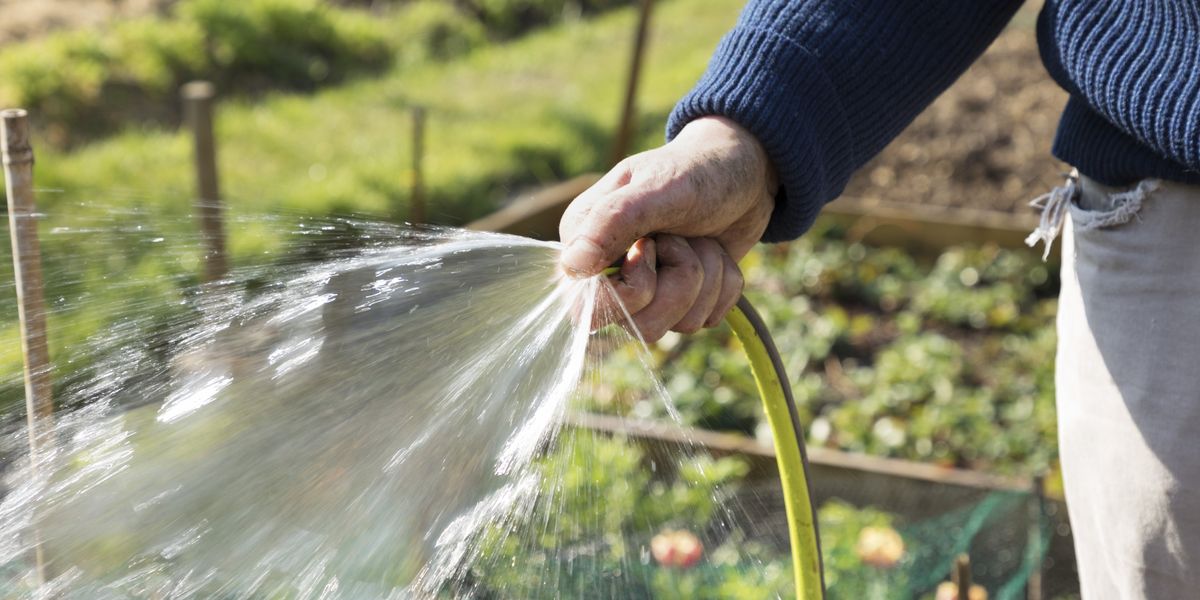
Britons have been ordered not to use any water for gardening, washing the car or filling up their paddling pools
A new hosepipe ban has come into force today, with tens of millions of Britons now living under fierce restrictions across swathes of the country.
Thames Water - Britain's largest water supplier - has urged households across its network to comply with the measures immediately.
Under the new rules, residents are prohibited from using hosepipes for non-essential purposes, including garden watering, car washing, filling paddling pools, and topping up hot tubs.
The ban follows a sustained period of hot weather and surging consumer demand.
The Environment Agency's (EA) National Drought Group has warned that swathes of southern, central and eastern England are edging towards full drought classification, with conditions currently designated "prolonged dry weather".
Eight regions across England have now reached this status - the final stage before an official drought declaration.
Those areas include East Anglia, the West Midlands, Devon, Cornwall and the Isles of Scilly, Lincolnshire and Northamptonshire, Hertfordshire and London, Wessex, Thames, and Solent and the South Downs.
England's third heatwave this year has caused ponds and wetlands to dry up, threatening bird breeding, while certain rivers have stopped flowing entirely in places, according to the EA.
Wildfires have also torn through multiple locations, damaging dozens of sensitive protected habitats and valuable farmland.
Across the Thames Valley and Home Counties, water consumption is running roughly 10 per cent higher than usual, while London demand sits about 7 per cent above the norm.
The Thames Water region received just 40 per cent of its typical spring rainfall this year, and the Thames catchment area has recorded no rain at all so far in July.
Customers have been consuming an additional 100 million litres daily - a volume the company likened to connecting every household in Manchester to its supply network.
According to Met Office data, central and south east England are experiencing the longest continuous dry spell recorded this century.
HOSEPIPE CRACKDOWNS - READ MORE:
The forecaster cautioned that at peak times, consumption has outpaced the system's capacity to treat and distribute water, placing severe strain on local supplies.
Helen Wakeham, chair of the National Drought Group, said the hot conditions and lack of rain have made for a "difficult combination, and we are seeing the effects on our farmers, our wildlife, and the amount available for public and business use".
"All sectors are taking action and we are grateful to the public for following the restrictions, where in place, to make sure there is enough water for everyone this summer," she said.
"We want everyone to stay safe and hydrated during the hot weather but every drop we can save is a drop more for nature and agriculture."
Thames Water's ban is the latest in a growing list of restrictions imposed by suppliers across England.
Southern Water has already restricted customers in Hampshire and the Isle of Wight, while Cambridge Water, Affinity Water - covering parts of Bedfordshire, Berkshire, Buckinghamshire, Essex, Hertfordshire and Surrey - and Anglian Water in the East of England all have bans in force.
On Monday, South East Water extended its own restrictions, affecting more than two million people.
Prolonged heat not only drives up consumption but also puts physical stress on underground pipes, increasing the frequency of bursts and leaks.
Thames Water said it is currently fixing over 750 leaks per week and pressing ahead with its most extensive infrastructure overhaul in a century and a half.
Although the company plans for dry spells and heightened summer usage, it acknowledged that the sheer scale and length of recent demand is taking a considerable toll on water resources.