


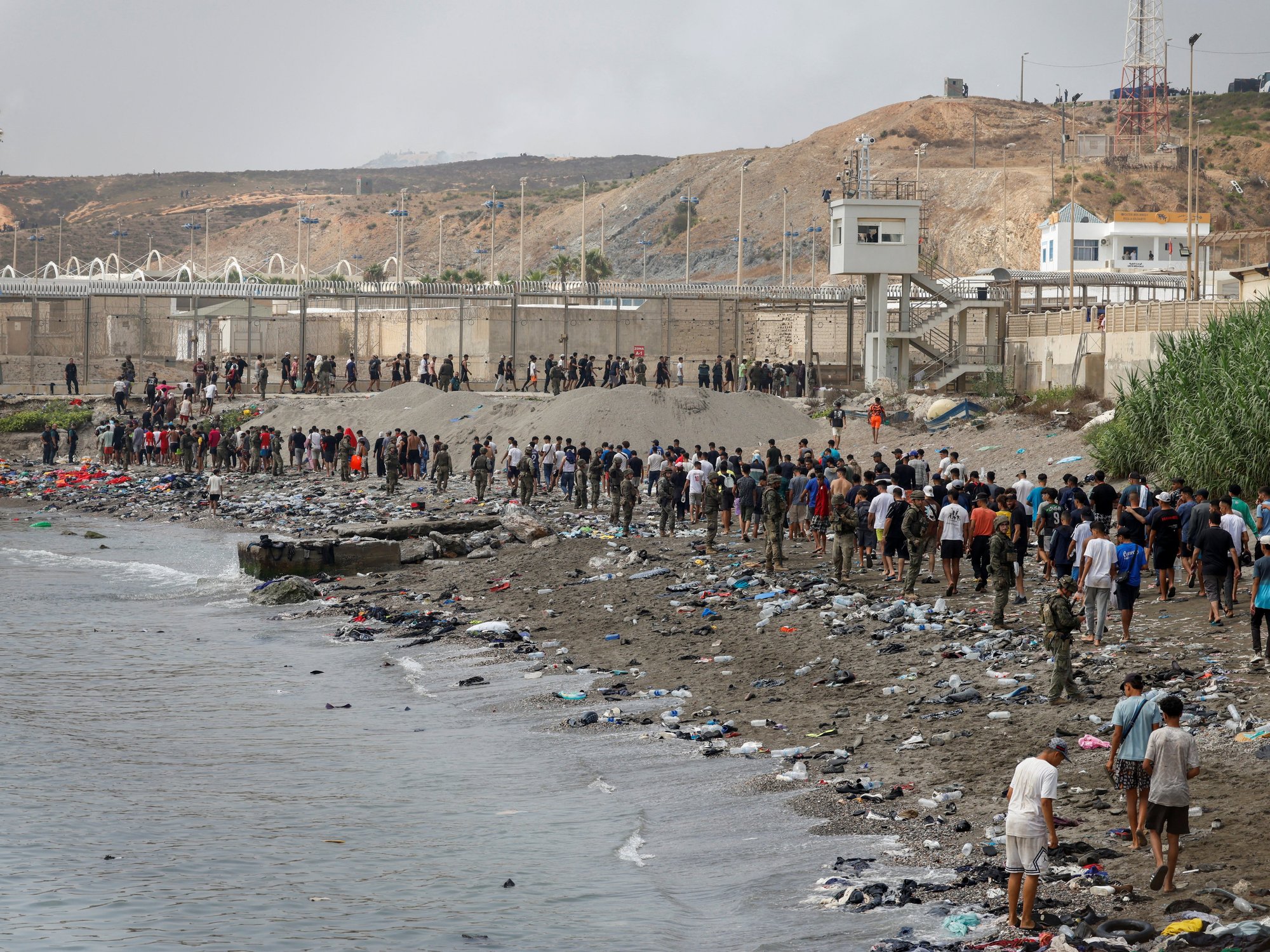
Spain's socialist leader has refused to take responsibility for the African migrant "invasion" of Ceuta.
Instead, Prime Minister Pedro Sánchez pointed the finger at trafficking gangs after more than 60,000 people crossed in the Spanish enclave in North Africa over the past 48 hours.
Mr Sánchez condemned the incident as "violation of Spain's territorial integrity".
Speaking from Ceuta, he said: "What has emerged from our talks with Moroccan authorities is that trafficking mafias took a self-serving interpretation of a Supreme Court ruling."
Mr Sánchez said it has "spread like wildfire".
Spain's Supreme Court ruled last month migrants intercepted at sea while attempting to reach Ceuta, or the enclave of Melilla, could not be summarily returned under the country's special border-rejection policy.
However, Spain's opposition politicians laid the blame on Mr Sánchez, calling him a "traitor" and the "main promoter" of the "invasion".
Santiago Abascal, the President of Spain's right-wing Vox party, wrote on X earlier this week: "It is an invasion. And Pedro Sánchez is its main promoter and guilty of all its consequences. Period."
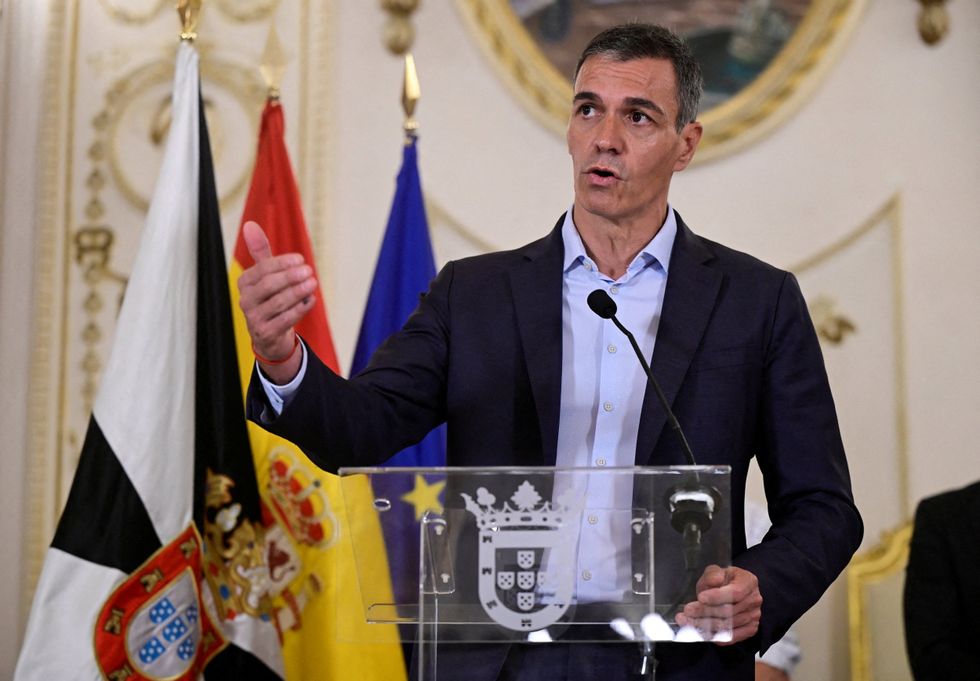
Pedro Sánchez condemned the incident as 'violation of Spain's territorial integrity'
|REUTERS
Alberto Núñez Feijóo, leader of the center-right People’s Party, also said the influx of Africans was due to "irresponsible decisions" which Spain "did not deserve".
Spanish officials confirmed yesterday more than 48,000 people had returned to Morocco, still leaving around 12,000 people illegally in Ceuta.
One man who was returning to Morocco said: "It's not good at all, and it's not fun either. I mean, people are dying here. I beg you, please, if you haven't come yet, don't come. Don't do it."
At least 57 people have died during the surge of people crossing the border.
LATEST DEVELOPMENTS
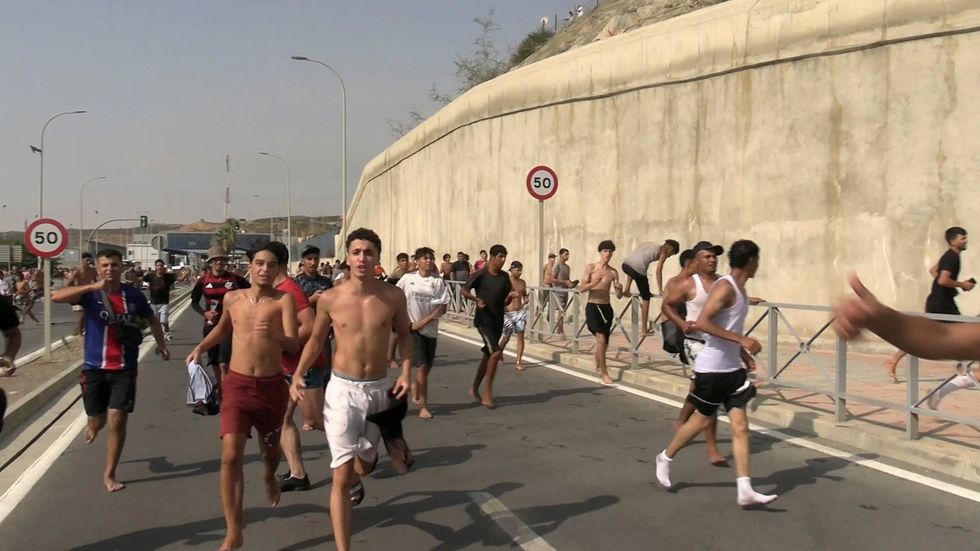
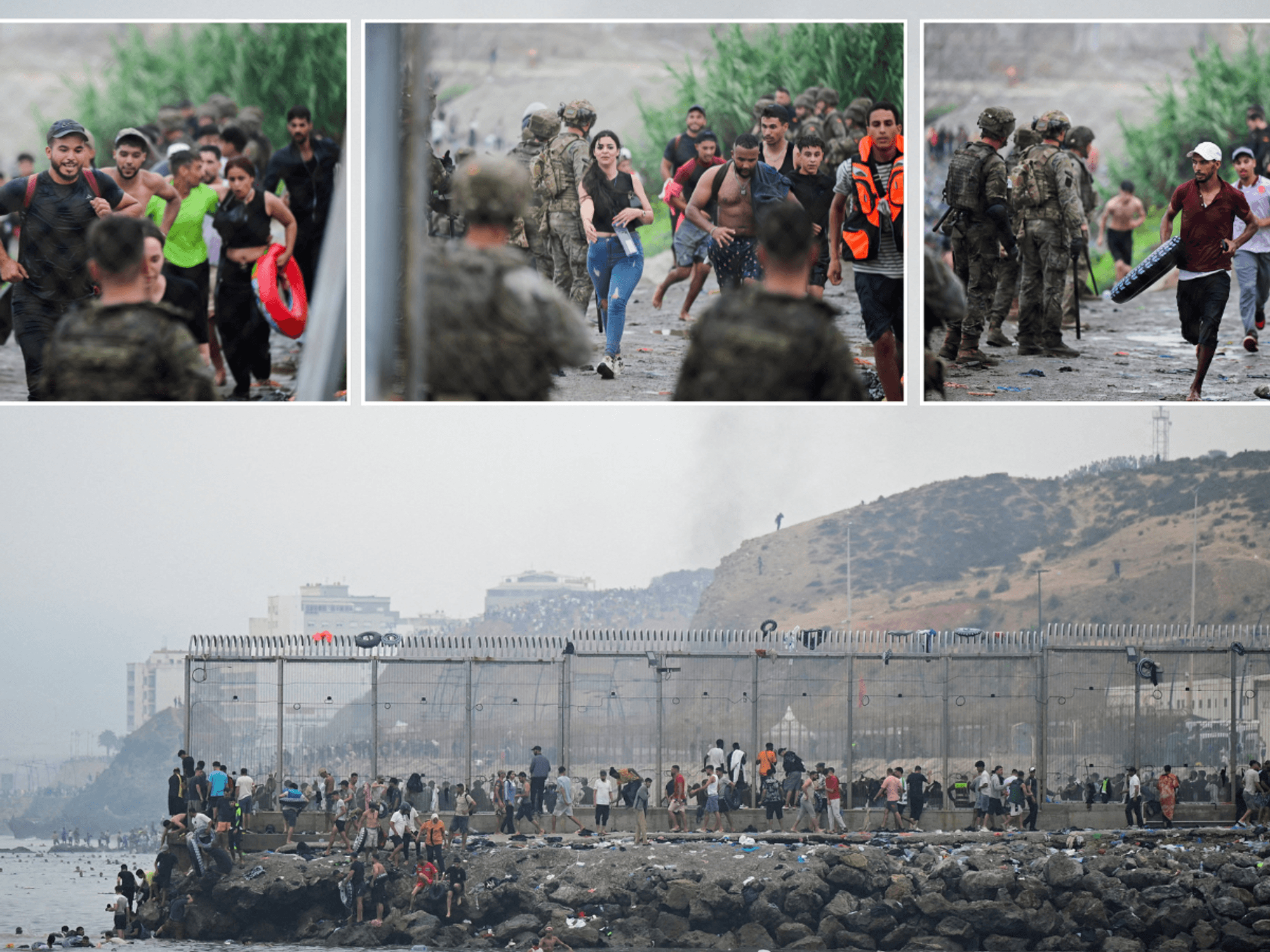
Migrants running on the roads of Ceuta after swimming from Morocco
|FARO TV VIA REUTERS
Mr Sánchez said his Government was looking into reinforcing the border with Morocco and the north African's country's authorities were cooperating with the return of those who had illegally crossed.
Spain's mainland neighbours have already taken action in order to protect their own borders, with Italy announcing they have temporarily suspended their free-movement Schengen agreement with Spain.
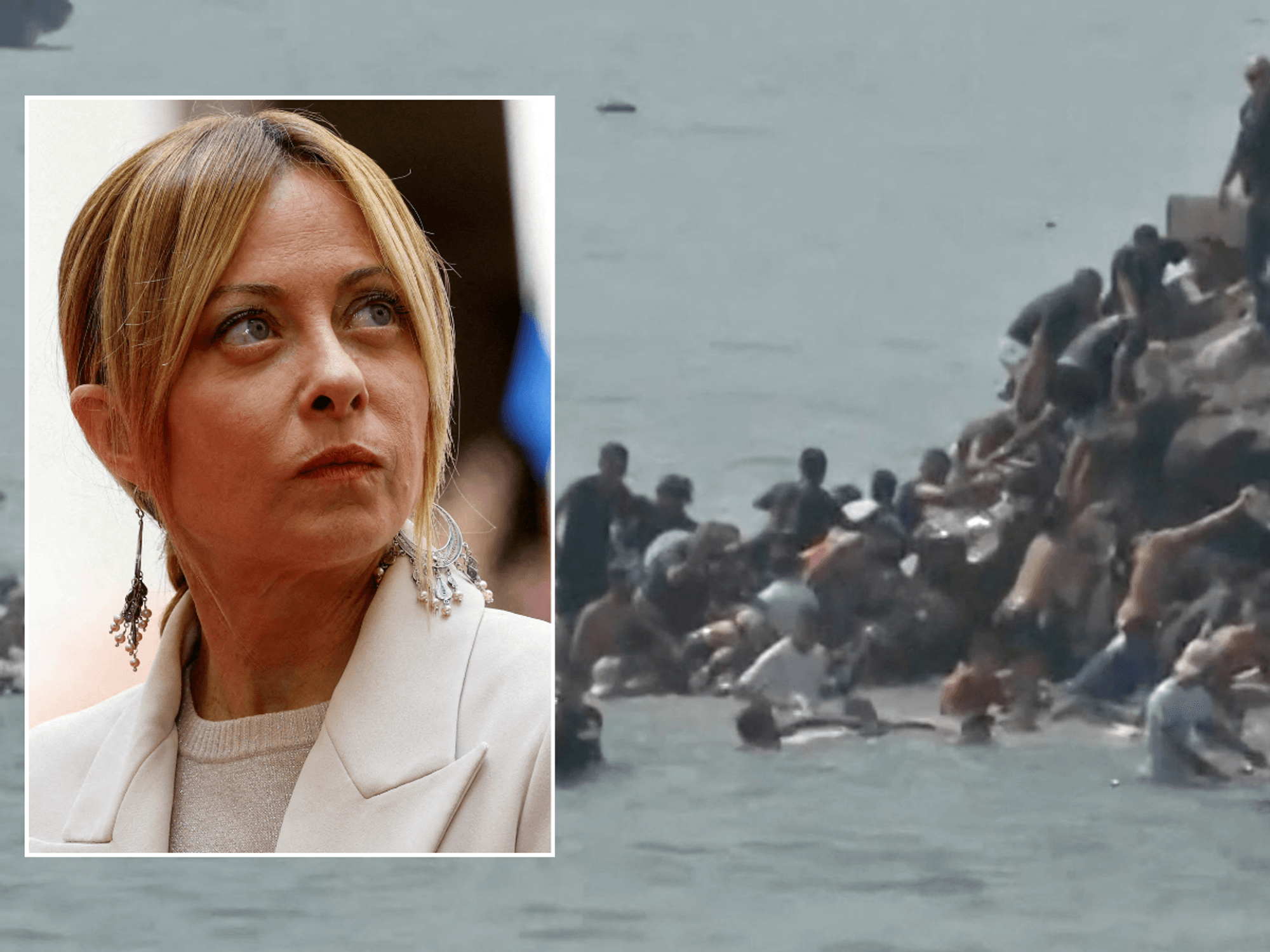
Italy's Prime Minister Giorgia Meloni called the situation "shocking".
Spain's foreign minister José Manuel Albares hit back, calling Ms Meloni's remarks "improper", saying the country expected "European solidarity and not partisan demagoguery".
He also summoned the Italian ambassador to Madrid yesterday.
France has also said it would be introducing stricter border controls on their joint border with Spain.
Mr Sánchez said on X: "Solidarity and empathy are optional. Respect for European treaties and data is not."
Prime Minister Andy Burnham said the situation was a "cause for concern", but did not announce any plans to protect the UK's borders from the migration surge.
He said British officials were in touch with Spanish counterparts "to provide support but also to understand the implications".
However, Shadow Foreign Secretary Priti Patel warned that some of those crossing would "inevitably try to make their way to the UK".
Reform UK's leader Nigel Farage echoed Ms Patel's concerns, saying: "Thousands of young men, lots of them dangerous, will be heading towards Calais and our country. It's time to wake up. This is a battle for our civilisation."
Ceuta, along with Melilla, another Spanish enclave, which is roughly 250 miles east of the former, are autonomous cities bordering northern Morocco.
The enclaves represent the EU's only land borders to north Africa.