Burnham has made some potentially savvy calls. writes leading political researcher Rakib Ehsan
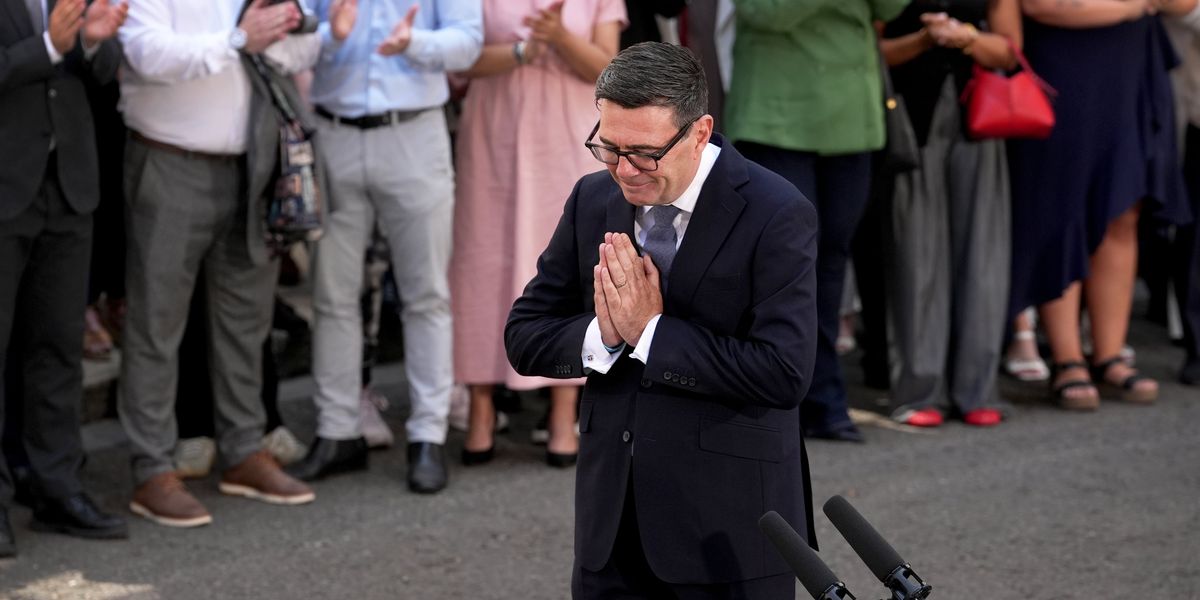
In his first speech as Prime Minister, Andy Burnham promised a ‘circuit breaker’ for Britain – the introduction of a new political and economic model which would represent the biggest changes we have seen as a country for four decades.
Without mentioning her by name, he took aim at Margaret Thatcher’s period at No10 in the 1980s, deriding it as an era of unhealthy political centralisation and economic privatisation – with mass deindustrialisation ripping out the heart and soul of many a community.
Burnham, who is the UK’s seventh prime minister in ten years, also acknowledged the need for Britain to show the world that it can regain stability.
Amid the flurry of high-profile sackings made by Burnham, his somewhat surprising appointment of John Healey as Chancellor of the Exchequer – replacing the sacked Rachel Reeves – is an encouraging one.
During his maiden speech as PM, the so-called ‘King of North’ talked up his commitment to defence and desire to support international strategic partnerships in a volatile multi-polar world.
Healey’s appointment as Chancellor backs this up, with the former defence secretary resigning from that role under former prime minister Sir Keir Starmer because he believed the defence investment plan fell well short of what the country needed “at this dangerous time”.
Starmer responded by trimming budgets to fund a £15 billion boost for military purposes. For those more conservative on defence, Healey – who comes across as a highly principled man – is a solid appointment and suggests that the so-called ‘King of the North’ in No10 is no provincial isolationist.
While she was viewed as the frontrunner to replace Reeves at No11, Shabana Mahmood – arguably the most impressive performer on the Government front-benches since Labour returned to Government – has been kept in her role as home secretary as part of Burnham’s top team.
There were signs that Burnham would reappoint Mahmood as his Home Secretary, having recently supported the Immigration and Asylum Bill at its second reading in the House of Commons.
Despite Burnham historically speaking in fairly liberal terms on multiculturalism and immigration, he – like a growing number in the Labour Party – recognises that the Government must shift to the right when it comes to migration and refugee policy.
If it fails to do so, Reform UK’s turquoise tanks will only advance further through Labour’s red lawns. The new MP for Makerfield has the local knowledge to grasp how much of an electoral threat Reform UK is to Labour in working-class Brexitland.
The appointment of Ed Miliband as foreign secretary – one of the great offices of state – will raise some eyebrows.
But in the context of Israel-Palestine, it is a potentially savvy one – considering the rising tides of left-wing populism in the shape of the Green Party and ‘Islamopopulism’ in the form of pro-Gaza independent politicians.
Miliband, who was serving as Energy Secretary, has a long-standing record of supporting Palestinian statehood as part of a long-term peace settlement in the Middle East.
It may be little too late for the Labour Party, but Burnham clearly has not given up on the possibility of winning over those who were frustrated, if not angered, by Starmer’s positioning on the Israel-Gaza conflict.
This includes younger Muslim voters who may belong to communities which are traditionally Labour-controlled but do not have the attachment that previous generations had with the party.
It is also worth noting that with Ed Miliband no longer being energy secretary, Burnham may distance his government from net-zero radicalism and adopt a more positive approach to North Sea resource exploration (one can only hope!).
Burnham’s top team shows that he is a pragmatic politician who understands the appeal of populism in this day and age – both its left-wing and right-wing variants.
While a good number of appointments have yet to be made, there is a sense that the former Greater Manchester mayor’s understanding of the national political picture is more sophisticated than some may have thought.