Proscribing Bash Back would leave the broader culture of misogyny untouched, writes celebrity doctor Renee Hoenderkamp
Lord Walney wants Bash Back banned. The former political violence tsar says the militant transgender group should be proscribed like Palestine Action and be treated as a terrorist organisation.
On the face of it, you can see why. Their own material tells supporters to form “local cells", pick targets (MPs, organisations, and conferences), and “hit them repeatedly until they desist".
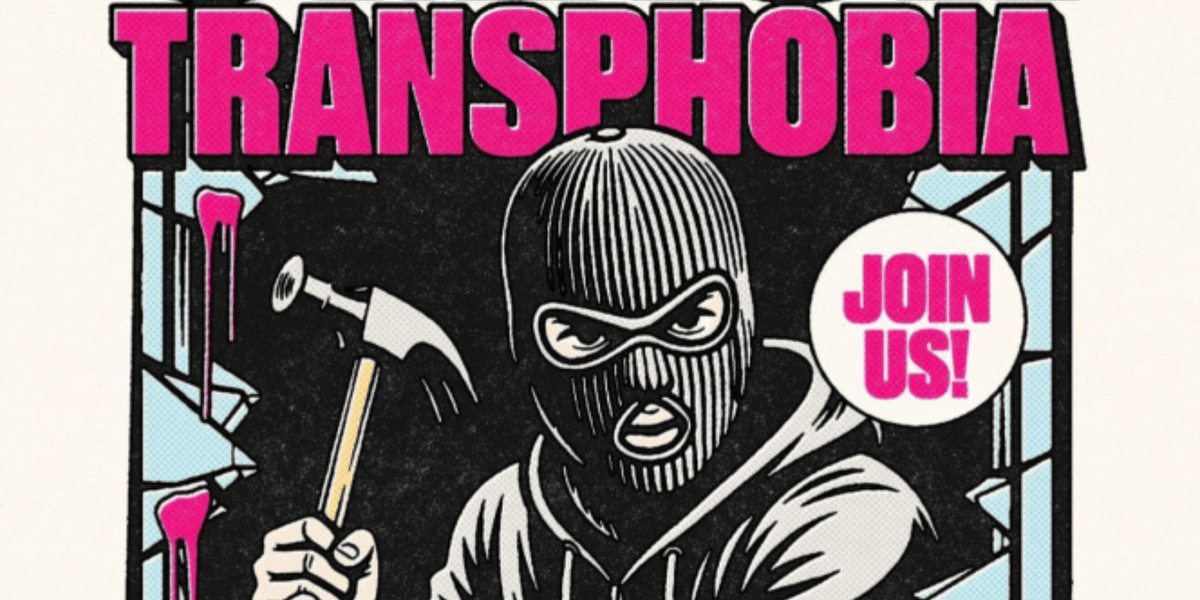
There are hammers in their graphics. Slogans about smashing transphobia.
They have already claimed and celebrated the vandalism of Labour minister Wes Streeting’s office, the hacking of the Free Speech Union, attacks on the Equality and Human Rights Commission, and disruption at a women’s rights conference. This is not polite disagreement.
It is organised intimidation and, I would say, misogyny, dressed up as liberation. But banning them is still the wrong move.
Proscription is a heavy weapon. Once you start using it against groups most people find repulsive, the power sits there ready for the next government to point at whoever is currently inconvenient.
We already have laws against criminal damage, threats, harassment, possession of offensive weapons, aggravated trespass and incitement to violence. Those laws exist precisely so we don’t have to reach for the nuclear option every time a fringe movement turns ugly.
The answer is not a new list of banned organisations. The answer is to use the laws we already have and use them properly, not selectively.
After all, it did not take a second for Lucy Connolly to be thrown in jail for her right to offensive speech, but free speech did it? That is the part that keeps failing.
When the same tactics – online pile-ons, venue disruption, threats, and physical intimidation – are aimed at women who insist sex is real, the response from police and prosecutors is often slow, cautious or simply absent. Women who object to males in female changing rooms, prisons or sports.
Lesbians who decline to treat a man with a penis as a potential partner. Parents who question the rush to medicalise distressed teenagers.
These women have faced years of abuse, doxxing and sometimes direct confrontation. The language used against them is frequently violent: “punch a TERF", “kill TERFs", “off with their heads”, “no debate".
In almost any other context that kind of rhetoric would trigger investigations. When it comes from the trans activists, usually men, it too often does not.
And it reveals something uglier about the radical end of the transgender movement. For all its progressive branding, it has become one of the most openly misogynistic forces in recent British politics.
Its most aggressive voices do not simply disagree with women who defend sex-based rights. They try to erase the category of woman itself.
Straight women who refuse to redefine single-sex spaces are called bigots. Lesbians who refuse to accept males as partners are dismissed as “genital fetishists” or as exclusionary.
The demand is not for tolerance. It is for compulsory agreement, enforced by social punishment and, when that fails, by threats of force.
Bash Back is simply that attitude with the volume turned up. Their manifesto treats every institution that upholds biological reality as having “blood on its hands".
Their direct-action guide presents disagreement as violence that must be answered with criminal damage designed to cause “direct harm with lasting effect".
The guide also states "Bash Back actions do not cause harm: we do not condone causing physical harm to any human being". That may be so, but calling yourselves non-violent and telling activists not to harm people while circulating imagery of hammers and advice on how to dispose of evidence is not subtle.
Yet even here, the solution is not to invent a special new category of “trans extremism". It is to apply the ordinary criminal law without political calculation. Police forces that move quickly against other forms of political intimidation should move just as quickly when the targets are women asserting basic boundaries.
Prosecutors who charge people for clumsy social-media posts should show the same energy when activists publish practical guides on how to “bash back” against elected representatives. Equality before the law is not a slogan.
It is the foundation. When that equality is suspended because one side has successfully branded itself progressive, the result is not fairness.
It is a hierarchy in which women, particularly lesbians and gender-critical women, are treated as less deserving of protection. None of this means denying some people experience gender dysphoria or that they should be free from harassment.
It does mean rejecting the claim recognising biological sex is itself an act of violence, and any resistance to that claim can therefore be met with force. Societies that blur the line between protest and intimidation, between disagreement and hatred, do not become kinder.
They become more brittle and more dangerous. Proscribing Bash Back would be a shortcut.
It would avoid the harder, necessary work of consistent law enforcement and leave the broader culture of misogyny untouched. The clearer path is simpler and more democratic: investigate the criminal damage, prosecute the threats and probe the incitement.
Do it regardless of the political branding the perpetrators claim. Women who refuse to redefine reality on demand are not the aggressors in this situation.
They are citizens entitled to the same protection the law offers everyone else. Until the authorities treat the misogyny directed at them with the seriousness it deserves, calls for bans will continue to look less like principle and more like a substitute for courage.