Thank you for subscribing!
Bottled water and volunteer wardens are no substitute for the armed forces Britain actually needs to deter Russia, writes the former army officer
So, it's official. The Government has finally woken up to the possibility that Russia might attack the United Kingdom.
According to reports, ministers are accelerating civil defence planning because they believe Moscow could strike a critical British sector within "the next few years". Cold War era "War Books" are being rewritten, Government departments are preparing emergency plans and a national home defence exercise is promised for 2027.
The public may also be encouraged to keep bottled water, batteries and tinned food at home.
In other words, Putin may be coming, so stand by for Dad's Army.
I am being slightly unfair. Britain would undoubtedly need civilian volunteers during a national emergency. They could support the emergency services, distribute food, check on vulnerable neighbours and help keep local communities functioning.
Britons have always been rather good at stepping forward when disaster strikes.
But let us not confuse community spirit with national defence. A retired accountant wearing a high visibility jacket, however enthusiastic, cannot repair a severed undersea cable, repel a cyberattack or shoot down a Russian drone heading towards a power station.
Nor do I expect Russian tanks to come clanking up Whitehall.
If Moscow decided to attack us, it would almost certainly begin more subtly. Why risk soldiers, ships and aircraft when Russia could inflict enormous damage without sending a single serviceman across the Channel?
A serious attack might target electricity networks, water supplies, ports, railways, mobile communications, banking systems or the cables carrying Britain's data beneath the sea.
Take out two or three of those simultaneously and the consequences could be dramatic.
Card payments stop working. Petrol stations cannot operate. Supermarket distribution systems seize up. Businesses cannot contact customers or suppliers. Hospitals switch to emergency generators. Social media fills with rumours, accusations and expertly manufactured lies.
That is the sort of operation the Kremlin understands very well. Russia would not necessarily want to conquer the United Kingdom. It might simply want to frighten us, divide us and expose our inability to cope.
I have been warning about this for some time. As I wrote recently, while Britain obsesses over small boats crossing the Channel, Russia is watching our coastline, mapping our infrastructure and looking for weaknesses.
Russian vessels have shown a particular interest in the undersea cables and pipelines upon which Britain depends. That is unlikely to be idle curiosity.
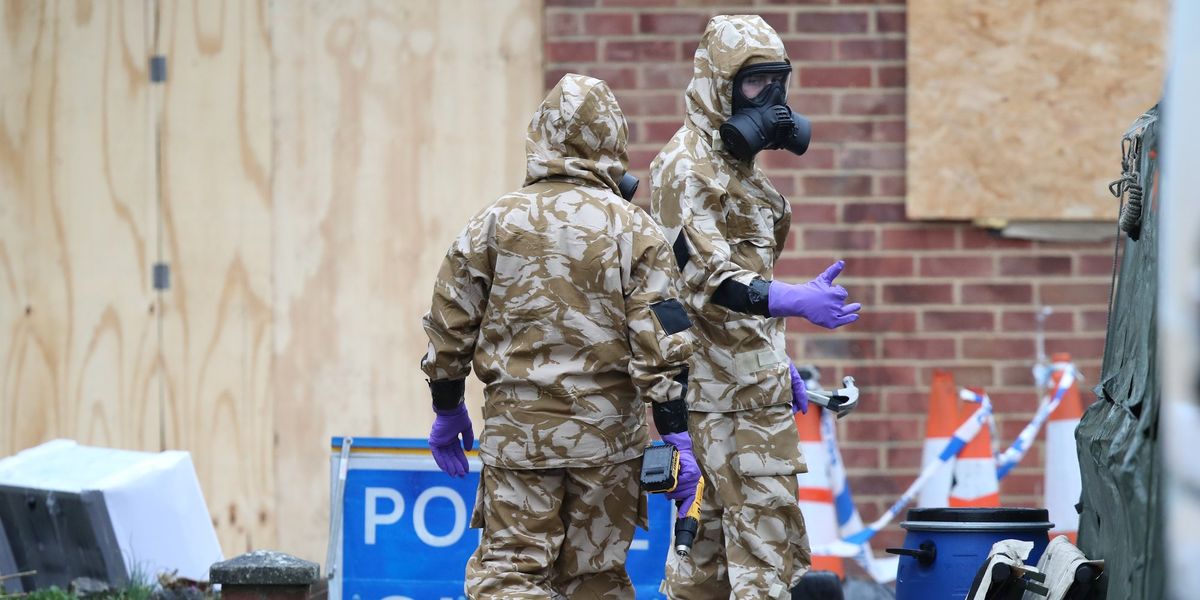
We should also remember that Russia has already carried out hostile operations here. Alexander Litvinenko was murdered in London. Sergei and Yulia Skripal were poisoned in Salisbury. Russian intelligence services have been accused of cyberattacks, attempted sabotage and other operations across Europe.
This is not something that may begin one day. The undeclared conflict is already under way. The Government effectively admits as much in its 2026 Resilience Action Plan, which refers to a growing number of Russian "sub threshold attacks".
That phrase is worth examining. It means hostile actions carefully calibrated to remain below the level that might provoke a conventional military response.
Russia pokes, prods and tests. We hold a meeting, announce a review and promise to learn lessons.
The latest Government plan includes updating emergency procedures and holding a national exercise involving hundreds of officials. Fine. But Russia will not be deterred by the prospect of several hundred civil servants gathering around conference tables in 2027.
Nor will it be impressed by a public information campaign advising people to buy extra baked beans. The Government's Strategic Defence Review acknowledges that Britain must be able to sustain a conflict against a peer adversary. It also says our critical national infrastructure requires greater protection and proposes examining the case for a new reserve force.
The review suggests that increasing regular Armed Forces numbers may have to wait until the next Parliament. A 20 per cent expansion of the active reserves might not arrive until the 2030s.
Russia is not going to wait patiently while Whitehall revises manuals, consults stakeholders and decides which department is responsible for the national supply of candles.
Civil defence matters, but it must be properly organised. Britain needs protected communications, emergency power, secure fuel and food supplies, hardened infrastructure and clear chains of command. We need people who are recruited, trained, equipped and regularly exercised, not names hurriedly collected after the lights have gone out.
Most importantly, civil defence must sit behind credible military power.
Volunteers can help Britain recover from an attack. They cannot deter one.
That requires Armed Forces with sufficient personnel, ammunition, air defences, drones and reserve capacity to convince Moscow that attacking Britain would be painful and pointless.
The Government deserves some credit for recognising that the British homeland is no longer safely removed from the wars taking place elsewhere. Preparing the public is sensible, not alarmist.
But ministers must be honest about what is required. National resilience cannot be delivered on the cheap, and it cannot be improvised after the emergency has begun.
Dad's Army had courage, ingenuity and some splendid comic timing.
Against Vladimir Putin, we may need something rather more substantial.