Thank you for subscribing!
Cancelling military exercises to save a few pounds is a reckless gamble with national security, writes the Director of Research at the Henry Jackson Society
If you want peace, you must prepare for war. For centuries, armies have operated on the understanding that preparing for a war is the best way to avoid having to fight one. But clearly that is no longer the view of the UK Government.
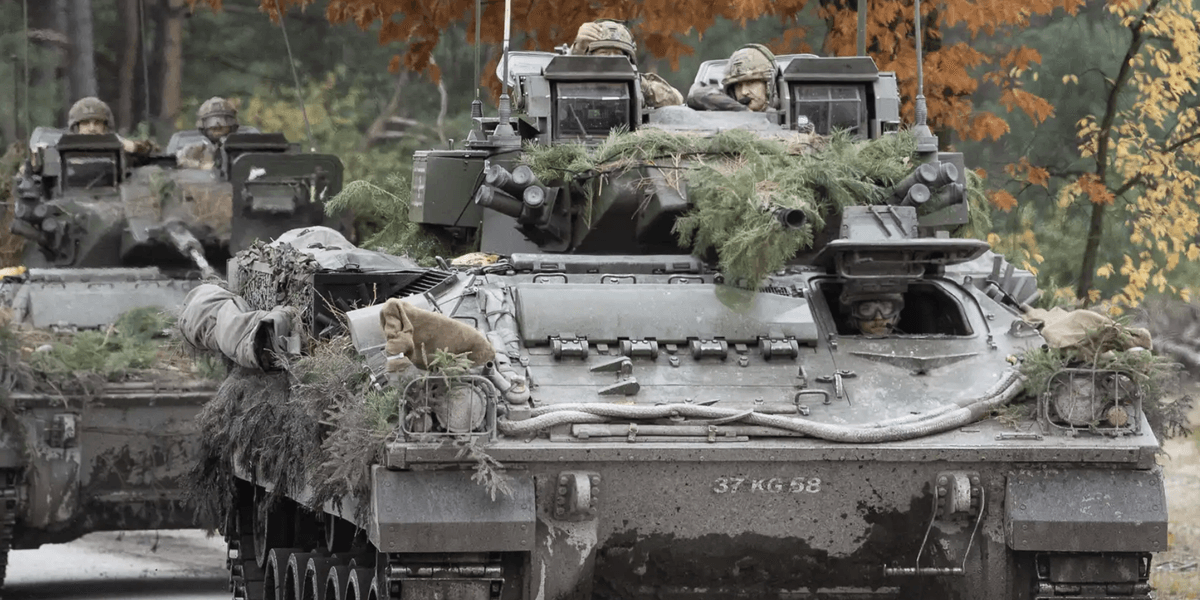
This week, our armed forces were told to cancel military exercises to save money. While there are many competing interests at the Treasury, surely the defence of the nation should be the highest. But apparently not.
The timing of the announcement to halt exercises could hardly be worse.
Just this week, a series of sabotage attacks were launched against Nato by Russia. Drone bombs were intercepted at a German airport, and rockets were fired at a power station near Berlin.
Putin is said to be eyeing a mass troop mobilisation in the autumn. Meanwhile, Russia's ally Belarus conducted "exercises" close to its border with Poland and the strategically sensitive Suwałki Gap. The UK Government cancels preparation for war at just the moment our enemies seem to be actively preparing for one.
The timing of the announcement is unacceptable, but so is the alleged justification: saving money. Consider the various projects that do receive UK funding.
While a bottomless pit of money seems to exist for DEI hiring and woke policy application, the bean counters shake their heads and tut-tut when money is needed to defend the country from attack.
Meanwhile, the armed forces lack vital equipment, and recruitment is struggling. Troops are at their maximum effectiveness when they are training and preparing. Staring at walls in a barracks to keep the Treasury happy is not what our servicemen and women signed up for.
Make no mistake, Russia is willing to provoke us. For years, its hackers have probed and damaged our computer systems, including shutting down the NHS with ransomware attacks.
Russian-linked arsonists burned down a warehouse in London full of aid for Ukraine. Meanwhile, nuclear-armed Russian submarines prowl off our coasts and its nuclear-armed bombers buzz close to our airspace.
One thing Russia excels in is "hybrid warfare". In addition to the conventional threat of planes and tanks, Russia has used cyber warfare, disinformation campaigns, and other "grey zone" tactics.
By doing so, the Kremlin can hit a sweet spot for provocation: just high enough to harm us, but not quite high enough to trigger a Nato Article 5 response.
Much of our understanding of war has rarely seriously grappled with countering hybrid warfare. And Russia knows it.
Our servicemen and women do a difficult job with tremendous courage and professionalism.
Unfortunately, they cannot fight a determined enemy with willpower alone. The armed forces need money and they need to remain well-trained.
Cancelling training to save a few pounds might make a Whitehall mandarin grin at the savings, but our armed forces will lose out on vital combat readiness as a result. And if the Kremlin does decide to up the ante, then a few saved pounds will pale in comparison with confronting Russia.
At the Munich Conference in 1938, the UK handed Czechoslovakia on a plate to Germany, an act that was dishonourable, but viewed as a means to secure peace.
As Churchill said at the time, "You were given the choice between war and dishonour. You chose dishonour, and you will have war anyway".
To paraphrase our greatest Prime Minister, we were given the choice between saving money and war. Our leaders chose to save money. But they may get war anyway.