Thank you for subscribing!
The GB News columnist pays tribute to a self made icon whose music, wit and generosity made her one of entertainment's last true legends
The word legend in the context of entertainment is thrown around so often these days its almost become meaningless.
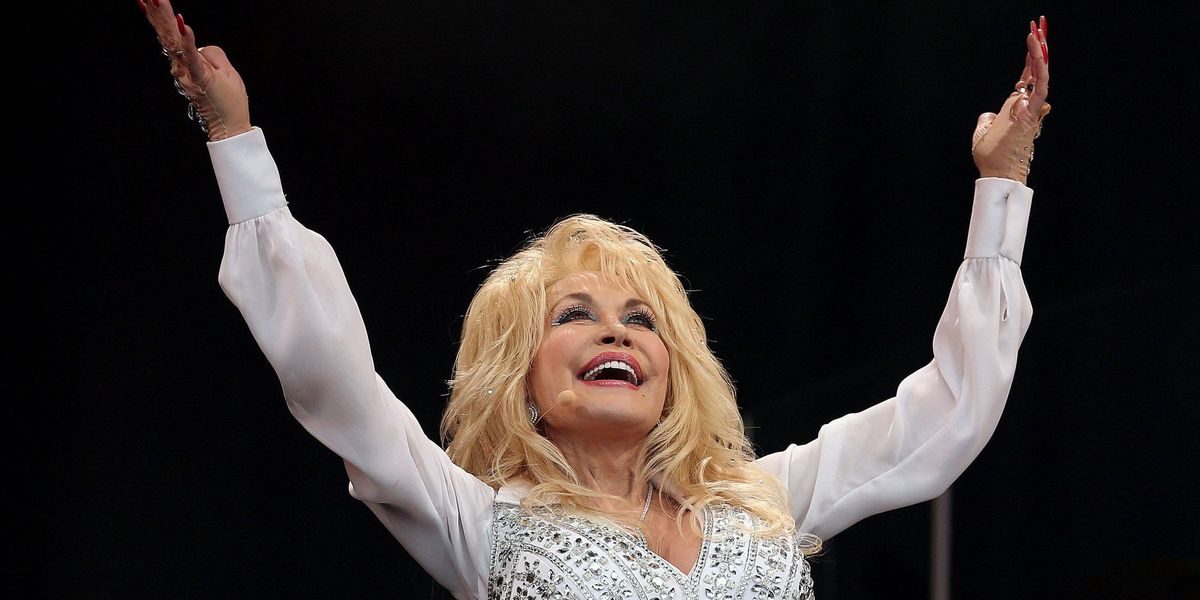
But Dolly Parton, who has died at the age of eighty, was a legend.
She was legendary for her music, her business acumen, her movie success, her philanthropy and doing all of that with a legendary sense of humour which made her adored and relatable.
Born in 1946 as one of twelve children Dolly Rebecca Parton and her family were dirt poor, living in a shack with no running water or electricity in East Tennessee. Her father was an illiterate farmer, and he and Dolly’s mother both raised their children with strict christian values. In fact, it was the gospel music at church services, as well as the influence from her mother’s musical side of the family which first gave Dolly a taste for performing.
This start in life would influence almost everything she did from her artistry to her philanthropy, and even her eventual style and image.
At the age of eighteen she permanently left the Smokey mountains to try to make it as a country music star in Nashville, famously meeting her husband Carl Dean to be on the day she arrived in the city. He remained by her side for a further sixty years until his death last year.
Within a few years of her arrival in Nashville she’d released her first hit single, a song which still to this day sums her up. ‘Dumb Blonde’ tells the story of a woman who might look like she can be easily fooled but is far smarter than anyone thinks.
In the subsequent years, Dolly herself would prove her brains were just as big as… her other assets.
‘Dumb Blonde' was heard by the country music star Porter Wagoner, who invited Dolly to sing on his weekly TV show as well as mentor her music career. This led to an incredibly successful partnership which lasted well into the seventies, which saw her star ascend. It was during this time she wrote some of her biggest and best known country hits including “Coat of Many Colours”, “Jolene” and “I will always love you”.
But Porter Wagoner became the first of many to underestimate the ‘dumb blonde’ as Dolly Parton the businesswoman knew it was time to move on from their partnership. Wagoner didn’t take it well, even launching a legal battle against her, but Parton stood firm. It was a number of years later they finally reconciled.
The bravery of Parton’s decision to branch out on her own proved that not only was she a brilliant songwriter and storyteller, she had to be a ruthless businesswoman in order to succeed long term.
Dolly’s legendary business credentials were further proven during this period when Elvis Presley requested permission to record “I will always love you”. He was a massive fan of the song, and Dolly was overjoyed at the request.
However Elvis had a rule; Any song he recorded, he required 50 per cent of the recording rights signed over to him.
Dolly refused. She’s spoken since of how much that decision devastated her, but from a business perspective she felt she had no other choice. It’s difficult to imagine the self belief and bravery it must have taken for her to turn down Elvis Presley, the world’s biggest recording artist, because she didn’t like the terms of the agreement, but that’s what she did.
She couldn’t possibly have known that years later, when Whitney Houston recorded the song, it would net her over £4million in royalties, half of which she’d have had to have shared with the estate of Presley had she given in.
But it was a wise business decision which she made, and stuck to.
In the next few years Dolly became an even bigger star crossing over from the country music genre, to mainstream chart success, with “Here you come again” in 1977 giving her a massive billboard hit leading to a string of others.
But it was her music showcasing her legendary, masterful ability to tell stories, many of which were influenced by her childhood which she’ll most be remembered for.
This was one of Dolly’s greatest skills. Her writing was relatable, meaning her songs were too. Who couldn’t relate to “Jolene”, the story of a woman Dolly is begging not to take her man? “Coat of many colours”, a heart felt tale of the coat her mother sewed together with different coloured rags for her to wear to school, just like the bible story of Joseph?
“Joshua”, her first US Country number one, telling the story of a local man everyone avoided, whom she fell in love with once she bothered to actually talk to him? Proving it’s wrong to judge a book by it’s cover.
The list of beautifully written relatable themes around love, life, and christianity, set to wonderful music eventually made her a mega star.
Movie success followed in the eighties with Parton successfully transitioning from music to being accepted by audiences in acting roles which are still adored today.
In “9 to 5” with Jane Fonda she starred as a busty secretary with a nightmare boss, in a movie which spawned one of her biggest hits of the same name. Legend has it she turned up on set one day with the ‘9 to 5’ theme tune written, singing it to the rest of the cast using her long finger nails as percussion. The producers instantly knew it was the perfect song to accompany the film.
She went on to star in other movies, including “Best Little Whorehouse in Texas” with Burt Reynolds, and “Steel Magnolias” holding her own with a stellar cast of women including Sally Field, Shirley MacLaine and Julia Roberts.
As the years went on, Dolly’s image changed too, becoming more and more outrageous, and surgically enhanced. The heels got taller, the hair got higher, the face got tighter, the chest got bigger, and the outfits got more and more ostentatious and sometimes revealing. She often told of her childhood being responsible for her ‘look’ too, basing it on the local town tramp!
That was Dolly’s wonderful skill. In a sanitised showbiz world where no-one is meant to notice celebrities who’ve had work done, or are dressing in a provocative way, Dolly embraced it, happily discussed it, and made a joke of it.
“It cost a lot of money to look this cheap” she’d often say in interviews. When asked how long it takes to style her hair, she’d reply “I don't know, I'm never there”. She’s even remarked if she sees “something sagging, bagging or dragging I'll get it nipped, tucked or sucked.”
It was this legendary self deprecation and ability to not take herself too seriously that just made her more adored. And her concerts were a showcase of this talent not only to sing, but also to tell stories. and make the crowd laugh with quips and quotes they’d be repeating for days and weeks afterwards.
How many genuine A- list stars are able to laugh at themselves like that? In a world so obsessed with image and spin, Dolly thought honesty was the best policy.
An honesty she stuck to, especially in never forgetting those childhood roots. It’s the reason her philanthropy was also a legendary part of her personality. Where so many stars might talk about their good deeds, Dolly just got on with doing it.
She created Dollywood, a theme park in her image, and located it near where she grew up in Tennessee. Why? So that one of the poorest parts of the USA had a place where residents could work and get an income. This was Dolly once again proving how her business acumen can translate to doing good deeds.
She never forgot her father’s lack of ability to read or write either. It affected her so much she created the Dollywood foundation, the charitable arm of her theme park, and used those funds to finance Dolly’s ‘Imagination Library’, a scheme where parents all over the world can sign up for their children to receive a free book from Dolly through the post from birth, to five years old.
In over thirty years, Dolly’s Imagination Library has sent out over three hundred and thirty million books worldwide, making a huge difference to children’s literacy and changing lives in the process. It’s difficult to think of another musical artist who can boast such a legacy.
Throughout it all though she never stopped recording, performing and touring. As it stands today, she’s sold over a hundred million records.
She even wowed the crowd at Glastonbury in 2014, appropriately in the ‘legends’ slot.