Thank you for subscribing!
It was a meeting between two extraordinarily successful women, separated by background and circumstance, but united by warmth, dignity and an instinctive understanding of the people who admired them, writes the US columnist
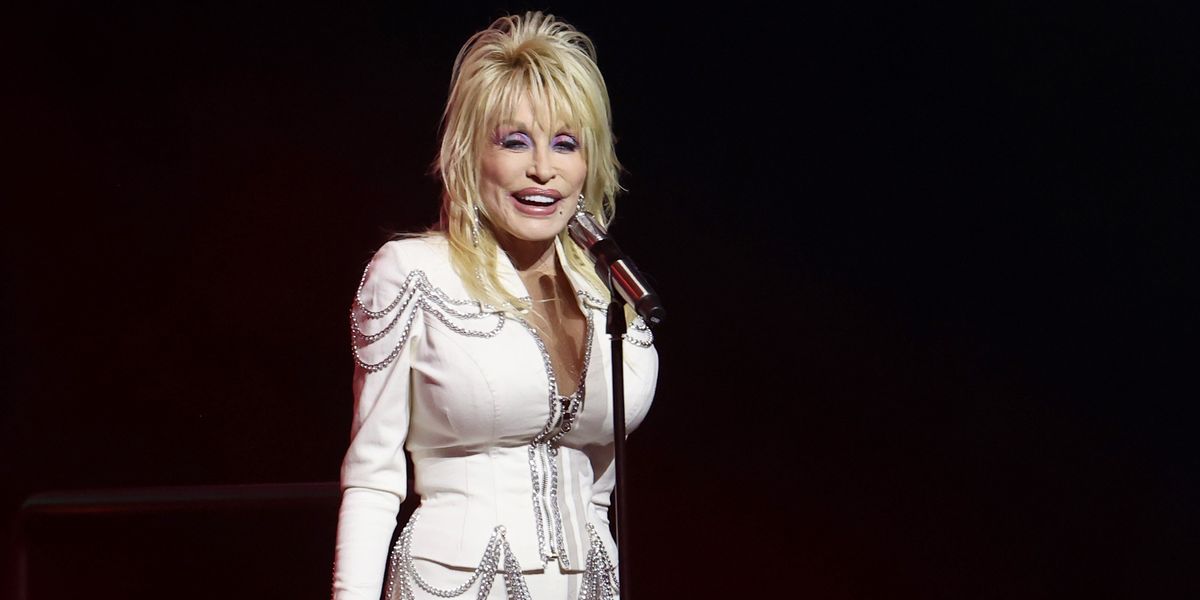
Dolly Parton, who died on 25 August at the age of 80, once described meeting Queen Elizabeth II as the "biggest thrill" of her career. The image of the Tennessee farm girl standing beside the British monarch has always felt quietly charming. In the wake of her death, it reads as something more: a small but telling illustration of how sincerity, tradition and unforced respect can outlast the noise of modern celebrity.
The encounter took place in 1977, during the celebrations for the Queen's Silver Jubilee. Parton was in Britain on tour and had been booked to appear at the Royal Variety Performance in Glasgow, a televised gala staged in honour of Elizabeth II. She did not know in advance that she would be meeting the Queen. When her management finally told her, she later recalled, she "just jumped up and down".
For a girl who had grown up in the mountains of East Tennessee, the prospect of meeting the Queen was almost beyond belief.
"When I was a little girl, I grew up in a world of kings and queens and princes and princesses in fairy tales," she said. "Now I'm going to meet one."
There is something wonderfully revealing about that reaction. Parton was by then one of the most famous and successful entertainers America had ever produced, a woman whose songs, films and larger-than-life persona made her a global icon. Yet she approached the Queen not with cynicism or ironic detachment, but with genuine excitement and deep respect.
Dolly Parton understood something that modern celebrity culture increasingly struggles to comprehend: fame and importance are not the same thing. She had built a career of extraordinary reach while remaining unmistakably herself — the woman from rural Tennessee who never seemed embarrassed by her humble beginnings or desperate to reinvent herself for the approval of fashionable opinion. Her success was vast, her image instantly recognisable across continents, yet when she stood before Elizabeth II she was, by her own admission, "scared to death" that she would not know how to curtsy properly.
What happened next mattered more to her than the ceremony itself. She found the Queen "very warm, very sweet" and sensed that Elizabeth was a "very giving person". The formality of the occasion did not obscure the humanity of the woman at its centre. That encounter left an impression Parton carried with her for the rest of her life.
When the Queen celebrated her Platinum Jubilee in 2022, marking seventy years on the throne, Parton sent a personal video message of congratulations. She told Elizabeth she was "more than pearls" and "more than platinum", describing her as a "shining diamond in this world". Behind her, clearly visible on a table, sat a framed photograph of their meeting in 1977. It was not the language of a celebrity politely acknowledging a distant institution. It was the affection of someone who had been genuinely moved by the woman she had met decades earlier and who had never forgotten the experience.
Americans can sometimes see something in Britain that Britons, through long familiarity, cease to notice. To someone raised in a country without a hereditary monarchy, the British Crown can retain an extraordinary sense of history and continuity. For Parton, kings and queens belonged first to the world of childhood stories. Meeting the Queen transformed that distant fascination into something personal and enduring.
Britain, meanwhile, can become so accustomed to its monarchy that it forgets how unusual and remarkable the institution still appears from abroad. The Crown is part of the national furniture — present, familiar and sometimes taken for granted. Yet to an outsider of Parton's background, or even President Donald Trump's, it remains something rare and worthy of open admiration. Her reaction offers a useful corrective, reminding Britons that what they live with every day can still look extraordinary to those who do not.
Among celebrities, Parton's attitude also says something infinitely laudable. She became extraordinarily rich and famous without making contempt for ordinary people part of her brand. She could be glamorous without sneering at traditional values, successful without pretending she had never known hardship, and influential without turning every public appearance into a political lecture. In an age when many celebrities seem to regard sincerity as a liability and tradition as a target, her approach and persona were a breath of fresh air.
Neither she nor the Queen needed to pretend to be ordinary in order to connect with ordinary people. One inherited a position that carried centuries of history. The other built an extraordinary career from poverty in the Tennessee mountains. Yet both became beloved because of their extraordinary personal qualities and ability to connect.
Dolly Parton never seemed to look down on anyone. That quality, more than the sequins or the hit records, helps explain the breadth of affection she inspired. It also explains why her encounter with the Queen remains so appealing. There is no need to turn it into a grander story than it was: it was a meeting between two extraordinarily successful women, separated by background and circumstance, but united by warmth, dignity and an instinctive understanding of the people who admired them.
Nearly half a century after the Queen of Country Music met the Queen of England, the photograph of that encounter still feels quietly charming. There is the smiling Queen, representing centuries of British history and continuity, standing beside the American girl who had grown up dreaming of kings and queens.